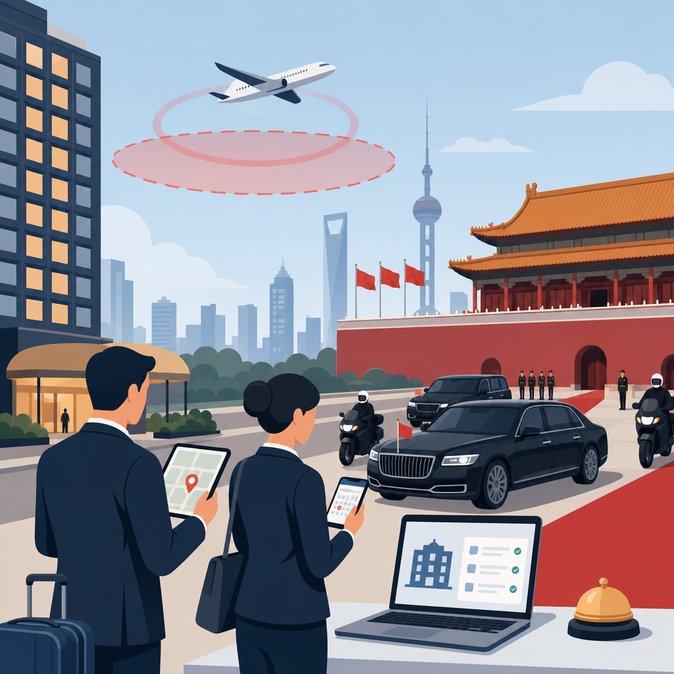
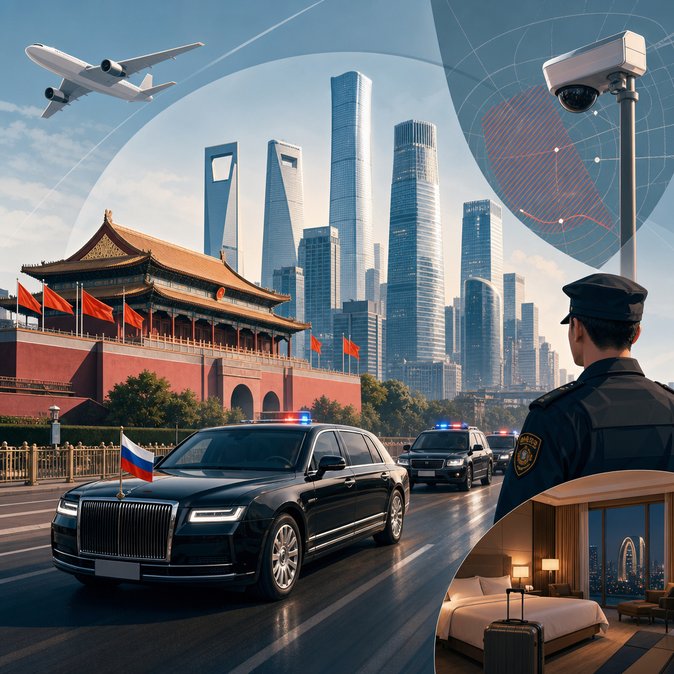
The Chinese Foreign Ministry confirmed on 16 May that Russian President Vladimir Putin will pay a state visit to Beijing from 19 to 20 May at President Xi Jinping’s invitation. Although the agenda marks the 25th anniversary of the China–Russia Treaty of Friendship, for mobility planners the bigger headline is Beijing’s tried-and-tested security playbook: temporary air-space closures over the Capital district, rolling traffic holds on the Airport Expressway, and restricted access to the city’s diplomatic quarter. According to NOTAMs issued by the North China Air-Traffic Management Bureau, VIP-movement windows of up to 60 minutes will be enforced around the arrival and departure of the Russian Il-96 presidential aircraft, with ripple effects on commercial departures throughout 19 May. Carriers have already advised passengers on 50-plus international flights to expect ground delays or minor re-timings.
![China Confirms 19–20 May Putin State Visit, Triggers Security Protocols Likely to Affect Beijing Flight Slots and Hotel Supply]()
Travel teams facing last-minute protocol shifts can turn to VisaHQ, whose dedicated China service simplifies visa procurement, tracks regulatory changes, and offers on-demand experts to troubleshoot consular questions—visit https://www.visahq.com/china/ to keep itineraries resilient when Beijing tightens the screws.
State-visit road escorts will meanwhile shut key arteries between Beijing Capital Airport and the Diaoyutai State Guesthouse, with police instructing ride-hailing firms to geofence prohibited zones and reroute pick-ups. Hotel operators report a surge in last-minute block bookings for security personnel and visiting media. High-end properties near the Forbidden City are quoting average daily rates 40 percent higher than the pre-Covid May average, and duty-managers warn that same-day extensions may be impossible. Companies sending executives to Beijing next week should lock in inventory immediately, consider suburban accommodation near Line 15 for quicker airport access, and pre-arrange driver services that hold Foreign Affairs Office (FAO) permits. The visit also has immigration implications beyond the capital: China and Russia are expected to sign a protocol extending their mutual visa-free group-tour scheme past its current September 2026 expiry. If finalised, the extension would preserve 30-day visa-free travel for ordinary-passport holders on approved itineraries—a perk business-events organisers increasingly leverage to pair Shanghai trade shows with week-end technical visits in Moscow. While the summit underscores deepening Sino-Russian ties, it highlights an operational truth for global-mobility teams: high-level diplomacy in Beijing can swiftly upend meticulously planned travel schedules. Real-time monitoring of NOTAMs, police traffic bulletins and hotel inventory systems remains essential whenever the red-carpet rolls out in the Chinese capital.
Travel teams facing last-minute protocol shifts can turn to VisaHQ, whose dedicated China service simplifies visa procurement, tracks regulatory changes, and offers on-demand experts to troubleshoot consular questions—visit https://www.visahq.com/china/ to keep itineraries resilient when Beijing tightens the screws.
State-visit road escorts will meanwhile shut key arteries between Beijing Capital Airport and the Diaoyutai State Guesthouse, with police instructing ride-hailing firms to geofence prohibited zones and reroute pick-ups. Hotel operators report a surge in last-minute block bookings for security personnel and visiting media. High-end properties near the Forbidden City are quoting average daily rates 40 percent higher than the pre-Covid May average, and duty-managers warn that same-day extensions may be impossible. Companies sending executives to Beijing next week should lock in inventory immediately, consider suburban accommodation near Line 15 for quicker airport access, and pre-arrange driver services that hold Foreign Affairs Office (FAO) permits. The visit also has immigration implications beyond the capital: China and Russia are expected to sign a protocol extending their mutual visa-free group-tour scheme past its current September 2026 expiry. If finalised, the extension would preserve 30-day visa-free travel for ordinary-passport holders on approved itineraries—a perk business-events organisers increasingly leverage to pair Shanghai trade shows with week-end technical visits in Moscow. While the summit underscores deepening Sino-Russian ties, it highlights an operational truth for global-mobility teams: high-level diplomacy in Beijing can swiftly upend meticulously planned travel schedules. Real-time monitoring of NOTAMs, police traffic bulletins and hotel inventory systems remains essential whenever the red-carpet rolls out in the Chinese capital.
More From China
View all
Beijing Activates Flood-Response Plan as May 16 Storm Alert Signals Possible Airport and Ground-Transport Disruptions
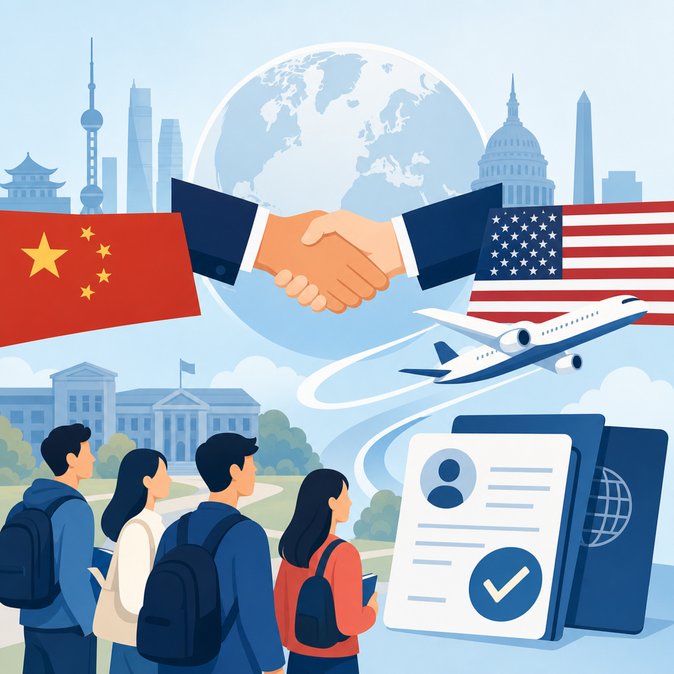
Wang Yi Briefs Press on Xi-Trump Summit: 50,000-Student Exchange Plan and New Push for Reciprocal Travel Facilitation