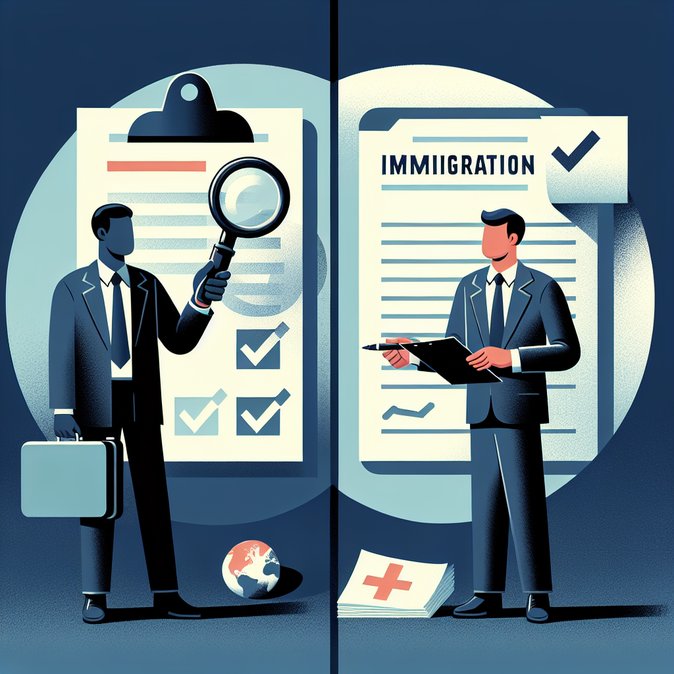
The Home Office has used its broad exclusion powers to deny entry to seven foreign nationals who planned to speak at a "Unite the Kingdom" rally organised by far-right figure Tommy Robinson in London on 16 May. Among those named are U.S. commentator Joey Mannarino and Chilean-born “MAGA influencer” Valentina Gómez, both of whom had previously obtained electronic travel authorisations (ETAs) that were subsequently revoked when security agencies raised concerns. Officials said the individuals’ presence was “not conducive to the public good” because of their history of inflammatory rhetoric. The move follows Prime Minister Keir Starmer’s pledge to keep “agitators” out of the country after violence at last year’s 100,000-strong rally. Under UK immigration law the Home Secretary can personally direct Border Force officers to refuse leave to enter if there is evidence that an individual’s statements, actions or affiliations threaten public order or national security.
![Home Office blocks seven foreign activists from entering UK ahead of far-right rally]()
VisaHQ’s UK practice can help companies and individual travellers stay ahead of such sudden policy shifts. Through its online hub (https://www.visahq.com/united-kingdom/) the firm tracks live Home Office updates, assists with ETA and visa applications, and provides pre-departure risk assessments—giving mobility managers an early warning if a traveller might face secondary screening or exclusion.
The case offers a practical demonstration of how the UK’s new ETA system interacts with existing exclusion powers. Although the seven had passed the automated ETA vetting stage, the Home Office was able to override that permission in real time after receiving updated intelligence—highlighting that an ETA is a pre-clearance, not a guarantee of admission. Airlines that carried the travellers after the revocation would have faced fines under the Immigration (Carrier Liability) Regulations. For corporate mobility managers the episode is a reminder to watch for last-minute refusals even where ETAs or visas are already issued. Employers should brief business travellers—especially high-profile speakers or attendees at sensitive events—about the risk of secondary screening and potential denial of entry. Where reputational issues are possible, contingency plans such as remote participation should be in place.

VisaHQ’s UK practice can help companies and individual travellers stay ahead of such sudden policy shifts. Through its online hub (https://www.visahq.com/united-kingdom/) the firm tracks live Home Office updates, assists with ETA and visa applications, and provides pre-departure risk assessments—giving mobility managers an early warning if a traveller might face secondary screening or exclusion.
The case offers a practical demonstration of how the UK’s new ETA system interacts with existing exclusion powers. Although the seven had passed the automated ETA vetting stage, the Home Office was able to override that permission in real time after receiving updated intelligence—highlighting that an ETA is a pre-clearance, not a guarantee of admission. Airlines that carried the travellers after the revocation would have faced fines under the Immigration (Carrier Liability) Regulations. For corporate mobility managers the episode is a reminder to watch for last-minute refusals even where ETAs or visas are already issued. Employers should brief business travellers—especially high-profile speakers or attendees at sensitive events—about the risk of secondary screening and potential denial of entry. Where reputational issues are possible, contingency plans such as remote participation should be in place.