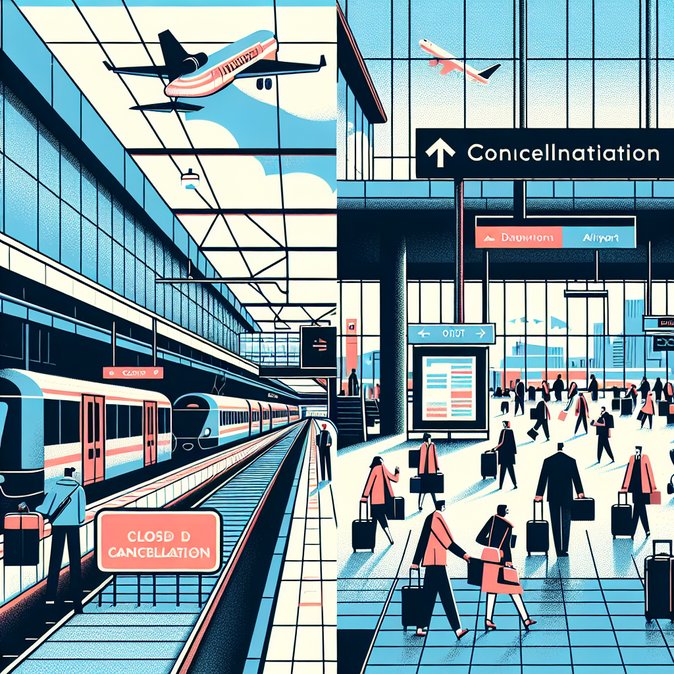
Business and leisure passengers heading for Heathrow on Sunday, 10 May 2026, woke to serious disruption after a person was struck by a train on the approaches to London Paddington. Network Rail closed all lines for more than two hours while emergency services attended, forcing Great Western Railway, Heathrow Express and Elizabeth line operators to cancel or heavily delay services. Even after the lines reopened mid-morning, knock-on delays of up to 45 minutes and short-notice cancellations persisted into the early afternoon, rendering many advance seat reservations useless.
![Paddington rail incident causes Heathrow Express and Elizabeth line chaos for Sunday travellers]()
While transport mishaps are impossible to predict, one element of trip planning that can be nailed down well in advance is entry documentation. VisaHQ’s intuitive platform (https://www.visahq.com/united-kingdom/) lets business and leisure travellers verify visa requirements, secure electronic authorisations and arrange passport services in minutes, removing at least one variable from an already stressful journey.
For corporate travellers, the timing could hardly have been worse. Sunday morning sees a high volume of long-haul departures from Heathrow’s Terminals 4 and 5, and the Heathrow Express normally offers the only sub-20-minute rail connection. Airlines issued blanket advisories urging passengers to allow at least an extra hour, while some long-haul carriers waived no-show fees for affected customers. Ride-hailing and taxi fares surged across west London as demand spilled onto the roads. The incident again highlights how a single point of failure on the Great Western Main Line can paralyse one of the world’s busiest airport corridors. Although the Elizabeth line now offers alternative stopping services, its susceptibility to the same infrastructure bottlenecks means capacity relief is limited. Industry groups repeated calls for contingency rail routings and better real-time data sharing between Network Rail and airlines so that check-in and baggage-drop cut-off times can be adjusted dynamically. Companies with travel-risk programmes should flag the Heathrow Express corridor as ‘at risk’ for the next 48 hours while timetables stabilise. Travellers scheduled to land at Heathrow tonight and tomorrow morning should pre-book ground transport or secure flexible rail tickets. Mobility managers may also wish to remind staff that ticket acceptance on London Underground’s Piccadilly line remains a slower but more predictable fallback during Paddington outages.
While transport mishaps are impossible to predict, one element of trip planning that can be nailed down well in advance is entry documentation. VisaHQ’s intuitive platform (https://www.visahq.com/united-kingdom/) lets business and leisure travellers verify visa requirements, secure electronic authorisations and arrange passport services in minutes, removing at least one variable from an already stressful journey.
For corporate travellers, the timing could hardly have been worse. Sunday morning sees a high volume of long-haul departures from Heathrow’s Terminals 4 and 5, and the Heathrow Express normally offers the only sub-20-minute rail connection. Airlines issued blanket advisories urging passengers to allow at least an extra hour, while some long-haul carriers waived no-show fees for affected customers. Ride-hailing and taxi fares surged across west London as demand spilled onto the roads. The incident again highlights how a single point of failure on the Great Western Main Line can paralyse one of the world’s busiest airport corridors. Although the Elizabeth line now offers alternative stopping services, its susceptibility to the same infrastructure bottlenecks means capacity relief is limited. Industry groups repeated calls for contingency rail routings and better real-time data sharing between Network Rail and airlines so that check-in and baggage-drop cut-off times can be adjusted dynamically. Companies with travel-risk programmes should flag the Heathrow Express corridor as ‘at risk’ for the next 48 hours while timetables stabilise. Travellers scheduled to land at Heathrow tonight and tomorrow morning should pre-book ground transport or secure flexible rail tickets. Mobility managers may also wish to remind staff that ticket acceptance on London Underground’s Piccadilly line remains a slower but more predictable fallback during Paddington outages.
More From United Kingdom
View all
Channel ‘small-boat’ arrivals hit 200,000 milestone, piling pressure on UK migration policy

Digital ‘Share Code’ checks become standard as healthcare staffing app automates right-to-work verification