
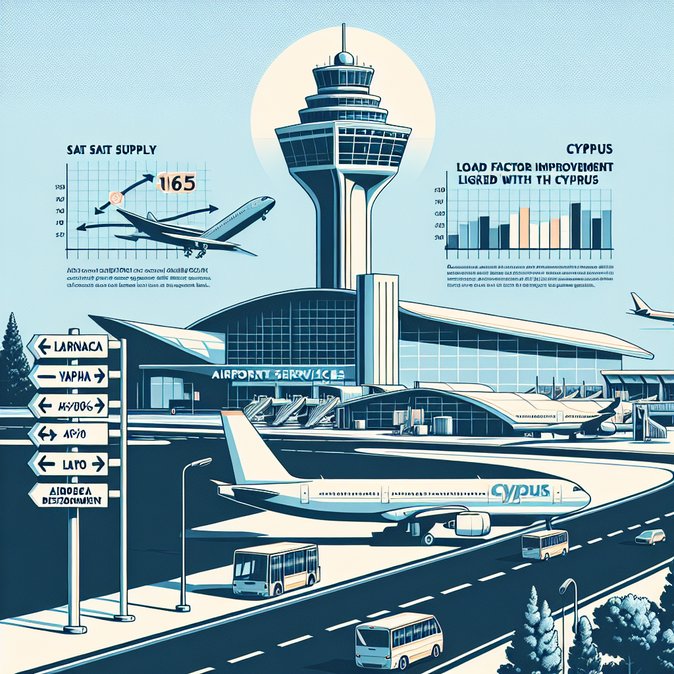
Hermes Airports, the operator of Larnaca and Paphos International Airports, has confirmed that total arriving passenger numbers fell by 16 percent in April 2026 compared with the same month last year. The decline—about 95,000 travellers—follows a decision by several carriers to trim summer‐2026 flight frequencies rather than cancel routes outright. The cuts translate into roughly 600,000 fewer seats on sale between April and October and an expected nine-percent reduction in passenger throughput for the season. Although the headline figures look stark, the airport company stresses that load factors have improved in recent weeks. Since 20 April, average seat occupancy on inbound flights has hovered between 80 and 85 percent, rising above 90 percent on staple routes from the United Kingdom and Poland. Hermes is already working with airlines on a capacity ramp-up from September as late-season leisure demand and conference traffic build.
![Cyprus airport passenger traffic dips 16% in April amid schedule cuts but recovery signs emerge]()
Meanwhile, travellers anxious to avoid last-minute paperwork snags can turn to VisaHQ, whose online platform (https://www.visahq.com/cyprus/) streamlines Cyprus visa and passport services for both leisure and corporate customers. The service provides up-to-date entry requirements, digital application tools and concierge assistance, making it easier to secure clearances well ahead of the tighter flight schedules.
For corporate mobility managers the message is mixed. Fewer frequencies mean reduced day-trip options and tighter inventory in the peak June-to-August window, so early booking is advisable—particularly on the UK, Israel, Poland and Germany sectors that collectively account for almost 70 percent of Cyprus’s summer arrivals. On the upside, Hermes reports no concerns about aviation-fuel supply, alleviating fears of price spikes or last-minute diversions that could disrupt travel programmes. Industry analysts note that Cyprus remains served by 54 airlines flying to 165 destinations in 42 countries, preserving network breadth despite the capacity trim. Forward data from travel-analytics firm ForwardKeys indicate that seat filings for September and October are already trending five points higher than the same time last year, suggesting that leisure carriers may yet restore frequencies once yield projections stabilise. In practical terms, employers sending staff to Cyprus over the next three months should build in additional connection buffers—especially for same-day meetings—and encourage travellers to monitor schedule changes closely. Hermes advises arriving more than the usual two hours ahead of departure until the revised timetables settle, and reminds passengers that security-checkpoint peak times have shifted slightly later in the day because of the new roster of flights.
Meanwhile, travellers anxious to avoid last-minute paperwork snags can turn to VisaHQ, whose online platform (https://www.visahq.com/cyprus/) streamlines Cyprus visa and passport services for both leisure and corporate customers. The service provides up-to-date entry requirements, digital application tools and concierge assistance, making it easier to secure clearances well ahead of the tighter flight schedules.
For corporate mobility managers the message is mixed. Fewer frequencies mean reduced day-trip options and tighter inventory in the peak June-to-August window, so early booking is advisable—particularly on the UK, Israel, Poland and Germany sectors that collectively account for almost 70 percent of Cyprus’s summer arrivals. On the upside, Hermes reports no concerns about aviation-fuel supply, alleviating fears of price spikes or last-minute diversions that could disrupt travel programmes. Industry analysts note that Cyprus remains served by 54 airlines flying to 165 destinations in 42 countries, preserving network breadth despite the capacity trim. Forward data from travel-analytics firm ForwardKeys indicate that seat filings for September and October are already trending five points higher than the same time last year, suggesting that leisure carriers may yet restore frequencies once yield projections stabilise. In practical terms, employers sending staff to Cyprus over the next three months should build in additional connection buffers—especially for same-day meetings—and encourage travellers to monitor schedule changes closely. Hermes advises arriving more than the usual two hours ahead of departure until the revised timetables settle, and reminds passengers that security-checkpoint peak times have shifted slightly later in the day because of the new roster of flights.