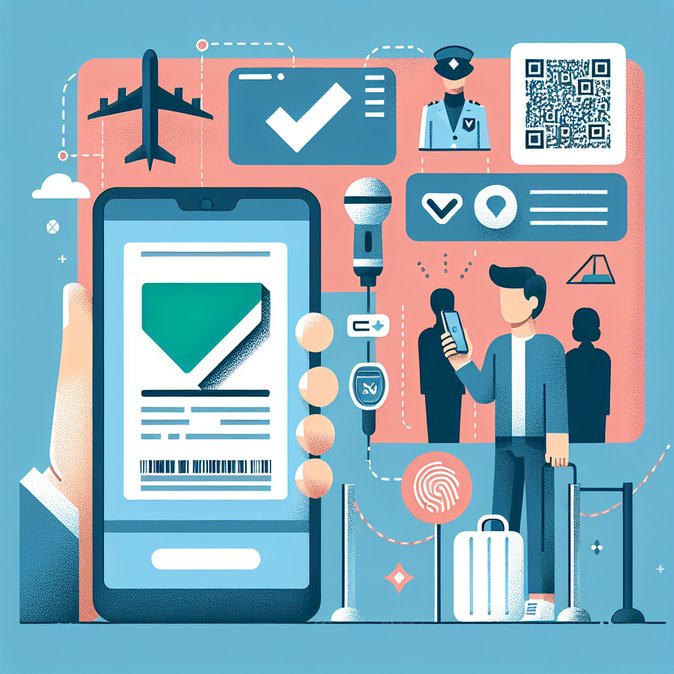
India has completed its transition to a paper-free border control system: every foreign passport holder—including Overseas Citizen of India (OCI) card-holders—must now fill out a digital e-Arrival Card online or on the Su-Swagatam mobile app no earlier than 72 hours before landing in the country. The electronic form, which became mandatory on 1 April 2026 after a six-month grace period, replaces the decades-old paper disembarkation card that airlines handed out on board . The measure, confirmed again in a U.S. Embassy notice on 8 April and highlighted in an Envoy Global client alert of 7 May, captures basic biographical data, travel history and a health self-declaration. Once submitted, the system generates a QR-coded receipt that travellers must download or screen-shot; immigration officers cannot always retrieve a lost code at the counter, which could mean long waits at a staffed kiosk . For corporate mobility managers the change is operational rather than substantive: no fee is charged and no supporting documents are required, but employees must be reminded to complete the form within the 72-hour window and to carry the QR code with their passport. Airlines have started adding the e-Arrival Card to their online check-in checklists and some travel-management companies have programmed automatic reminders for India-bound staff.
![India makes e-Arrival Card compulsory 72 hours before entry]()
For travellers who prefer extra assurance, VisaHQ’s India portal (https://www.visahq.com/india/) offers a one-stop resource that walks users through the new e-Arrival Card, sends deadline reminders and provides live support—services that can greatly reduce the administrative load on both individuals and corporate mobility teams.
Failure to comply is not grounds for refusal of entry, but it may trigger secondary inspection and delays that cascade into missed connections and duty-of-care concerns. Companies with high-volume travel to India are therefore updating their pre-trip workflows and advising travellers to store the QR code in multiple places (phone gallery, cloud drive and e-mail) to avoid connectivity issues on arrival. In parallel, the government is working on integrating the e-Arrival database with its Fast-Track Immigration biometric gates so that compliant passengers can benefit from the shorter “DigiYatra” lanes planned for late 2026.

For travellers who prefer extra assurance, VisaHQ’s India portal (https://www.visahq.com/india/) offers a one-stop resource that walks users through the new e-Arrival Card, sends deadline reminders and provides live support—services that can greatly reduce the administrative load on both individuals and corporate mobility teams.
Failure to comply is not grounds for refusal of entry, but it may trigger secondary inspection and delays that cascade into missed connections and duty-of-care concerns. Companies with high-volume travel to India are therefore updating their pre-trip workflows and advising travellers to store the QR code in multiple places (phone gallery, cloud drive and e-mail) to avoid connectivity issues on arrival. In parallel, the government is working on integrating the e-Arrival database with its Fast-Track Immigration biometric gates so that compliant passengers can benefit from the shorter “DigiYatra” lanes planned for late 2026.