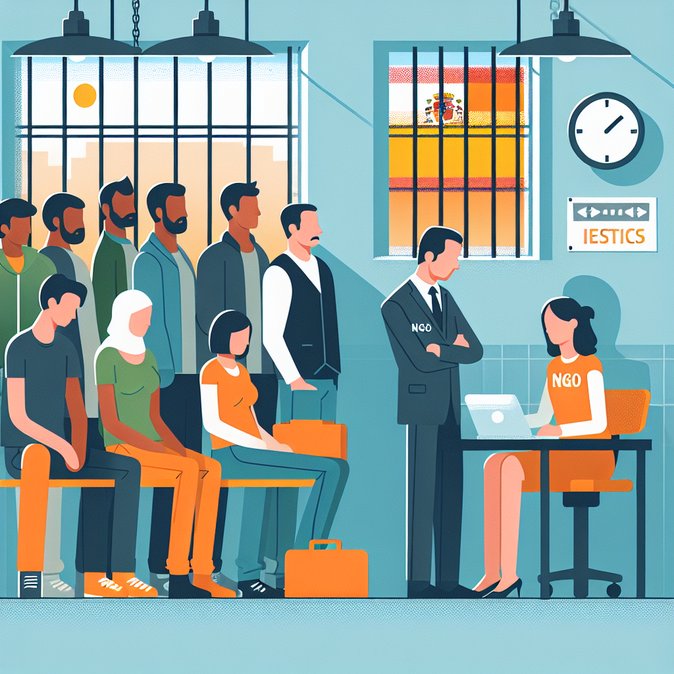
Less than three weeks after Spain opened its one-off extraordinary regularisation process, the Region of Murcia has become an early stress-test for the new system. Local migrant associations report a surge of phone calls and queues outside municipal social-services offices as thousands of applicants discover that the make-or-break document is not their police record from abroad but a locally issued “certificate of vulnerability.” Without it, the electronic application on the Ministry of Inclusion’s portal cannot be completed. Why the log-jam? According to the Federation of African Associations in Murcia (FAAM), appointments with social workers are booked weeks in advance. Cartagena has managed to group requests and clear backlog quickly, whereas smaller towns such as Las Torres de Cotillas still struggle to allocate staff.
![Spain’s extraordinary regularisation hits a bottleneck in Murcia as migrants scramble for the key “vulnerability” certificate]()
Travelers, employers and legal advisers who need broader support with Spanish immigration paperwork can also turn to VisaHQ. The platform centralises up-to-date visa requirements, offers document-preparation tools and provides live assistance for Spain and more than 200 other destinations, helping applicants sidestep many of the bureaucratic surprises now bogging down local offices. Details are available at https://www.visahq.com/spain/
Each municipality applies slightly different interpretations of the same ministerial guideline, creating geographic inequality for applicants who often depend on seasonal work and cannot easily travel. Time pressure is acute. Background-check documents and passports that many applicants obtained with the help of their embassies are valid for only 90 days. If the local certificate is delayed, those documents may expire, forcing migrants to restart the entire—and costly—paper chase. Senegal has even dispatched consular teams to Murcia to expedite passport renewals, illustrating the international ripple effects of Spain’s domestic policy. Grass-roots NGOs such as Cepaim and Convivir Sin Racismo have turned into de-facto project managers, coaching applicants on documentation, chasing city halls for extra appointment slots and translating bureaucratic jargon into plain language. Volunteers say they are “on call 24 hours” and warn against opportunistic intermediaries charging steep fees. Their message: start the file even if a piece is missing; updates can be uploaded later via the government portal. For employers and relocation teams the stakes are high. The regularisation could move thousands of informal workers—farm hands, care givers, delivery drivers—into the formal economy, easing chronic labour shortages and expanding the Social-Security base. But unless the early bottlenecks are fixed, businesses may still face a summer of uncertainty over the legal status of the workers they plan to hire.

Travelers, employers and legal advisers who need broader support with Spanish immigration paperwork can also turn to VisaHQ. The platform centralises up-to-date visa requirements, offers document-preparation tools and provides live assistance for Spain and more than 200 other destinations, helping applicants sidestep many of the bureaucratic surprises now bogging down local offices. Details are available at https://www.visahq.com/spain/
Each municipality applies slightly different interpretations of the same ministerial guideline, creating geographic inequality for applicants who often depend on seasonal work and cannot easily travel. Time pressure is acute. Background-check documents and passports that many applicants obtained with the help of their embassies are valid for only 90 days. If the local certificate is delayed, those documents may expire, forcing migrants to restart the entire—and costly—paper chase. Senegal has even dispatched consular teams to Murcia to expedite passport renewals, illustrating the international ripple effects of Spain’s domestic policy. Grass-roots NGOs such as Cepaim and Convivir Sin Racismo have turned into de-facto project managers, coaching applicants on documentation, chasing city halls for extra appointment slots and translating bureaucratic jargon into plain language. Volunteers say they are “on call 24 hours” and warn against opportunistic intermediaries charging steep fees. Their message: start the file even if a piece is missing; updates can be uploaded later via the government portal. For employers and relocation teams the stakes are high. The regularisation could move thousands of informal workers—farm hands, care givers, delivery drivers—into the formal economy, easing chronic labour shortages and expanding the Social-Security base. But unless the early bottlenecks are fixed, businesses may still face a summer of uncertainty over the legal status of the workers they plan to hire.