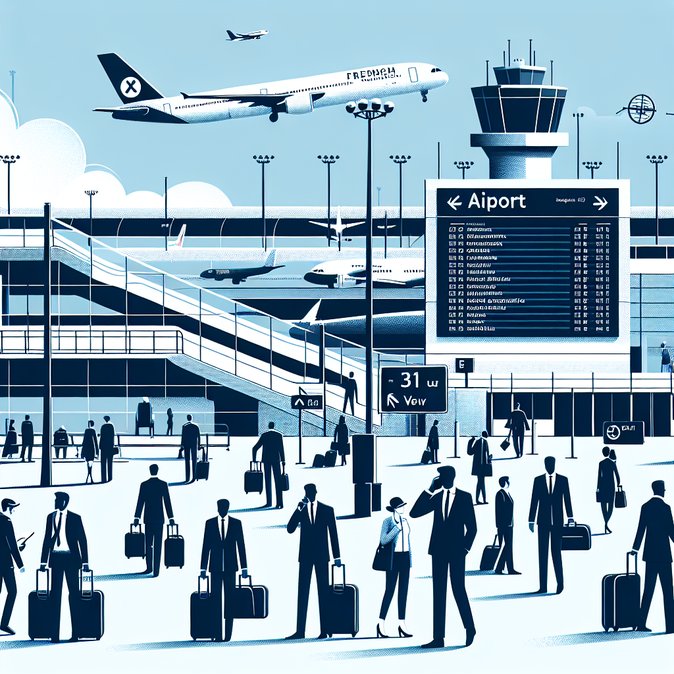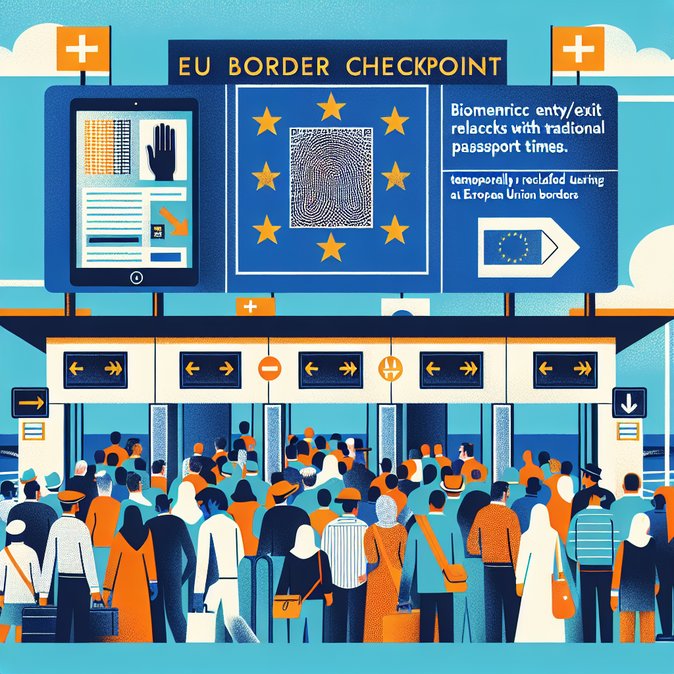
Long immigration-hall queues at Paris-Charles-de-Gaulle and Orly over the May-day weekend finally pushed Brussels to act. Late on 2 May the European Commission circulated a note allowing Schengen members to switch off the new Entry/Exit System (EES) kiosks when lines spill beyond agreed service-level thresholds. In practice that means border officers may revert to the old manual passport stamp during peak surges. France’s border-police union confirmed that the instruction was activated on the morning of 3 May, giving officers discretion to wave travellers through without taking fingerprints or a facial scan. The concession is an acknowledgement that the full EES go-live on 10 April has proved harder than labs tests suggested. EU statistics show 61 million third-country crossings have already been logged, but airlines report dozens of missed connections each day as biometrics kiosks choke the flow of transfer passengers. Air-France told corporate travel managers its minimum connection time at CDG will stay at 90 minutes “until biometric reliability improves.”
![EU lets Schengen states pause fingerprint checks; France’s airports first to use the loophole]()
Travellers and corporate mobility teams seeking practical help navigating these fast-moving entry rules can lean on VisaHQ’s specialists. The company’s France portal (https://www.visahq.com/france/) consolidates live guidance on EES waivers, Schengen-day calculations and the upcoming ETIAS authorisation, and can process visa or travel-authorisation requests when manual stamps or single-entry limits threaten to upend itineraries.
For mobility managers the main practical impact is uncertainty around Schengen-stay calculations. A manual stamp still records entry, yet the automated clock that subtracts days from a traveller’s 90/180 allowance is blind to unstamped exits until data are back-entered. Global mobility teams should warn assignees who hold single-entry Schengen visas that a new stamp could inadvertently use up their only permitted entry, jeopardising a return flight. Longer-term, the Commission insists the biometric obligation will return once airports add more kiosks and staff. It also reiterated the October 2026 launch of ETIAS, the electronic travel authorisation that will layer an additional pre-travel check for Brits, Americans and other visa-exempt visitors. Companies should therefore keep the extra 30-minute buffer in travel policies and begin budgeting for ETIAS fees now.

Travellers and corporate mobility teams seeking practical help navigating these fast-moving entry rules can lean on VisaHQ’s specialists. The company’s France portal (https://www.visahq.com/france/) consolidates live guidance on EES waivers, Schengen-day calculations and the upcoming ETIAS authorisation, and can process visa or travel-authorisation requests when manual stamps or single-entry limits threaten to upend itineraries.
For mobility managers the main practical impact is uncertainty around Schengen-stay calculations. A manual stamp still records entry, yet the automated clock that subtracts days from a traveller’s 90/180 allowance is blind to unstamped exits until data are back-entered. Global mobility teams should warn assignees who hold single-entry Schengen visas that a new stamp could inadvertently use up their only permitted entry, jeopardising a return flight. Longer-term, the Commission insists the biometric obligation will return once airports add more kiosks and staff. It also reiterated the October 2026 launch of ETIAS, the electronic travel authorisation that will layer an additional pre-travel check for Brits, Americans and other visa-exempt visitors. Companies should therefore keep the extra 30-minute buffer in travel policies and begin budgeting for ETIAS fees now.