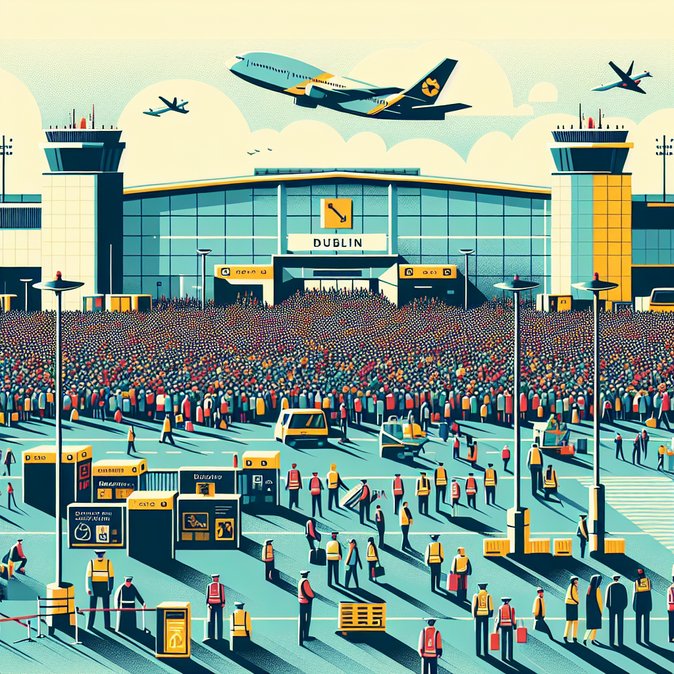
Ryanair has confirmed that it is removing nearly three million seats from its 2026 European network, with Ireland bearing a dispro-portionate share of the pain. According to schedules filed yesterday, the Dublin operation alone will lose about 4,500 flights—equivalent to up to 800,000 seats—while Cork and Belfast airports will see entire routes disappear. In Dublin, the carrier has frozen growth plans after the Government signalled it would maintain the 32-million-passenger cap at the airport for at least another summer. Instead of the previously announced 10 % expansion, capacity will now stay flat year-on-year. Cork loses its services to Rome, Gdańsk and Poznań following the relocation of one based aircraft to Shannon, while Belfast sees the end of its Kaunas link. The Dublin–Palanga (Lithuania) and Dublin–Rodez (France) routes are also being withdrawn. Management blames rising airport fees, aviation taxes and what it calls “artificial” capacity caps for eroding the economics of secondary city routes. Governments and airport authorities, however, argue that the airline is leveraging cancellations to secure more favourable commercial terms. Either way, the move will reverberate across Ireland’s tourism and export sectors: SME exporters that rely on low-cost belly-hold freight and face-to-face sales trips now have fewer options, and inbound leisure traffic from the affected European cities will likely fall. Corporate travel buyers should double-check summer itineraries: tickets issued before 27 April may no longer be valid, and Ryanair is offering free re-routing or refunds only for a limited window.
![Ryanair axes almost 800,000 seats from Dublin schedule as part of continent-wide cuts]()
For travellers scrambling to rebook via alternative gateways, ensuring the right travel documents are in place is crucial—especially if new routings involve extra transit points outside the Common Travel Area. VisaHQ’s Ireland portal (https://www.visahq.com/ireland/) can instantly check whether you need a transit visa or full entry clearance and can expedite the paperwork online, giving corporate travel teams and holiday-makers one less headache while schedules remain in flux.
Duty-of-care teams are urged to audit any traveller itineraries that rely on connection banks in Dublin, Cork or Belfast, as missed onward flights could trigger cascading hotel and re-booking costs. Competitors Aer Lingus and easyJet have not yet announced replacement capacity, though analysts expect opportunistic frequency boosts on high-yield city-pairs such as Dublin–Berlin. Long-term, the dispute reopens the debate about national aviation strategy. Industry groups say the cuts demonstrate why the State must move quickly on the proposed third terminal at Dublin and provide regulatory certainty on passenger caps, or risk losing connectivity to larger European hubs. Multinational firms with Irish HQs—especially in tech and pharma—will be watching closely, as air-link density is a key factor in investment decisions.

For travellers scrambling to rebook via alternative gateways, ensuring the right travel documents are in place is crucial—especially if new routings involve extra transit points outside the Common Travel Area. VisaHQ’s Ireland portal (https://www.visahq.com/ireland/) can instantly check whether you need a transit visa or full entry clearance and can expedite the paperwork online, giving corporate travel teams and holiday-makers one less headache while schedules remain in flux.
Duty-of-care teams are urged to audit any traveller itineraries that rely on connection banks in Dublin, Cork or Belfast, as missed onward flights could trigger cascading hotel and re-booking costs. Competitors Aer Lingus and easyJet have not yet announced replacement capacity, though analysts expect opportunistic frequency boosts on high-yield city-pairs such as Dublin–Berlin. Long-term, the dispute reopens the debate about national aviation strategy. Industry groups say the cuts demonstrate why the State must move quickly on the proposed third terminal at Dublin and provide regulatory certainty on passenger caps, or risk losing connectivity to larger European hubs. Multinational firms with Irish HQs—especially in tech and pharma—will be watching closely, as air-link density is a key factor in investment decisions.