The UK Government has announced a major shift in the way the Afghan Resettlement Programme (ARP) will operate in its final years. In a written statement laid before Parliament on 28 April 2026, Defence Minister Luke Pollard confirmed that fewer than 9,000 eligible Afghans still need to be moved to Britain and that all outstanding eligibility decisions should be completed by spring 2027. Applications to the ARP have been closed since July 2025, and the caseload has already fallen from 25,000 to 17,000 in that period.
![Government sets December 2028 back-stop as Afghan Resettlement Programme enters wind-down phase]()
For Afghans now required to navigate the UK visa process without government-funded assistance, services like VisaHQ can provide invaluable practical help. The company offers clear, up-to-date guidance on visa categories, document preparation and Visa Application Centre appointment booking—all via an easy online portal (https://www.visahq.com/united-kingdom/). Leveraging this kind of support can streamline applications and reduce the risk of last-minute travel snags as the ARP transitions to a self-funded model.
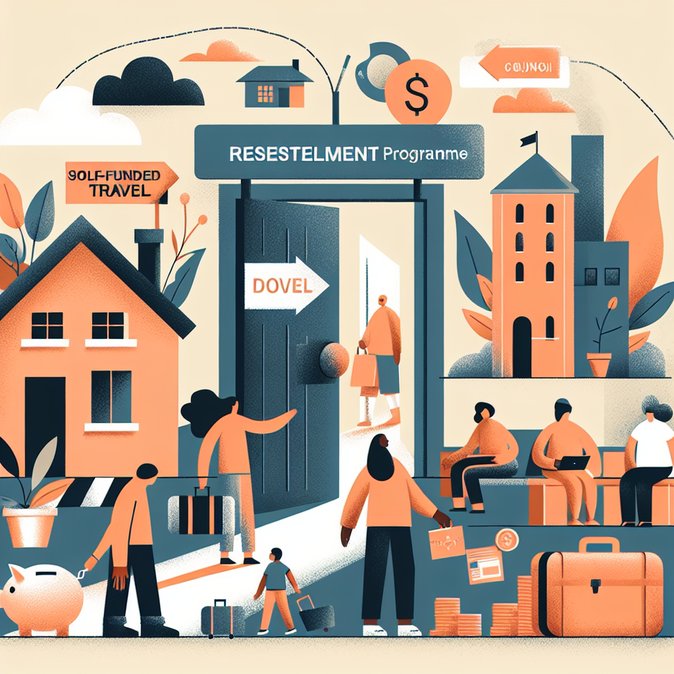
The most immediate change is the withdrawal of Home-Office-funded “in-country assistance” that previously helped eligible Afghans travel from Afghanistan to a UK visa application centre (VAC) in a third country. From now on, applicants will have to self-fund and self-organise that journey—bringing the ARP into line with other UK resettlement schemes such as the Afghan Citizens Resettlement Scheme (ACRS). Pollard said evidence from recent months shows “increased successful self-moves”, and the Government believes taxpayer-funded escorts are no longer justified. A strict timeline has been set. Eligible individuals must attend a VAC within 12 months of being asked, and a hard back-stop of December 2028 has been introduced for all relocations and transitional support. The Ministry of Defence will also end large-scale use of hotels and Defence Estate accommodation, shifting housing responsibilities to local authorities under a new pilot designed to give councils more flexibility over placements. For businesses and local authorities involved in sponsorship or housing, the announcement brings critical clarity on budgets, staffing and property planning. HR teams should note that the pipeline of arrivals will slow but will not cease entirely until 2028, meaning integration support—from English-language tuition to employment pathways—will remain necessary for several more years. Companies looking to recruit from the skilled Afghan cohort may find candidates arriving with shorter notice as self-organised travel speeds up the process. Finally, the Government’s decision to publish quarterly Key Performance Indicators and to reduce the use of costly hotels responds to long-standing criticism from both Parliament’s Public Accounts Committee and local councils about transparency and value for money. Stakeholders should monitor those KPIs carefully: failure to hit processing targets could still force policy adjustments or additional funding rounds before the programme finally closes.

For Afghans now required to navigate the UK visa process without government-funded assistance, services like VisaHQ can provide invaluable practical help. The company offers clear, up-to-date guidance on visa categories, document preparation and Visa Application Centre appointment booking—all via an easy online portal (https://www.visahq.com/united-kingdom/). Leveraging this kind of support can streamline applications and reduce the risk of last-minute travel snags as the ARP transitions to a self-funded model.
The most immediate change is the withdrawal of Home-Office-funded “in-country assistance” that previously helped eligible Afghans travel from Afghanistan to a UK visa application centre (VAC) in a third country. From now on, applicants will have to self-fund and self-organise that journey—bringing the ARP into line with other UK resettlement schemes such as the Afghan Citizens Resettlement Scheme (ACRS). Pollard said evidence from recent months shows “increased successful self-moves”, and the Government believes taxpayer-funded escorts are no longer justified. A strict timeline has been set. Eligible individuals must attend a VAC within 12 months of being asked, and a hard back-stop of December 2028 has been introduced for all relocations and transitional support. The Ministry of Defence will also end large-scale use of hotels and Defence Estate accommodation, shifting housing responsibilities to local authorities under a new pilot designed to give councils more flexibility over placements. For businesses and local authorities involved in sponsorship or housing, the announcement brings critical clarity on budgets, staffing and property planning. HR teams should note that the pipeline of arrivals will slow but will not cease entirely until 2028, meaning integration support—from English-language tuition to employment pathways—will remain necessary for several more years. Companies looking to recruit from the skilled Afghan cohort may find candidates arriving with shorter notice as self-organised travel speeds up the process. Finally, the Government’s decision to publish quarterly Key Performance Indicators and to reduce the use of costly hotels responds to long-standing criticism from both Parliament’s Public Accounts Committee and local councils about transparency and value for money. Stakeholders should monitor those KPIs carefully: failure to hit processing targets could still force policy adjustments or additional funding rounds before the programme finally closes.
More From United Kingdom
View all
France begins at-sea interceptions of Channel migrant boats after new £662 million UK-funded deal

Immigration Advice Authority issues April newsletter with new guidance on EU Settlement Scheme and adviser regulation