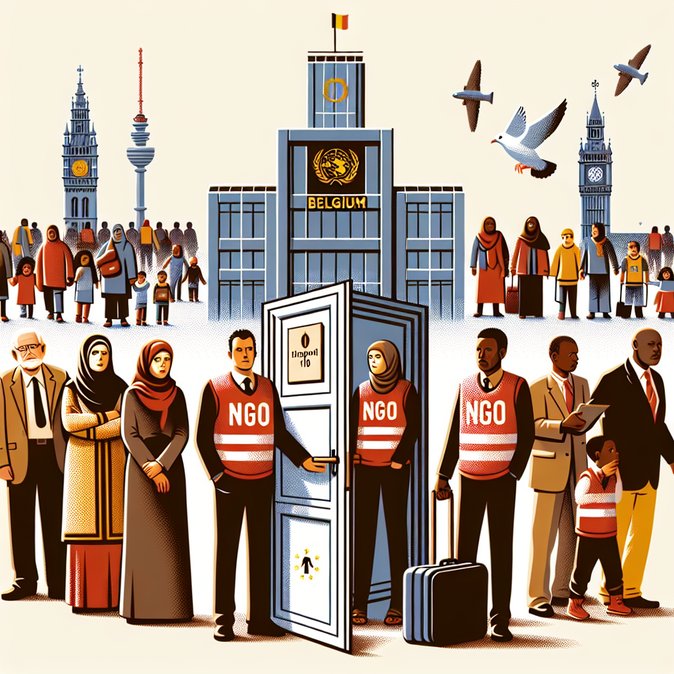
Seven humanitarian organisations—including Médecins Sans Frontières, Doctors of the World and Caritas International—issued a joint report on 23 April accusing Belgium of systematically denying shelter, food and medical care to asylum seekers. The groups say 62 percent of single men and 75 percent of families were refused accommodation in the second half of 2025, trends that have continued into 2026 despite multiple court rulings ordering the state to improve reception capacity.
![NGOs warn Belgium is ‘deliberately violating’ asylum-reception obligations]()
Amid these mounting logistical and legal hurdles, individuals and employers who must still secure the correct Belgian visas or residence permits can streamline the process through VisaHQ’s digital platform. The company offers clear checklists, document-review services and fast submission channels for a wide range of Belgian visa categories, ensuring applications stay on track even while the country’s reception system is under pressure. Find out more at https://www.visahq.com/belgium/
The NGOs cite shrinking Fedasil reception places—down to roughly 30 000 from 34 500 a year ago—plus funding cuts that led Brussels’ Humanitarian Hub to halve medical consultations. They allege the government is relying on emergency tents and informal volunteer networks rather than expanding structural capacity. The report raises reputational and compliance risks for employers hosting refugees under Belgium’s labour-market integration schemes. Without stable housing and healthcare, many eligible candidates cannot obtain municipal registration, bank accounts or social-security numbers—blocking work-permit issuance and payroll access. Firms participating in Talent Beyond Borders and similar programmes may need to provide temporary lodging or partner with NGOs until reception standards improve. Politically, the criticism sharpens pressure on Migration Minister Anneleen Van Bossuyt, already facing parliamentary scrutiny over other asylum reforms. Observers note that Belgium will assume the rotating EU Council presidency in January 2027, making domestic adherence to EU asylum standards a diplomatic priority. The NGOs recommend a national redistribution mechanism and emergency funding to reopen mothballed Fedasil centres. They also call for an immediate moratorium on the August 2025 law that ended reception for people granted protection in another EU state, arguing that it violates international obligations.

Amid these mounting logistical and legal hurdles, individuals and employers who must still secure the correct Belgian visas or residence permits can streamline the process through VisaHQ’s digital platform. The company offers clear checklists, document-review services and fast submission channels for a wide range of Belgian visa categories, ensuring applications stay on track even while the country’s reception system is under pressure. Find out more at https://www.visahq.com/belgium/
The NGOs cite shrinking Fedasil reception places—down to roughly 30 000 from 34 500 a year ago—plus funding cuts that led Brussels’ Humanitarian Hub to halve medical consultations. They allege the government is relying on emergency tents and informal volunteer networks rather than expanding structural capacity. The report raises reputational and compliance risks for employers hosting refugees under Belgium’s labour-market integration schemes. Without stable housing and healthcare, many eligible candidates cannot obtain municipal registration, bank accounts or social-security numbers—blocking work-permit issuance and payroll access. Firms participating in Talent Beyond Borders and similar programmes may need to provide temporary lodging or partner with NGOs until reception standards improve. Politically, the criticism sharpens pressure on Migration Minister Anneleen Van Bossuyt, already facing parliamentary scrutiny over other asylum reforms. Observers note that Belgium will assume the rotating EU Council presidency in January 2027, making domestic adherence to EU asylum standards a diplomatic priority. The NGOs recommend a national redistribution mechanism and emergency funding to reopen mothballed Fedasil centres. They also call for an immediate moratorium on the August 2025 law that ended reception for people granted protection in another EU state, arguing that it violates international obligations.