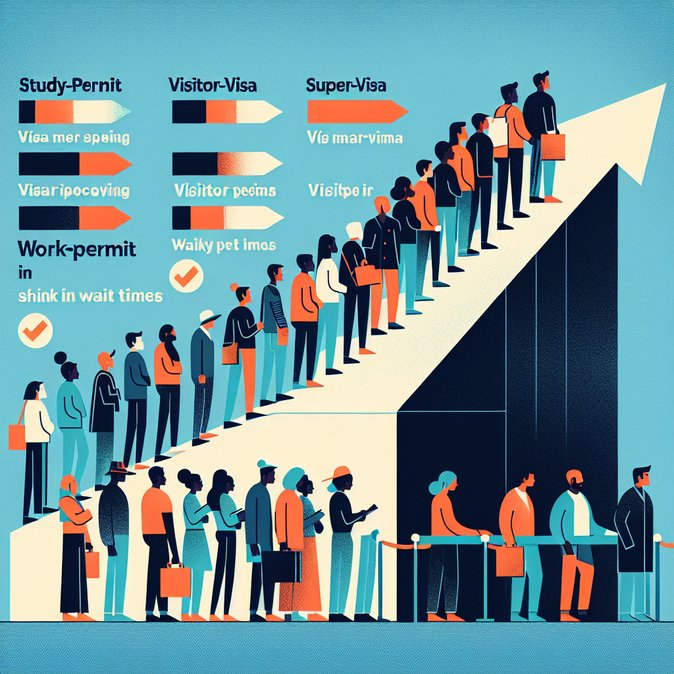
Indian students eyeing a place in Canadian classrooms this September just received an unexpected gift from Immigration, Refugees and Citizenship Canada (IRCC). In its weekly processing-time update published April 15 and reported on April 22, IRCC shows that 80 percent of study-permit applications lodged from India are now finalized in three weeks—down from four weeks a month ago and from the 8-to-12-week norm that prevailed for much of 2025. The tighter timeline comes as Ottawa tries to balance domestic pressure to cap international enrolments with mounting concern from colleges and universities that high-value master’s and PhD candidates may choose other destinations. While the improved speed does not change the overall intake cap of 408,000 study permits for 2026, it offers well-prepared applicants a narrow but valuable window to secure approvals in time for the Fall semester.
![Canada Cuts Study Permit Wait to 3 Weeks for Indian Applicants]()
Students and institutions looking to navigate these shifting requirements can streamline their paperwork through VisaHQ, which offers step-by-step guidance on Canadian study permits and other visas. Its online platform (https://www.visahq.com/canada/) allows applicants to track documents, schedule biometrics and receive real-time updates, reducing the risk of delays caused by incomplete submissions.
Faster processing, however, is not uniform across all categories. IRCC data show Indian visitor-visa wait times falling from 37 to 23 days and super-visa waits easing by 20 days, yet employer-specific work-permit times have lengthened to eight weeks. Analysts attribute the divergent trend to back-office triage that shifts resources toward student files—an area under intense political scrutiny—while lower-volume work-permit streams absorb the slack. For universities and pathway providers the message is clear: encourage admitted Indian students to apply now, ensure Provincial Attestation Letters (PAL/TAL) are in hand, and double-check that proof-of-funds meets the new CAD 22,895 living-expense threshold. IRCC warns that published times are benchmarks, not guarantees; complex cases, missing biometrics or additional background screening can still push files well past the three-week mark. Business implications extend beyond education. The Fall intake drives demand for housing, retail and air capacity. A quicker visa turnaround compresses booking windows, forcing airlines and landlords to forecast demand more dynamically. Conversely, any sudden reversal in processing speed could strand hundreds of students and dent provincial tuition revenues. For now, though, the three-week figure signals that Canada remains competitive in the global race for talent—even as it tightens overall numbers.

Students and institutions looking to navigate these shifting requirements can streamline their paperwork through VisaHQ, which offers step-by-step guidance on Canadian study permits and other visas. Its online platform (https://www.visahq.com/canada/) allows applicants to track documents, schedule biometrics and receive real-time updates, reducing the risk of delays caused by incomplete submissions.
Faster processing, however, is not uniform across all categories. IRCC data show Indian visitor-visa wait times falling from 37 to 23 days and super-visa waits easing by 20 days, yet employer-specific work-permit times have lengthened to eight weeks. Analysts attribute the divergent trend to back-office triage that shifts resources toward student files—an area under intense political scrutiny—while lower-volume work-permit streams absorb the slack. For universities and pathway providers the message is clear: encourage admitted Indian students to apply now, ensure Provincial Attestation Letters (PAL/TAL) are in hand, and double-check that proof-of-funds meets the new CAD 22,895 living-expense threshold. IRCC warns that published times are benchmarks, not guarantees; complex cases, missing biometrics or additional background screening can still push files well past the three-week mark. Business implications extend beyond education. The Fall intake drives demand for housing, retail and air capacity. A quicker visa turnaround compresses booking windows, forcing airlines and landlords to forecast demand more dynamically. Conversely, any sudden reversal in processing speed could strand hundreds of students and dent provincial tuition revenues. For now, though, the three-week figure signals that Canada remains competitive in the global race for talent—even as it tightens overall numbers.