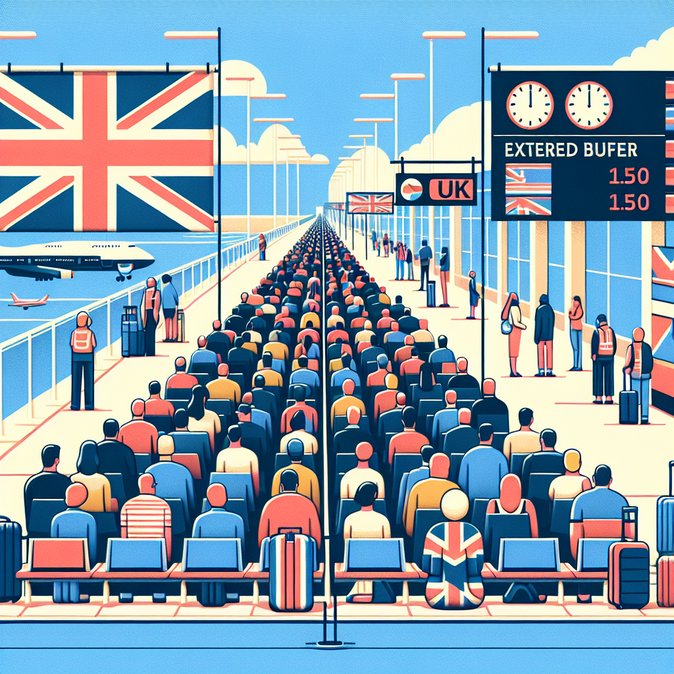
Barely a week after the European Union switched on its continent-wide biometric Entry-Exit System (EES), airlines and airport operators are warning of severe bottlenecks for non-EU passengers—including millions of UK citizens. A Guardian investigation published on 15 April reports waits of up to three hours at airports such as Madrid-Barajas, Berlin Brandenburg and Lisbon Humberto Delgado as border guards grapple with fingerprint scanners and facial-recognition kiosks that became mandatory on 10 April. Under EES, passport stamping has been abolished for third-country nationals; instead, travellers must submit four fingerprints and a live photo the first time they enter the Schengen Area after the go-live date. The data are stored for three years, but officials admit the enrolment process is taking far longer than the 90 seconds originally modelled. Queues have been exacerbated by the Easter school-holiday peak and by teething troubles integrating national police databases with the new central repository managed by eu-LISA. For UK holiday-makers and business travellers, the delays threaten tight connections to onward flights and rail services. Eurostar says it has not yet activated EES at London St Pancras because French officials have not finished installing compliant kiosks on the UK side of the border; coach and ferry operators report similar postponements at Dover and Folkestone. While that respite avoids immediate disruption on Channel routes, experts warn the backlog will hit once Britain-based kiosks go live later in the summer, compressing the learning curve into peak season. Travel-management companies (TMCs) are urging corporates to build minimum two-hour buffers into European itineraries until enrolment rates improve.
![EU Entry-Exit System Blamed for Three-Hour Queues as British Travellers Face Post-Easter Chaos]()
For anyone needing practical assistance amidst these changes, VisaHQ’s United Kingdom platform (https://www.visahq.com/united-kingdom/) provides real-time advice on Schengen entry rules, biometric enrolment and future ETIAS requirements, helping individual travellers and mobility managers cut paperwork and avoid unnecessary hold-ups.
Frequent travellers can speed future crossings by completing biometric capture at the first opportunity, but must travel on the same passport thereafter; renewing a passport resets the record. Mobility and HR teams should also begin budgeting for the €20 European Travel Information and Authorisation System (ETIAS) fee due in late 2026, as the two programmes are designed to work in tandem. In the medium term, the European Commission claims EES will shorten queues by automating ‘white-list’ checks for regular visitors, yet governments concede full optimisation could take nine months. Until then, British companies with time-sensitive operations in mainland Europe—such as consulting, engineering maintenance and film production—should consider routing staff via regional airports where volumes are lower and staffing levels more flexible.

For anyone needing practical assistance amidst these changes, VisaHQ’s United Kingdom platform (https://www.visahq.com/united-kingdom/) provides real-time advice on Schengen entry rules, biometric enrolment and future ETIAS requirements, helping individual travellers and mobility managers cut paperwork and avoid unnecessary hold-ups.
Frequent travellers can speed future crossings by completing biometric capture at the first opportunity, but must travel on the same passport thereafter; renewing a passport resets the record. Mobility and HR teams should also begin budgeting for the €20 European Travel Information and Authorisation System (ETIAS) fee due in late 2026, as the two programmes are designed to work in tandem. In the medium term, the European Commission claims EES will shorten queues by automating ‘white-list’ checks for regular visitors, yet governments concede full optimisation could take nine months. Until then, British companies with time-sensitive operations in mainland Europe—such as consulting, engineering maintenance and film production—should consider routing staff via regional airports where volumes are lower and staffing levels more flexible.