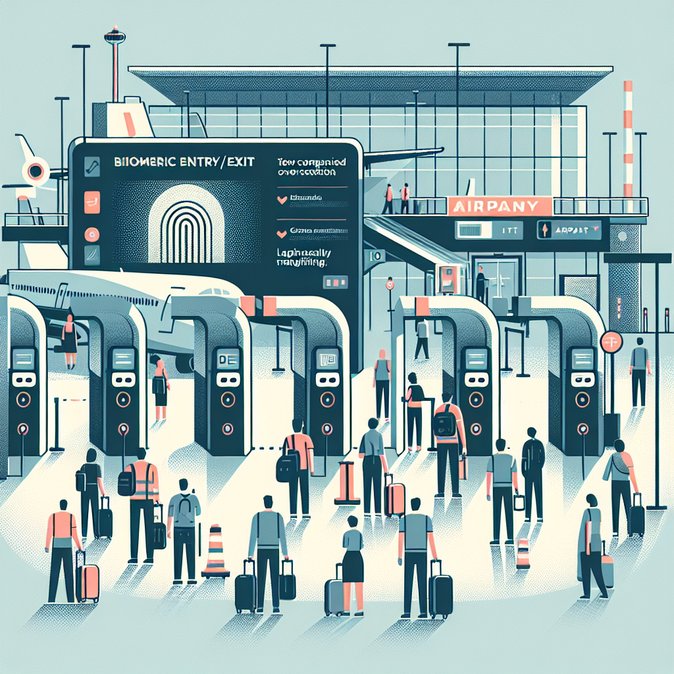
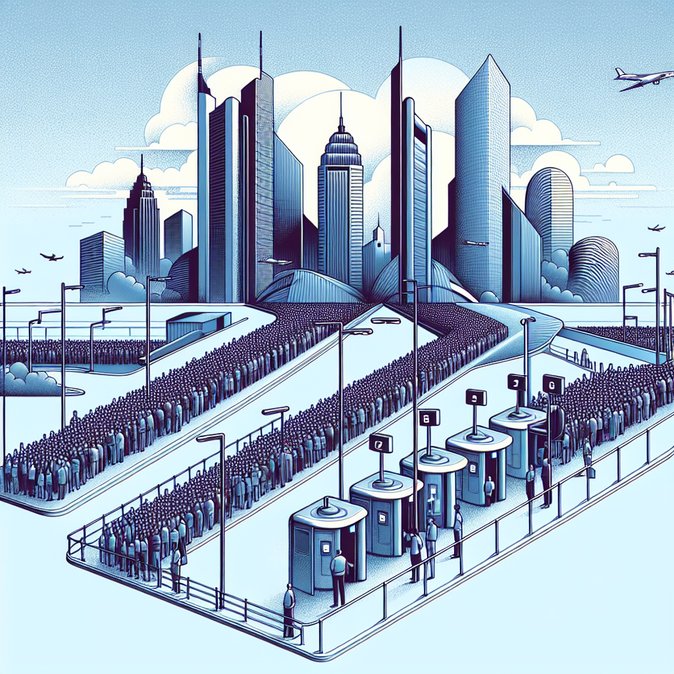
The European Union’s long-delayed Entry/Exit System (EES) switched from pilot to full operation on 10 April 2026, digitising passport stamps for all non-EU travellers. By the first weekend, Frankfurt, Munich and Berlin reported queues of up to three hours as passengers were funnelled to biometric kiosks to give fingerprints and facial scans before proceeding to passport control. Airlines estimate up to 8 % of travellers missed onward connections on 12–13 April. German Federal Police (Bundespolizei) say throughput is improving as extra officers are redeployed, yet admit the system flagged 4,200 “data mismatches” at Frankfurt alone, requiring manual secondary screening. Aviation group ADV warns of a “summer capacity crunch” unless more kiosks are installed and recommends travellers arrive at least four hours before departure.
![EU Entry/Exit System Goes Live—Three-Hour Queues Reported at German Airports]()
For those grappling with the new EES reality, VisaHQ can smooth the process: its dedicated Germany page (https://www.visahq.com/germany/) lets travellers and HR teams pre-screen passport validity, keep tabs on Schengen day balances and line up ETIAS approvals the moment they become available, while experts handle any biometric or documentation snags in the background.
Business-class fast-track lanes currently bypass the kiosks but will be integrated by June. For employers relocating staff to Germany, the biggest change is automated counting of Schengen stays: the system denies entry once the 90/180-day rule is exceeded. HR teams must track consultants who rotate through EU projects to avoid accidental overstays that could trigger re-entry bans. Carriers also face €2,000 fines per passenger if they board travellers whose biometric enrolment fails. The EES is a prerequisite for the ETIAS travel authorisation, now slated for November 2026. Travel-management companies urge clients to collect staff biometric proofs on first entry and to brief frequent flyers on longer connection times. Despite teething problems, officials insist the system will cut fraud and ultimately speed flows once databases are fully populated. Industry associations are lobbying Berlin for tax incentives to accelerate airport hardware upgrades. Without them, Germany risks losing transfer traffic to hubs such as Istanbul and Doha that already offer seamless biometric journeys.
For those grappling with the new EES reality, VisaHQ can smooth the process: its dedicated Germany page (https://www.visahq.com/germany/) lets travellers and HR teams pre-screen passport validity, keep tabs on Schengen day balances and line up ETIAS approvals the moment they become available, while experts handle any biometric or documentation snags in the background.
Business-class fast-track lanes currently bypass the kiosks but will be integrated by June. For employers relocating staff to Germany, the biggest change is automated counting of Schengen stays: the system denies entry once the 90/180-day rule is exceeded. HR teams must track consultants who rotate through EU projects to avoid accidental overstays that could trigger re-entry bans. Carriers also face €2,000 fines per passenger if they board travellers whose biometric enrolment fails. The EES is a prerequisite for the ETIAS travel authorisation, now slated for November 2026. Travel-management companies urge clients to collect staff biometric proofs on first entry and to brief frequent flyers on longer connection times. Despite teething problems, officials insist the system will cut fraud and ultimately speed flows once databases are fully populated. Industry associations are lobbying Berlin for tax incentives to accelerate airport hardware upgrades. Without them, Germany risks losing transfer traffic to hubs such as Istanbul and Doha that already offer seamless biometric journeys.