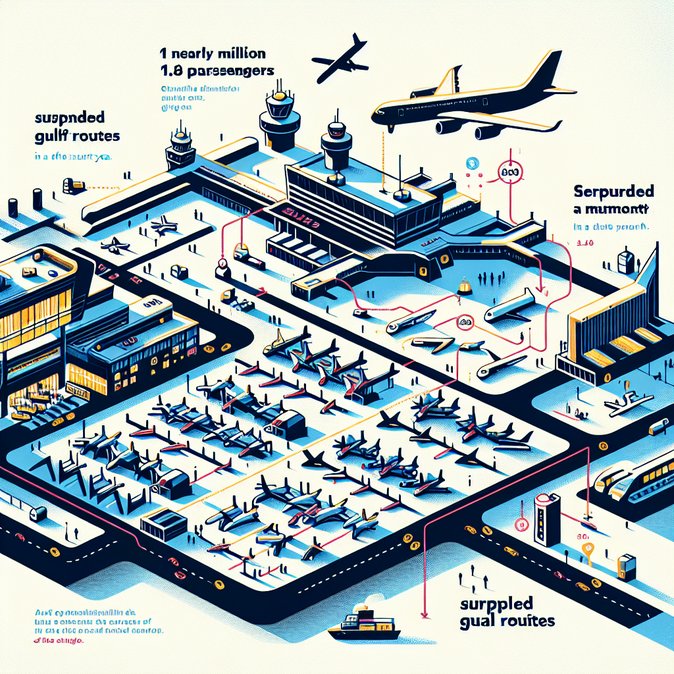
Airlines for Europe (A4E) – representing carriers such as Brussels Airlines, Lufthansa and Air France-KLM – has written to the European Commission urging immediate intervention to avert a looming aviation fuel shortage triggered by the widening Middle-East conflict and the closure of the Strait of Hormuz. The letter, seen by Voice of Emirates, calls for centrally coordinated fuel allocation, suspension of the EU Emissions Trading Scheme for aviation and temporary relief from national ticket taxes. EASA has already extended flight bans over parts of Gulf airspace until at least 24 April, forcing carriers to operate longer routings that burn more fuel. ACI Europe warns strategic jet-fuel reserves could be depleted within three weeks if the strait remains blocked. Airlines fear the combination of costlier detours and constrained supply will lead to widespread cancellations, especially on long-haul sectors. The Commission is preparing a crisis package for 22 April, but has not committed to the airlines’ requests. For Belgian corporates, the development threatens further volatility on key Asia-Pacific and African routes that rely on Middle-East refuelling stops. Travel buyers should review hedging arrangements and consider alternative routings via Istanbul or Addis Ababa, which are currently outside the restricted zone.
![European airlines ask Brussels for emergency measures as Gulf conflict threatens jet-fuel supply]()
Travel managers weighing those alternative routings may suddenly face new transit or short-stay visa requirements. VisaHQ’s Belgium platform (https://www.visahq.com/belgium/) can quickly verify entry rules for multiple countries and arrange any necessary paperwork, ensuring employees stay compliant even as flight paths shift at short notice.
Should fuel shortages materialise, priority distribution could favour medical and repatriation flights, meaning discretionary business travel would face curbs or higher prices.
Travel managers weighing those alternative routings may suddenly face new transit or short-stay visa requirements. VisaHQ’s Belgium platform (https://www.visahq.com/belgium/) can quickly verify entry rules for multiple countries and arrange any necessary paperwork, ensuring employees stay compliant even as flight paths shift at short notice.
Should fuel shortages materialise, priority distribution could favour medical and repatriation flights, meaning discretionary business travel would face curbs or higher prices.