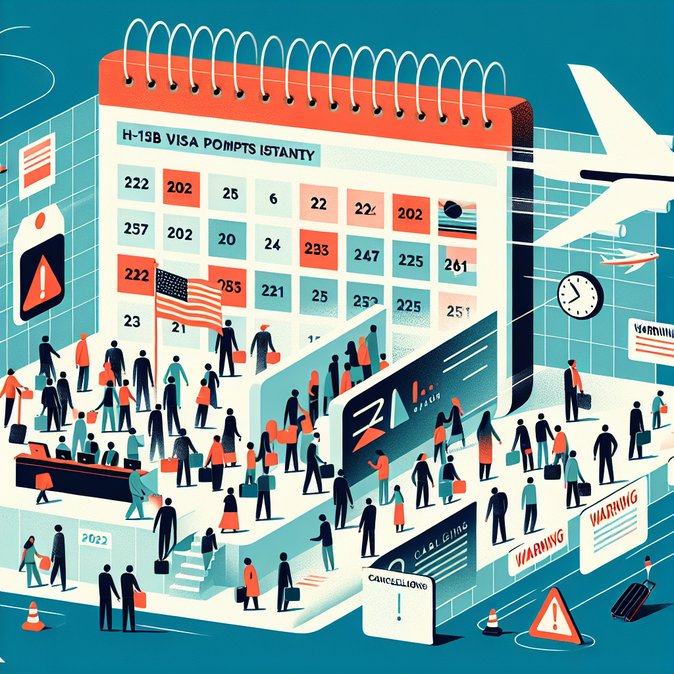
Indian US-visa consulates released a surprise batch of H-1B appointment slots in the early hours of 12 April, but immigration trackers say most dates lie deep into late-2025 and disappear within minutes—especially at Hyderabad. Specialist blog Meyka reports that while the drops are a welcome sign of movement, US-based H-1B workers risk being stranded if they travel for stamping now. Immigration attorneys cite three hazards: sudden cancellation of booked slots, extended administrative processing triggered by profile mismatches, and potential petition revocation during travel.
![Consulate slot drops spark fresh H-1B travel warning for India-based visa applicants]()
Amid all this volatility, VisaHQ offers a practical safety net. Through its India portal (https://www.visahq.com/india/) applicants can access real-time consular alerts, smart document checklists, and an optional concierge that watches for slot openings and submits paperwork the moment a window appears—helping busy professionals avoid frantic 2 a.m. refresh sessions.
Given the live West-Asia security crisis, any return via Gulf hubs also carries reroute risk. Employers are therefore advising staff in the US to defer non-essential trips and instead file extensions in-country. For offshore development centres in India the intermittent slot releases are at least allowing new hires to join on-site projects later in the year, but HR managers must budget for unpredictable travel windows and higher premium-processing fees. Vendors servicing US clients are modelling delivery slippage in Q2–Q3 as onshore rotations remain tight. Practical guidance from consultants includes snapshot-booking (grabbing any available date, then advancing later), maintaining six-month passport validity buffers, and preparing duplicate DS-160s in case of portal errors. Applicants are also reminded that biometrics can be scheduled at any VAC in India, even if the interview city differs, a flexibility that can shave days off total travel time.

Amid all this volatility, VisaHQ offers a practical safety net. Through its India portal (https://www.visahq.com/india/) applicants can access real-time consular alerts, smart document checklists, and an optional concierge that watches for slot openings and submits paperwork the moment a window appears—helping busy professionals avoid frantic 2 a.m. refresh sessions.
Given the live West-Asia security crisis, any return via Gulf hubs also carries reroute risk. Employers are therefore advising staff in the US to defer non-essential trips and instead file extensions in-country. For offshore development centres in India the intermittent slot releases are at least allowing new hires to join on-site projects later in the year, but HR managers must budget for unpredictable travel windows and higher premium-processing fees. Vendors servicing US clients are modelling delivery slippage in Q2–Q3 as onshore rotations remain tight. Practical guidance from consultants includes snapshot-booking (grabbing any available date, then advancing later), maintaining six-month passport validity buffers, and preparing duplicate DS-160s in case of portal errors. Applicants are also reminded that biometrics can be scheduled at any VAC in India, even if the interview city differs, a flexibility that can shave days off total travel time.