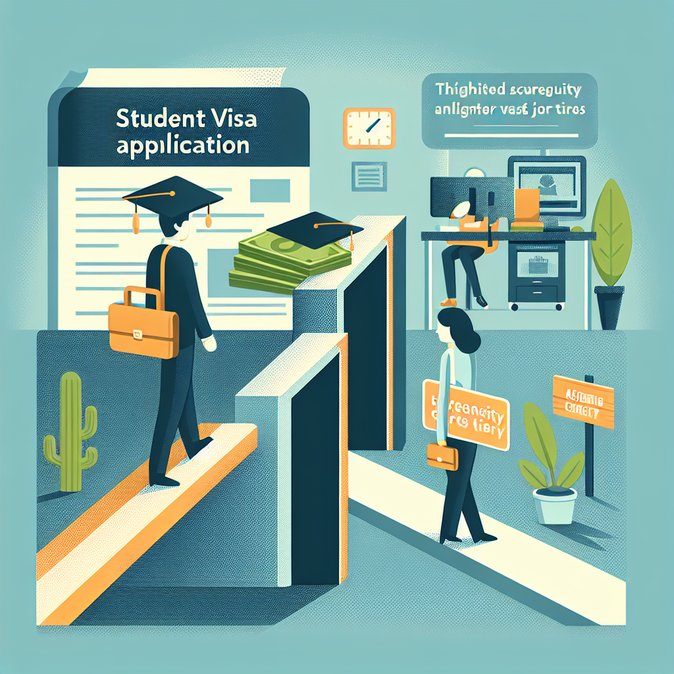
The governing Labor Party has outlined a pre-election fiscal platform that would hike the base international-student visa fee from the current A$1,600 to A$2,000, raising an estimated A$760 million over four years. Treasurer Jim Chalmers framed the move, announced 12 April, as a way to “prize the value of studying in Australia” while helping to tame record net-migration inflows and housing pressure. If re-elected, Labor would also cap new international commencements at 270,000 in 2025. The conservative Coalition has gone further, proposing fees of up to A$5,000 for applicants to Group of Eight universities and a lower cap of 240,000 student arrivals. Australia already has the highest upfront student-visa costs among the major English-speaking destinations.
![Labor floats A$2,000 student-visa fee as election looms]()
Amid this shifting fee landscape, students and HR teams can turn to VisaHQ’s Australian portal (https://www.visahq.com/australia/) for real-time cost breakdowns, document checklists, and expert guidance, helping applicants stay compliant and budget accurately despite policy volatility.
Education peak bodies warn that another jump could erode price competitiveness, especially when paired with recent fee increases for post-study work rights and tougher financial-capacity rules. For corporate sponsors, higher visa charges may dampen demand among overseas employees seeking Australian postgraduate qualifications and could inflate salary-packaging expectations for dependants. Institutions reliant on price-sensitive markets – notably South-Asia and Sub-Saharan Africa – may accelerate scholarship offers or articulation agreements to cushion the blow. Mobility planners should model budgets on the assumption that both major parties will keep ratcheting up application fees and may introduce differential pricing by provider tier or course type.

Amid this shifting fee landscape, students and HR teams can turn to VisaHQ’s Australian portal (https://www.visahq.com/australia/) for real-time cost breakdowns, document checklists, and expert guidance, helping applicants stay compliant and budget accurately despite policy volatility.
Education peak bodies warn that another jump could erode price competitiveness, especially when paired with recent fee increases for post-study work rights and tougher financial-capacity rules. For corporate sponsors, higher visa charges may dampen demand among overseas employees seeking Australian postgraduate qualifications and could inflate salary-packaging expectations for dependants. Institutions reliant on price-sensitive markets – notably South-Asia and Sub-Saharan Africa – may accelerate scholarship offers or articulation agreements to cushion the blow. Mobility planners should model budgets on the assumption that both major parties will keep ratcheting up application fees and may introduce differential pricing by provider tier or course type.