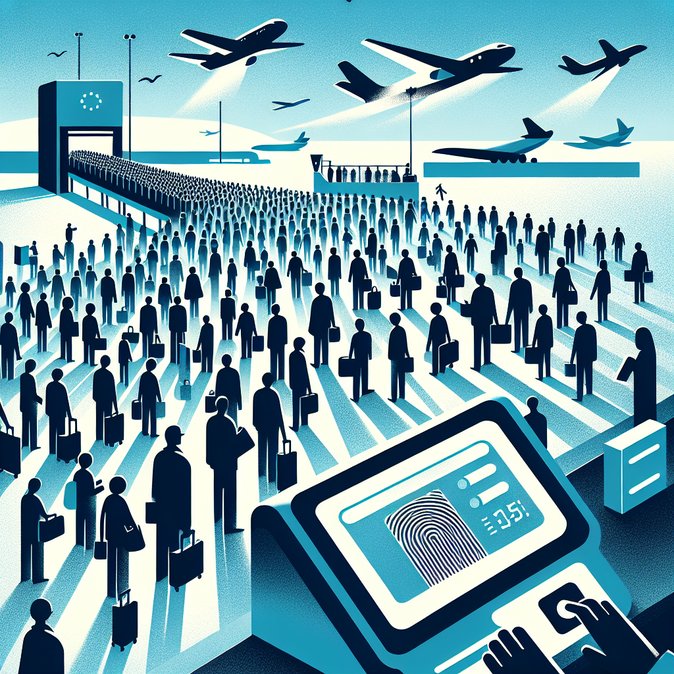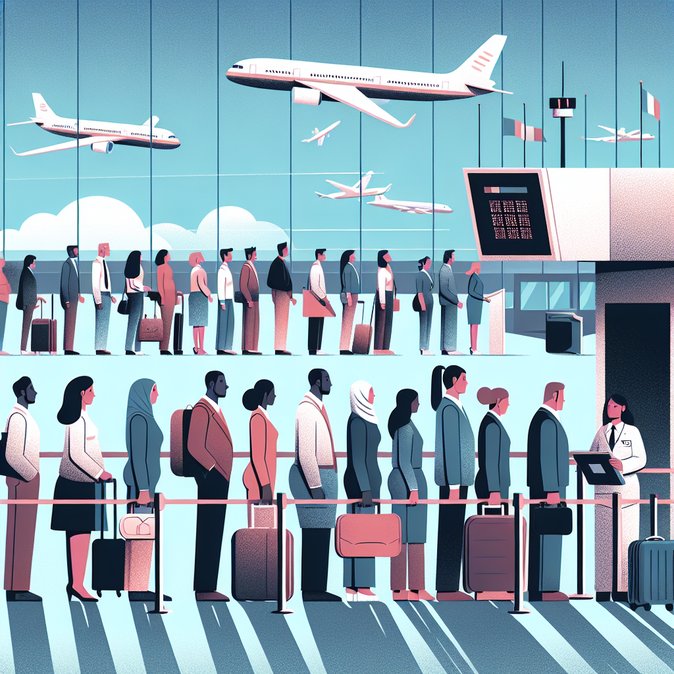
Travellers arriving in Spain this weekend were among the first to feel the full impact of the European Union’s new biometric Entry/Exit System (EES). Palma’s Majorca Airport reported queues of “between two and three hours” at passport control on Saturday, 11 April, according to a joint statement from Airports Council International Europe (ACI-Europe) and Airlines for Europe (A4E). The industry bodies warned that some UK-bound aircraft left half-empty after boarding gates closed while passengers were still stuck in the immigration line. The EES, switched on across the Schengen Area on 10 April, replaces manual passport stamps with a double biometric enrolment (facial image and four fingerprints) for every non-EU national entering or leaving the bloc. Border-control officials argue that the system will eventually cut down processing times while automatically detecting overstays. Airlines, however, say the learning curve is steep and fear reputational damage if early glitches are not ironed out before the summer peak. Oliver Jankovec, Director-General of ACI-Europe, urged Brussels to give member states “the power to suspend the system temporarily when queues become excessive” so that flight schedules can recover. The Commission has so far only acknowledged “technical difficulties” in unnamed countries and promised troubleshooting support.
![Spain’s airports hit by three-hour queues as new EU Entry/Exit System goes live]()
Before setting off, travellers can minimise the risk of last-minute airport surprises by confirming that their passports, visas and supporting documents meet Spain’s latest border requirements. VisaHQ’s online platform (https://www.visahq.com/spain/) consolidates real-time guidance on Schengen entry rules—including what the new EES procedures mean for different nationalities—and offers an easy application pathway for any visa or travel authorisation you might need.
For corporate travel managers, the new reality is likely to mean longer connection buffers and higher duty-of-care costs. Multinationals that routinely route project teams through Madrid, Barcelona or Palma may need to add four hours between an intercontinental arrival and any onward domestic sector until the system beds in. Airlines have begun advising passengers to arrive at Spanish airports at least three hours before departure and to use mobile check-in to shorten their time landside. The queues also revive post-Brexit sensitivities: with UK travellers now treated as third-country nationals, British passport holders make up a significant share of the throughput at Spanish leisure airports. Hoteliers in the Balearics fear that images of snaking lines could deter last-minute spring bookings. The Balearic government, meanwhile, says it is monitoring the situation but insists that the EES “will ultimately make Spain a safer, more efficient destination”. In practical terms, travellers should expect to enrol their biometrics the very first time they cross an external Schengen frontier after 10 April. Subsequent trips within the three-year data-retention period should be faster; nonetheless, business-traveller programmes are advising staff to add at least 30 minutes to pre-existing airport arrival guidelines until further notice.

Before setting off, travellers can minimise the risk of last-minute airport surprises by confirming that their passports, visas and supporting documents meet Spain’s latest border requirements. VisaHQ’s online platform (https://www.visahq.com/spain/) consolidates real-time guidance on Schengen entry rules—including what the new EES procedures mean for different nationalities—and offers an easy application pathway for any visa or travel authorisation you might need.
For corporate travel managers, the new reality is likely to mean longer connection buffers and higher duty-of-care costs. Multinationals that routinely route project teams through Madrid, Barcelona or Palma may need to add four hours between an intercontinental arrival and any onward domestic sector until the system beds in. Airlines have begun advising passengers to arrive at Spanish airports at least three hours before departure and to use mobile check-in to shorten their time landside. The queues also revive post-Brexit sensitivities: with UK travellers now treated as third-country nationals, British passport holders make up a significant share of the throughput at Spanish leisure airports. Hoteliers in the Balearics fear that images of snaking lines could deter last-minute spring bookings. The Balearic government, meanwhile, says it is monitoring the situation but insists that the EES “will ultimately make Spain a safer, more efficient destination”. In practical terms, travellers should expect to enrol their biometrics the very first time they cross an external Schengen frontier after 10 April. Subsequent trips within the three-year data-retention period should be faster; nonetheless, business-traveller programmes are advising staff to add at least 30 minutes to pre-existing airport arrival guidelines until further notice.