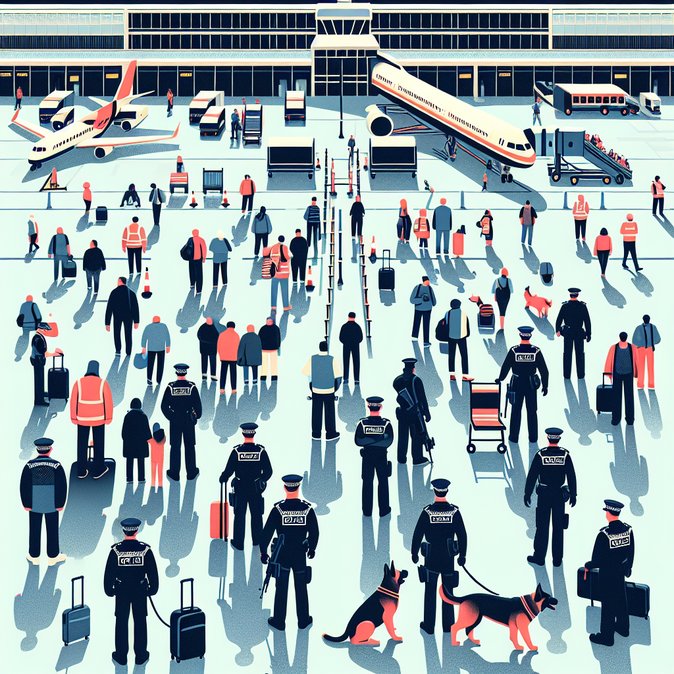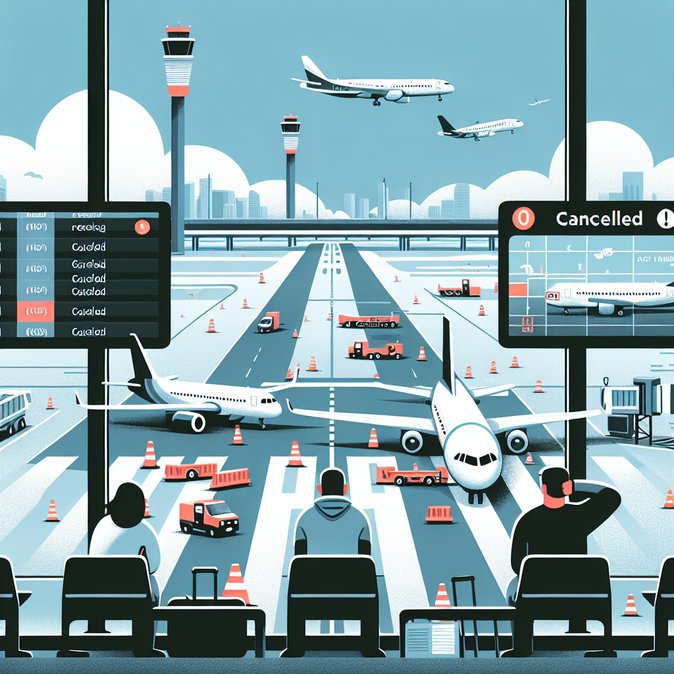
Airlines operating on Australia’s golden triangle—Sydney, Melbourne and Brisbane—spent 1 April 2026 firefighting a cascade of operational problems that forced 38 outright cancellations and delayed a further 380 services. According to aviation data cited by industry outlet Travel and Tour World, low cloud ceilings in Sydney, simultaneous runway maintenance in Melbourne and continuing pilot-and-cabin-crew shortages combined to push on-time performance below 25 % for parts of the day. Qantas and its low-cost arm Jetstar bore the brunt on domestic routes, while international carriers such as Singapore Airlines and Cathay Pacific reported knock-on delays to Asia-bound departures. The disruption spilled into secondary hubs—Canberra, Adelaide and Hobart—where aircraft and crew were left out of position. For mobility managers the timing could not be worse: Easter leisure traffic has heavily loaded flight manifests, leaving fewer re-accommodation options.
![Weather, runway works and crew shortages cause 38 cancellations and 380 delays across Sydney–Melbourne–Brisbane corridor]()
At this point, it’s worth noting that specialist consular service providers such as VisaHQ can take some of the sting out of unexpected reroutings. Through its Australian portal (https://www.visahq.com/australia/), the firm offers rapid online processing for transit documents and multiple-entry visas, giving travel managers an emergency back-up when flights are diverted at short notice.
Corporates with travellers stranded overnight faced extra hotel and meal costs, and those with connecting long-haul tickets risked forfeiting non-refundable sectors. Travel-policy advisors are recommending that employees keep at least a three-hour buffer between domestic and international legs for the next week, and that relocation shipments relying on unaccompanied baggage be tracked closely for carousel delays. Industry analysts note that Australia’s tight labour market continues to hamper crew rostering resilience, while scheduled runway works at both SYD and MEL will intermittently reduce capacity until mid-May. Travellers should sign up for SMS alerts from their airline and consider flexible fares until the maintenance window closes. The episode also highlights the visa implications of unexpected diversions: passengers rerouted via Auckland or Singapore may trigger transit-visa requirements. Employers should ensure international assignees carry multiple-entry visas or eTAs where relevant.

At this point, it’s worth noting that specialist consular service providers such as VisaHQ can take some of the sting out of unexpected reroutings. Through its Australian portal (https://www.visahq.com/australia/), the firm offers rapid online processing for transit documents and multiple-entry visas, giving travel managers an emergency back-up when flights are diverted at short notice.
Corporates with travellers stranded overnight faced extra hotel and meal costs, and those with connecting long-haul tickets risked forfeiting non-refundable sectors. Travel-policy advisors are recommending that employees keep at least a three-hour buffer between domestic and international legs for the next week, and that relocation shipments relying on unaccompanied baggage be tracked closely for carousel delays. Industry analysts note that Australia’s tight labour market continues to hamper crew rostering resilience, while scheduled runway works at both SYD and MEL will intermittently reduce capacity until mid-May. Travellers should sign up for SMS alerts from their airline and consider flexible fares until the maintenance window closes. The episode also highlights the visa implications of unexpected diversions: passengers rerouted via Auckland or Singapore may trigger transit-visa requirements. Employers should ensure international assignees carry multiple-entry visas or eTAs where relevant.