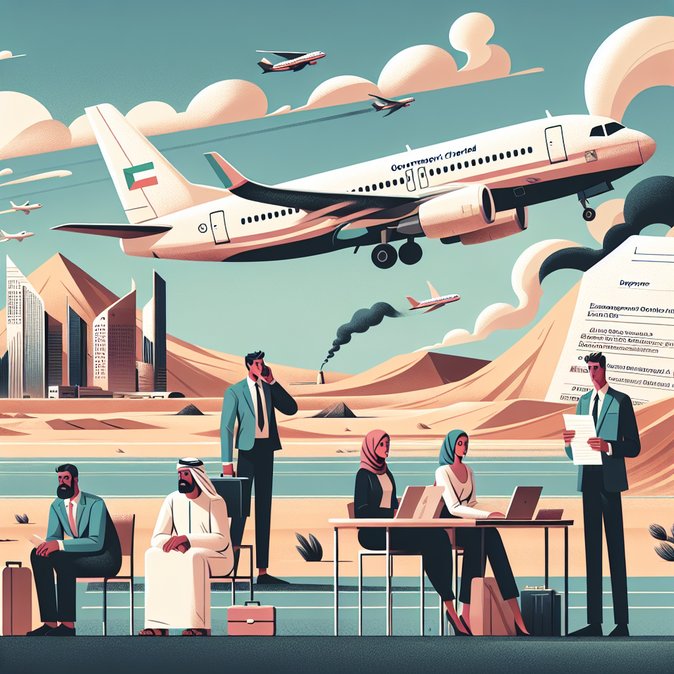
Facing rapidly escalating hostilities across the Persian Gulf, Ireland’s Department of Foreign Affairs activated its crisis protocol on 7 March, chartering an Airbus A330 from Muscat to repatriate vulnerable nationals. The paid-for evacuation—€800 per adult seat—marks the first direct Irish government airlift from the region in more than a decade and highlights the growing importance of corporate contingency planning in volatile markets.
Roughly 24,000 Irish citizens are registered in Gulf states, with Dubai alone hosting an estimated 14,000 expatriates. While most residents have chosen to remain, mounting security fears and patchy commercial flight options prompted more than 2,300 consular queries in a single week. Priority on the charter was given to families with children, those with medical needs and short-term visitors lacking residency permits.
Irish businesses operating in energy, construction and aviation services across the UAE, Qatar and Saudi Arabia have been advised to review staff-tracking systems and ensure emergency-leave authorisations are in place. Insurers are warning that policies covering “known risks” could be restricted if companies ignore updated travel advisories.
![Ireland Charters Emergency Evacuation Flight as 24,000 Citizens Remain in Gulf Hot-Spot]()
For organisations and individuals who suddenly need updated visas or travel documents, VisaHQ’s Ireland portal (https://www.visahq.com/ireland/) can expedite Gulf-region paperwork, monitor regulatory changes and arrange emergency courier services—helping travellers stay compliant when local consulates are overwhelmed.
The charter flight is only one strand of a wider evacuation mosaic. Dublin has secured block-booked seats on daily Emirates rotations to Dublin and is coordinating with EU partners for land transits to Riyadh and Doha should airspace closures widen. A second government-chartered flight remains on standby, but officials stress that commercial routes remain the first resort for now.
Corporate mobility managers are urged to double-check that Gulf-based assignees have registered on the DFA Citizens’ Register and to remind travelling staff that satellite phones and certain VPN software may be restricted under local cyber-security laws.
Roughly 24,000 Irish citizens are registered in Gulf states, with Dubai alone hosting an estimated 14,000 expatriates. While most residents have chosen to remain, mounting security fears and patchy commercial flight options prompted more than 2,300 consular queries in a single week. Priority on the charter was given to families with children, those with medical needs and short-term visitors lacking residency permits.
Irish businesses operating in energy, construction and aviation services across the UAE, Qatar and Saudi Arabia have been advised to review staff-tracking systems and ensure emergency-leave authorisations are in place. Insurers are warning that policies covering “known risks” could be restricted if companies ignore updated travel advisories.

For organisations and individuals who suddenly need updated visas or travel documents, VisaHQ’s Ireland portal (https://www.visahq.com/ireland/) can expedite Gulf-region paperwork, monitor regulatory changes and arrange emergency courier services—helping travellers stay compliant when local consulates are overwhelmed.
The charter flight is only one strand of a wider evacuation mosaic. Dublin has secured block-booked seats on daily Emirates rotations to Dublin and is coordinating with EU partners for land transits to Riyadh and Doha should airspace closures widen. A second government-chartered flight remains on standby, but officials stress that commercial routes remain the first resort for now.
Corporate mobility managers are urged to double-check that Gulf-based assignees have registered on the DFA Citizens’ Register and to remind travelling staff that satellite phones and certain VPN software may be restricted under local cyber-security laws.