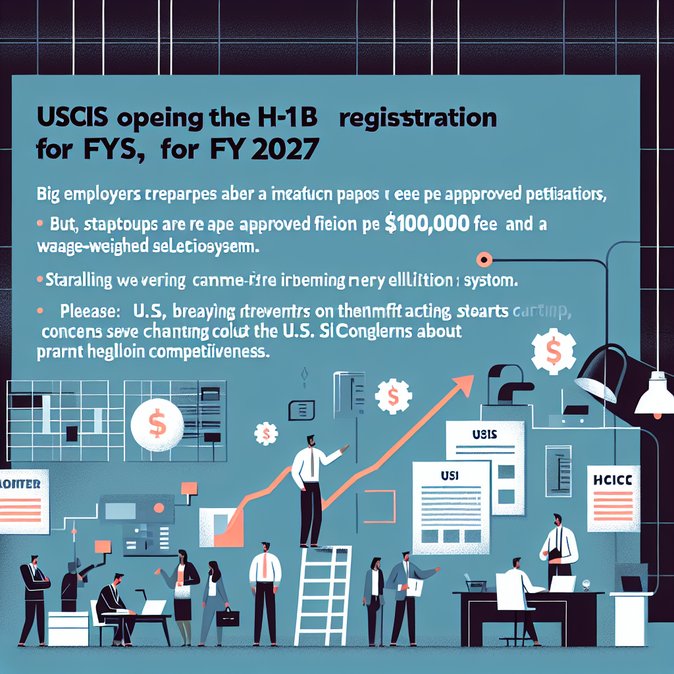
The United States has kicked off the first H-1B cap-season operating under the Trump Administration’s new $100,000 filing fee and wage-weighted selection rule, and companies are scrambling to reset talent plans before the March 19 registration deadline. The change, imposed by a September 2025 executive order and codified in a DHS final rule that took effect 26 February 2026, replaces the $10 electronic-registration fee with a staggering $100,000 payment for any petition that ultimately wins a cap slot. At the same time, USCIS now sorts all registrations into four wage-level buckets and conducts sequential drawings—starting with the highest-paid positions—until the statutory cap of 85,000 visas is met.
![First H-1B Lottery Under Trump’s $100,000 Filing Fee Begins, Sending Shockwaves Through U.S. Talent Strategy]()
Against this backdrop, many HR teams and foreign professionals are turning to VisaHQ for practical assistance: the company’s U.S. immigration services portal (https://www.visahq.com/united-states/) streamlines document collection, fee forecasting and deadline tracking, while connecting users with vetted attorneys and real-time status alerts—helping employers decide whether to shoulder the new $100,000 risk or pursue alternative mobility strategies.
Early indications from immigration counsel show many traditional IT-staffing firms sitting out the process or limiting filings to candidates already in the United States, while Fortune 500 employers in finance, semiconductors and biotech are absorbing the cost to protect critical R&D roles. Smaller venture-backed companies report shelving overseas hiring plans altogether; some are shifting head-count to Canada, Mexico or remote-work hubs in Europe. Practically, the fee is payable only if a registration is selected—yet budget owners must still reserve six-figure contingencies for each overseas candidate, adding unprecedented volatility to workforce planning. The rule also tightens adjudicatory standards: petitions must show that the proffered wage exceeds the 75th percentile for the occupation and location or risk denial. Observers fear the twin pressures of cost and complexity will slash the number of genuine new-hire registrations, shrinking the long-term U.S. STEM talent pipeline. The policy is already facing legal and political headwinds. Business groups have filed suit in the U.S. Court of Federal Claims arguing that the fee is an unconstitutional tax; bipartisan bills in both chambers of Congress would cap any future H-1B surcharge at $20,000 and restore a purely random lottery. Until the courts or Congress intervene, however, multinational employers must decide—within days—whether to pay the price or forgo urgently needed skills.

Against this backdrop, many HR teams and foreign professionals are turning to VisaHQ for practical assistance: the company’s U.S. immigration services portal (https://www.visahq.com/united-states/) streamlines document collection, fee forecasting and deadline tracking, while connecting users with vetted attorneys and real-time status alerts—helping employers decide whether to shoulder the new $100,000 risk or pursue alternative mobility strategies.
Early indications from immigration counsel show many traditional IT-staffing firms sitting out the process or limiting filings to candidates already in the United States, while Fortune 500 employers in finance, semiconductors and biotech are absorbing the cost to protect critical R&D roles. Smaller venture-backed companies report shelving overseas hiring plans altogether; some are shifting head-count to Canada, Mexico or remote-work hubs in Europe. Practically, the fee is payable only if a registration is selected—yet budget owners must still reserve six-figure contingencies for each overseas candidate, adding unprecedented volatility to workforce planning. The rule also tightens adjudicatory standards: petitions must show that the proffered wage exceeds the 75th percentile for the occupation and location or risk denial. Observers fear the twin pressures of cost and complexity will slash the number of genuine new-hire registrations, shrinking the long-term U.S. STEM talent pipeline. The policy is already facing legal and political headwinds. Business groups have filed suit in the U.S. Court of Federal Claims arguing that the fee is an unconstitutional tax; bipartisan bills in both chambers of Congress would cap any future H-1B surcharge at $20,000 and restore a purely random lottery. Until the courts or Congress intervene, however, multinational employers must decide—within days—whether to pay the price or forgo urgently needed skills.
More From United States of America
View all
USCIS Issues March 5 RFI for Mobile ‘Digital Green Card’ and EAD, Signaling Paperless Future for Immigration Documents
U.S. Embassy in Abuja Shuts Doors and Reschedules March 4–5 Visa & ACS Appointments Amid Protest Threats