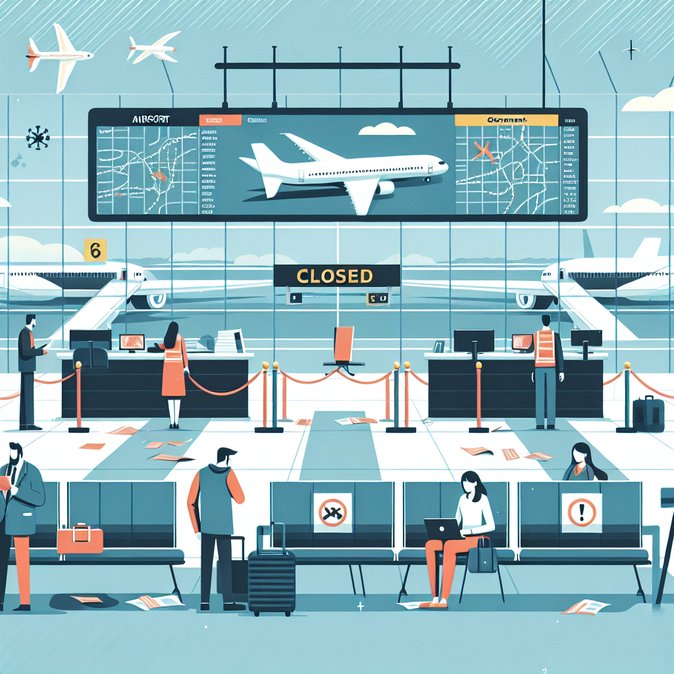
What began as a regional air-traffic freeze in the Gulf spilled over into Ireland on **4 March 2026**, with airlines scrapping most Dublin services to Doha, Dubai and Abu Dhabi. Qatar Airways cancelled four Dublin–Doha rotations, Etihad halted its early-morning Abu Dhabi inbound, and Emirates axed six Dubai legs planned for the previous day while warning of further cuts. Dublin Airport operator daa said the uncertainty could persist for days as carriers await clearance to overfly affected airspace. The three Gulf hubs are vital connectors for Irish business travellers heading to Asia-Pacific and Africa; daa estimates **around 10,000 passengers** have already been caught in the “waiting game”.
![Middle-East Airspace Crisis Grounds Dublin–Gulf Flights, Disrupting Thousands of Irish Travellers]()
Amid the disruption, travellers suddenly rerouting through alternative hubs may also discover new visa requirements. VisaHQ’s Ireland portal (https://www.visahq.com/ireland/) can fast-track those applications with digital forms, document checks and real-time status alerts—helping passengers stay compliant while airlines and itineraries remain in flux.
Aircraft stranded at Dublin occupy stands needed for other traffic, compounding operational headaches. Ireland’s Department of Foreign Affairs urged nationals in the region to shelter in place and register their details, while the Irish Aviation Authority reiterated the “check before you travel” mantra. Under EU Regulation 261, passengers are entitled to refunds or rerouting, plus meals and accommodation, although extraordinary-circumstance rules likely remove fixed cash compensation. Travel-risk managers are scrambling to re-route essential staff via European gateways still operating to East Africa and Asia, and corporations with time-sensitive projects in the Gulf are activating contingency plans—including remote-work protocols and staggered crew rotations. Mobility teams should remind employees not to travel to the airport until an airline rebooks them, and to keep receipts for eventual reimbursement. Longer term, the episode highlights Ireland’s reliance on a handful of Gulf connectors. Policy analysts argue that Dublin’s contested passenger-cap and limited long-haul network leave the country exposed when single-region shocks occur. Calls for additional capacity—either direct or via European code-shares—are likely to intensify once the crisis eases.

Amid the disruption, travellers suddenly rerouting through alternative hubs may also discover new visa requirements. VisaHQ’s Ireland portal (https://www.visahq.com/ireland/) can fast-track those applications with digital forms, document checks and real-time status alerts—helping passengers stay compliant while airlines and itineraries remain in flux.
Aircraft stranded at Dublin occupy stands needed for other traffic, compounding operational headaches. Ireland’s Department of Foreign Affairs urged nationals in the region to shelter in place and register their details, while the Irish Aviation Authority reiterated the “check before you travel” mantra. Under EU Regulation 261, passengers are entitled to refunds or rerouting, plus meals and accommodation, although extraordinary-circumstance rules likely remove fixed cash compensation. Travel-risk managers are scrambling to re-route essential staff via European gateways still operating to East Africa and Asia, and corporations with time-sensitive projects in the Gulf are activating contingency plans—including remote-work protocols and staggered crew rotations. Mobility teams should remind employees not to travel to the airport until an airline rebooks them, and to keep receipts for eventual reimbursement. Longer term, the episode highlights Ireland’s reliance on a handful of Gulf connectors. Policy analysts argue that Dublin’s contested passenger-cap and limited long-haul network leave the country exposed when single-region shocks occur. Calls for additional capacity—either direct or via European code-shares—are likely to intensify once the crisis eases.