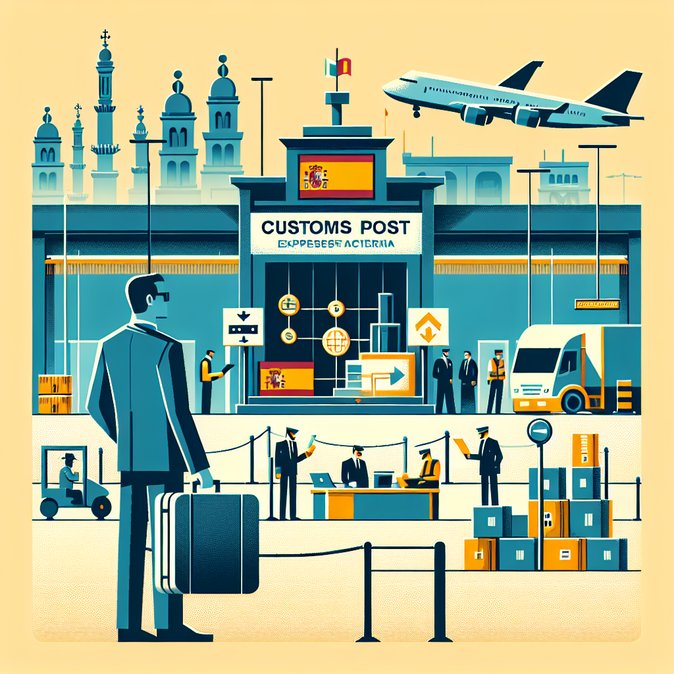
Foreign Minister José Manuel Albares has declared that the newly operational commercial-goods customs facility in Ceuta is running “smoothly” and symbolises the “best moment ever” in Spain–Morocco relations. Speaking on 23 February, Albares stressed that both Ceuta and Melilla now have functioning customs posts for the first time, framing the move as proof of trust after years of border tension.
For global-mobility stakeholders, the announcement matters because improved customs infrastructure typically precedes more liberal people-flow arrangements. Madrid and Rabat already cooperate on joint police patrols that have reduced irregular crossings into the Canary Islands.
Trade volume has surged to €21 billion, and officials hint that streamlined freight clearances could be followed by expanded business-traveller fast-track lanes. Spanish logistics firms are positioning Ceuta as a micro-free-trade hub for North-African supply chains.
![Spain Hails ‘Historic’ Ceuta Customs Opening as Morocco Cooperation Deepens]()
Iberia-based expatriates who need to visit Moroccan plants can now connect via the Tarajal border with fewer documentary checks, shortening door-to-door transit.
Businesses and travellers eager to leverage these smoother crossings can streamline their paperwork through VisaHQ. The company’s Spain portal (https://www.visahq.com/spain/) offers step-by-step assistance with visas, passports and supporting documents for both Spanish and Moroccan itineraries, enabling logistics teams, project engineers and frequent executives to secure the right authorisations quickly and reliably.
Likewise, Moroccan managers attending meetings in Andalusia may benefit from reciprocal “frequent traveller” passes under discussion. Albares also linked the customs breakthrough to broader diplomatic wins: co-hosting the 2030 FIFA World Cup with Portugal and Morocco, and progress on a legal text governing post-Brexit Gibraltar.
Analysts say the convergence of projects could lock in a rules-based framework for cross-Mediterranean labour mobility, from seasonal farm workers to highly skilled engineers. Multinationals should track forthcoming bilateral committees on mobility, expected to outline trusted-employer schemes, electronic visas and digital carnet systems for technicians. In the meantime, companies moving goods or staff through Ceuta should review new tariff codes and ensure drivers carry the updated customs declarations now in force.
For global-mobility stakeholders, the announcement matters because improved customs infrastructure typically precedes more liberal people-flow arrangements. Madrid and Rabat already cooperate on joint police patrols that have reduced irregular crossings into the Canary Islands.
Trade volume has surged to €21 billion, and officials hint that streamlined freight clearances could be followed by expanded business-traveller fast-track lanes. Spanish logistics firms are positioning Ceuta as a micro-free-trade hub for North-African supply chains.

Iberia-based expatriates who need to visit Moroccan plants can now connect via the Tarajal border with fewer documentary checks, shortening door-to-door transit.
Businesses and travellers eager to leverage these smoother crossings can streamline their paperwork through VisaHQ. The company’s Spain portal (https://www.visahq.com/spain/) offers step-by-step assistance with visas, passports and supporting documents for both Spanish and Moroccan itineraries, enabling logistics teams, project engineers and frequent executives to secure the right authorisations quickly and reliably.
Likewise, Moroccan managers attending meetings in Andalusia may benefit from reciprocal “frequent traveller” passes under discussion. Albares also linked the customs breakthrough to broader diplomatic wins: co-hosting the 2030 FIFA World Cup with Portugal and Morocco, and progress on a legal text governing post-Brexit Gibraltar.
Analysts say the convergence of projects could lock in a rules-based framework for cross-Mediterranean labour mobility, from seasonal farm workers to highly skilled engineers. Multinationals should track forthcoming bilateral committees on mobility, expected to outline trusted-employer schemes, electronic visas and digital carnet systems for technicians. In the meantime, companies moving goods or staff through Ceuta should review new tariff codes and ensure drivers carry the updated customs declarations now in force.