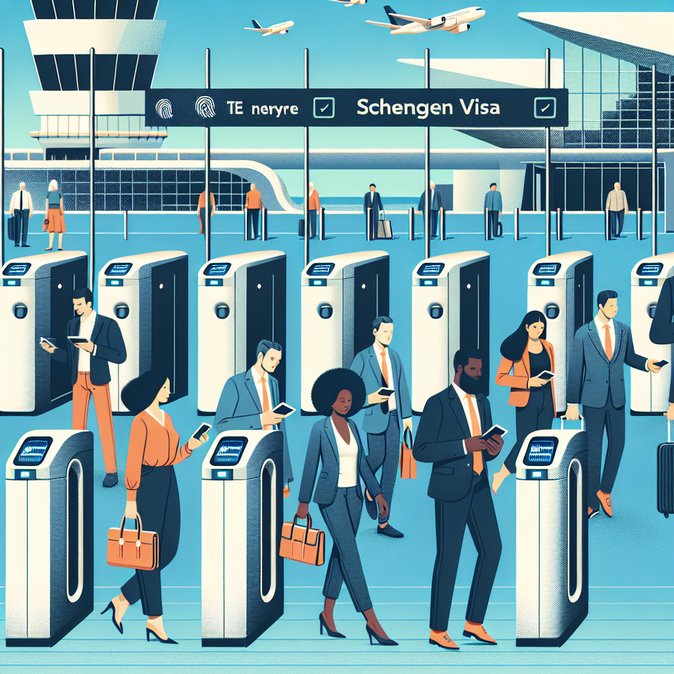
Italy quietly ushered in a new era of border management on 22 February 2026, confirming that every Italian embassy and consulate can now issue fully-digital Schengen visas. Instead of a visa sticker, successful applicants will receive an encrypted PDF containing a dynamic QR code that can be verified offline at border inspection points. The Ministry of the Interior said the move is the first stage of Italy’s wider Entry/Exit System (EES) roll-out and will be followed by a nationwide deployment of 150 automated e-gates at Rome-Fiumicino, Milan-Malpensa, Venice-Marco Polo and other major airports. Why it matters for Ireland: although Irish citizens travel visa-free, thousands of Ireland-based third-country nationals still require a Schengen visa for client meetings or conferences in Italy. Corporations with mobile workforces will need to update their travel policies and train mobility teams to recognise the new digital document, which must be printed in colour until airlines finish integrating the QR-code validation API. HR managers should also brief travellers about carrying a back-up PDF on their phones because many Italian car-rental desks plan to scan the code at pickup.
![Italy Switches to Digital Schengen Visas and Installs 150 Biometric E-Gates]()
VisaHQ helps large and small Irish employers navigate this change. Through our Ireland portal (https://www.visahq.com/ireland/) we already support applications for Italy’s digital Schengen visa, offering step-by-step document checks, status alerts and a single dashboard so mobility teams can monitor all travelling staff in one place—saving time while ensuring every QR code meets airline and border-police requirements.
Border-processing impact: the Italian Border Police estimate that each e-gate can process 10–12 passengers per minute—more than twice the throughput of a staffed booth—helping to reduce the congestion that plagued Milan during last summer’s peak. The gates capture a facial biometric and cross-check it against the QR code and European watch-lists in seconds. According to the Ministry, an initial pilot will start in July 2026 before full national coverage by December. Practical next steps: Irish-based mobility teams should (1) flag upcoming Italian assignments that still require a physical sticker and switch them to the e-visa channel where possible; (2) add an IT security note telling travellers not to post their QR code on social media; and (3) remind staff that ETIAS registration (fee €20) will still be mandatory for visa-exempt travellers later this year. Airlines serving Dublin–Italy routes have already begun updating their DCS (departure-control systems) to read the new document, but a manual check-in desk fallback will remain until winter. Big picture: Italy’s switch is the clearest signal yet that the EU’s plan to dematerialise all short-stay visas by 2030 is on schedule. Irish policymakers—who maintain separate visa rules outside Schengen—will be watching closely: the Department of Justice told The Irish Times last year that any future Irish e-visa project would aim for full interoperability with the Schengen format.
VisaHQ helps large and small Irish employers navigate this change. Through our Ireland portal (https://www.visahq.com/ireland/) we already support applications for Italy’s digital Schengen visa, offering step-by-step document checks, status alerts and a single dashboard so mobility teams can monitor all travelling staff in one place—saving time while ensuring every QR code meets airline and border-police requirements.
Border-processing impact: the Italian Border Police estimate that each e-gate can process 10–12 passengers per minute—more than twice the throughput of a staffed booth—helping to reduce the congestion that plagued Milan during last summer’s peak. The gates capture a facial biometric and cross-check it against the QR code and European watch-lists in seconds. According to the Ministry, an initial pilot will start in July 2026 before full national coverage by December. Practical next steps: Irish-based mobility teams should (1) flag upcoming Italian assignments that still require a physical sticker and switch them to the e-visa channel where possible; (2) add an IT security note telling travellers not to post their QR code on social media; and (3) remind staff that ETIAS registration (fee €20) will still be mandatory for visa-exempt travellers later this year. Airlines serving Dublin–Italy routes have already begun updating their DCS (departure-control systems) to read the new document, but a manual check-in desk fallback will remain until winter. Big picture: Italy’s switch is the clearest signal yet that the EU’s plan to dematerialise all short-stay visas by 2030 is on schedule. Irish policymakers—who maintain separate visa rules outside Schengen—will be watching closely: the Department of Justice told The Irish Times last year that any future Irish e-visa project would aim for full interoperability with the Schengen format.