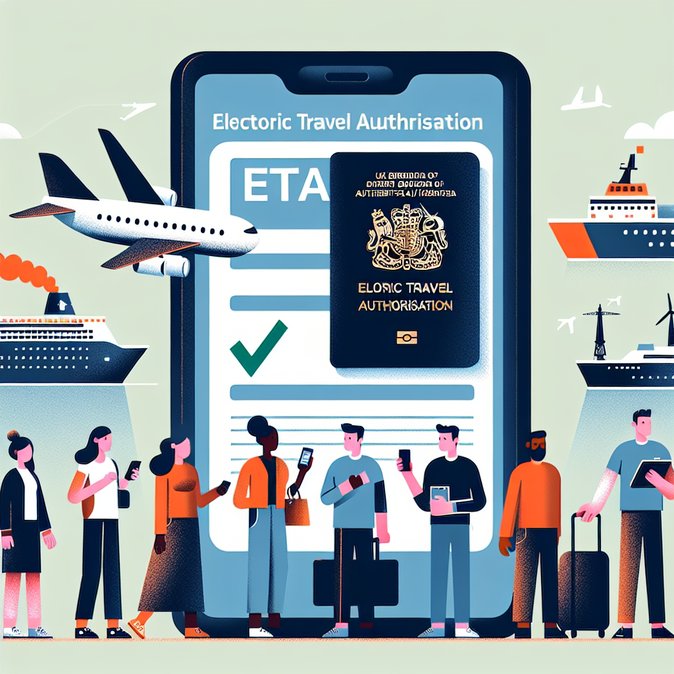
With the United Kingdom’s Electronic Travel Authorisation (ETA) scheme moving to full enforcement on 25 February 2026, transport operators have begun hard-stop document checks that could strand unprepared passengers—including many Ireland-based residents—before they ever leave the island. Travel advisory site Adept Traveler reports that, from late February, airlines, ferries and Eurostar trains will refuse boarding to visa-exempt travellers who cannot present an approved ETA linked to the passport they are using. Although Irish citizens remain exempt under the Common Travel Area, the tightened regime has two immediate implications for Ireland. First, non-Irish residents—international students, tech workers and dependants—who routinely route through Dublin to Britain must now secure an ETA in advance. Second, dual British nationals living in Ireland must carry a valid British (or Irish) passport; an ETA on a third-country passport will no longer suffice.
![Carriers warn of strict UK ETA checks from 25 February; Irish travellers urged to prepare]()
Travellers unsure about their eligibility or anxious about completing the new paperwork can get step-by-step support from VisaHQ, whose Ireland portal (https://www.visahq.com/ireland/) streamlines ETA applications, verifies passport data, and provides real-time status updates—helping to prevent the kind of last-minute boarding refusals now facing carriers’ zero-tolerance checks.
Carrier liability penalties mean check-in agents have little discretion. Documentation mismatches—incorrect passport numbers, expired British passports or last-minute renewals—will trigger outright refusal rather than secondary border questioning. Travel-management companies are already flagging higher denied-boarding risk for corporate commuters between Dublin and UK hubs such as London, Manchester and Edinburgh. Practical steps include auditing traveller profiles to ensure the correct passport is recorded, verifying ETA status 72 hours before departure, and building buffer time into itineraries where onward connections rely on UK gateways. Families should remember that children need individual ETA approvals. Longer-term, the episode underscores a trend toward ‘off-shore’ immigration enforcement, where airlines and rail operators act as the first line of defence. Organisations with mobile talent in Ireland are advised to integrate ETA status into pre-trip approval workflows alongside US ESTA and forthcoming EU ETIAS requirements.

Travellers unsure about their eligibility or anxious about completing the new paperwork can get step-by-step support from VisaHQ, whose Ireland portal (https://www.visahq.com/ireland/) streamlines ETA applications, verifies passport data, and provides real-time status updates—helping to prevent the kind of last-minute boarding refusals now facing carriers’ zero-tolerance checks.
Carrier liability penalties mean check-in agents have little discretion. Documentation mismatches—incorrect passport numbers, expired British passports or last-minute renewals—will trigger outright refusal rather than secondary border questioning. Travel-management companies are already flagging higher denied-boarding risk for corporate commuters between Dublin and UK hubs such as London, Manchester and Edinburgh. Practical steps include auditing traveller profiles to ensure the correct passport is recorded, verifying ETA status 72 hours before departure, and building buffer time into itineraries where onward connections rely on UK gateways. Families should remember that children need individual ETA approvals. Longer-term, the episode underscores a trend toward ‘off-shore’ immigration enforcement, where airlines and rail operators act as the first line of defence. Organisations with mobile talent in Ireland are advised to integrate ETA status into pre-trip approval workflows alongside US ESTA and forthcoming EU ETIAS requirements.