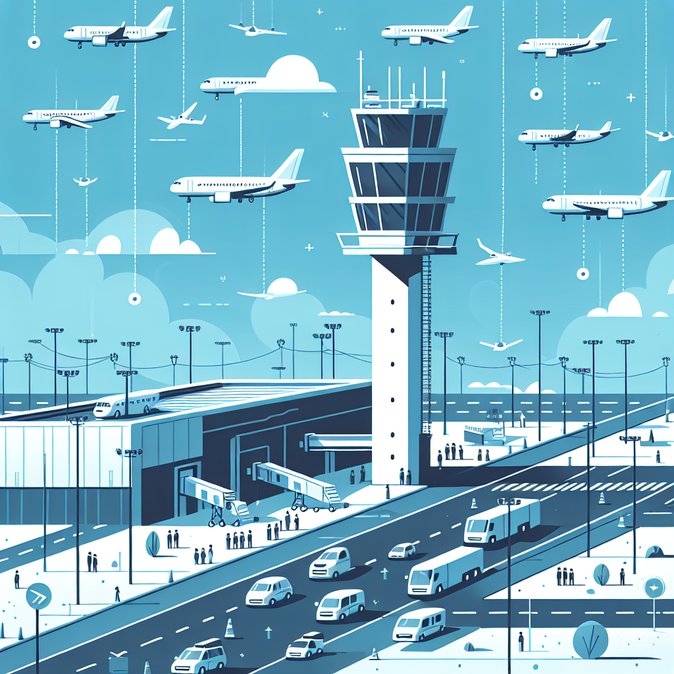
Cork Airport was forced to suspend all arrivals and departures between midnight and 07:00 on 12 February after AirNav Ireland could not replace an air-traffic controller who reported sick at short notice.(irishexaminer.com) One inbound flight diverted to Shannon and at least four early-morning departures were delayed, with knock-on schedule ripples lasting into the afternoon.
The incident is the latest symptom of a chronic staffing gap. Fórsa, the union representing controllers, says many are working four to five days of overtime per month while pension and pay scales lag international offers. Industry insiders warn that the situation could deteriorate when the summer schedule begins in late March; Dublin’s northern runway alone has already closed 11 times this year because of controller shortages.(irishexaminer.com)
![Overnight air-traffic-controller shortage closes Cork Airport for seven hours]()
While airlines and airports struggle with such operational uncertainties, VisaHQ can help travelers and mobility managers eliminate at least one source of stress. Through its Ireland portal (https://www.visahq.com/ireland/), the service streamlines visa processing and passport renewals, providing real-time tracking and integration with corporate travel tools so employees can reroute swiftly when disruptions like Cork’s overnight shutdown occur.
For businesses, the most acute risk is unpredictability. The NOTAM that grounded Cork traffic was issued in the middle of the night, leaving corporate travel teams scrambling to reroute passengers and cargo. Companies with manufacturing plants in Munster or pharmaceutical cold-chain shipments that rely on first-flight-out connections should review contingency plans, including ground transport to Shannon or Dublin and flexible ticketing clauses.
AirNav Ireland has 32 trainees in an 18-month pipeline but acknowledges that retention, not recruitment, is the greater challenge. Management is now before an internal dispute-resolution board with Fórsa; any industrial action could widen the disruption to Ireland’s two busiest airports. Until a sustainable staffing model is in place, mobility managers should treat overnight closures as a real possibility and build Cork-specific alerts into their travel-risk dashboards.
The incident is the latest symptom of a chronic staffing gap. Fórsa, the union representing controllers, says many are working four to five days of overtime per month while pension and pay scales lag international offers. Industry insiders warn that the situation could deteriorate when the summer schedule begins in late March; Dublin’s northern runway alone has already closed 11 times this year because of controller shortages.(irishexaminer.com)

While airlines and airports struggle with such operational uncertainties, VisaHQ can help travelers and mobility managers eliminate at least one source of stress. Through its Ireland portal (https://www.visahq.com/ireland/), the service streamlines visa processing and passport renewals, providing real-time tracking and integration with corporate travel tools so employees can reroute swiftly when disruptions like Cork’s overnight shutdown occur.
For businesses, the most acute risk is unpredictability. The NOTAM that grounded Cork traffic was issued in the middle of the night, leaving corporate travel teams scrambling to reroute passengers and cargo. Companies with manufacturing plants in Munster or pharmaceutical cold-chain shipments that rely on first-flight-out connections should review contingency plans, including ground transport to Shannon or Dublin and flexible ticketing clauses.
AirNav Ireland has 32 trainees in an 18-month pipeline but acknowledges that retention, not recruitment, is the greater challenge. Management is now before an internal dispute-resolution board with Fórsa; any industrial action could widen the disruption to Ireland’s two busiest airports. Until a sustainable staffing model is in place, mobility managers should treat overnight closures as a real possibility and build Cork-specific alerts into their travel-risk dashboards.