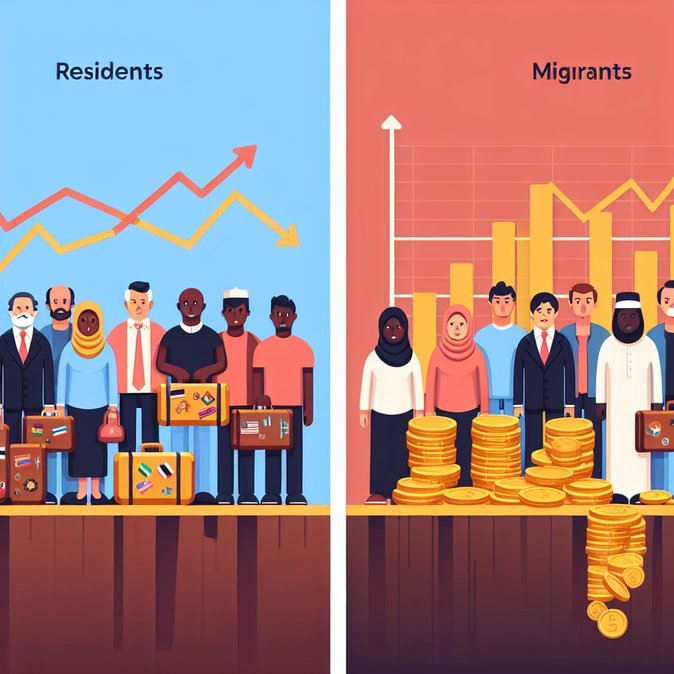
An Economic & Social Research Institute (ESRI) survey released on 15 January reveals that the average Irish adult believes 28 % of the population was born abroad — six points above the official 22 % figure. Respondents also thought twice as many migrants live in social housing and prisons as the data show, and underestimated migrants’ education and employment rates. (irishtimes.com)
The study, funded by the Department of Justice, links factual misperceptions to negative attitudes: those with the widest gaps between perception and reality were three times more likely to cite immigration as Ireland’s “most serious problem.” Researchers warn the findings create fertile ground for misinformation, particularly as the country debates new asylum legislation and grapples with housing shortages.
From a corporate-mobility perspective, exaggerated perceptions can translate into political pressure for tighter work-permit quotas or local resistance to expatriate housing projects. Employers relocating staff should therefore invest in community-engagement programmes that highlight migrants’ economic contribution and address myth-busting data.
![ESRI Survey Finds Public Greatly Overestimates Immigration Levels]()
In this context, VisaHQ can assist employers and individuals navigating Ireland’s migration landscape by streamlining the visa and work-permit application process. Through its online platform (https://www.visahq.com/ireland/), the service provides up-to-date requirements, document checklists and expert support, ensuring that accurate information—not misperception—guides both businesses and prospective migrants.
The ESRI recommends a coordinated government communication campaign and inclusion of basic migration statistics in secondary-school curricula. It also suggests that media outlets contextualise asylum numbers against broader labour and student flows to avoid skewing public debate.
HR leaders can leverage the report in diversity training and in briefing packs for inbound assignees, helping them understand the nuanced attitude landscape they are entering.
The study, funded by the Department of Justice, links factual misperceptions to negative attitudes: those with the widest gaps between perception and reality were three times more likely to cite immigration as Ireland’s “most serious problem.” Researchers warn the findings create fertile ground for misinformation, particularly as the country debates new asylum legislation and grapples with housing shortages.
From a corporate-mobility perspective, exaggerated perceptions can translate into political pressure for tighter work-permit quotas or local resistance to expatriate housing projects. Employers relocating staff should therefore invest in community-engagement programmes that highlight migrants’ economic contribution and address myth-busting data.

In this context, VisaHQ can assist employers and individuals navigating Ireland’s migration landscape by streamlining the visa and work-permit application process. Through its online platform (https://www.visahq.com/ireland/), the service provides up-to-date requirements, document checklists and expert support, ensuring that accurate information—not misperception—guides both businesses and prospective migrants.
The ESRI recommends a coordinated government communication campaign and inclusion of basic migration statistics in secondary-school curricula. It also suggests that media outlets contextualise asylum numbers against broader labour and student flows to avoid skewing public debate.
HR leaders can leverage the report in diversity training and in briefing packs for inbound assignees, helping them understand the nuanced attitude landscape they are entering.