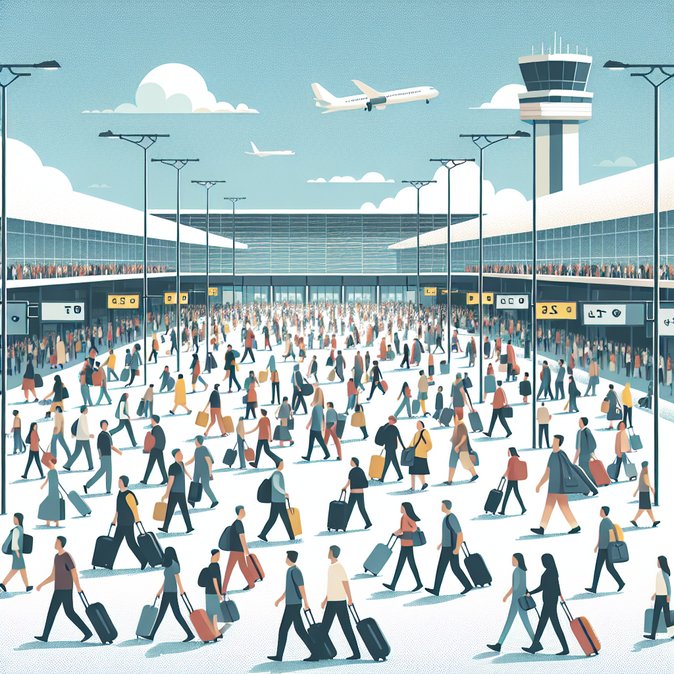
Dublin Airport confirmed that 36.43 million travellers passed through its two terminals in 2025, a 5.1 % jump on the previous year and the highest total in the hub’s 85-year history. Airport managers hailed the figures as proof of Ireland’s post-pandemic rebound and pointed to 97 % of passengers clearing security in under 20 minutes, thanks in part to the full roll-out of C3 scanners. The boom was felt across all markets: London routes remained the busiest, trans-Atlantic traffic tipped two million for the first time and 1.7 million passengers used Dublin as a transfer gateway. (dublinairport.com)
Yet the headline number immediately sharpened a long-running legal row. Current planning permission caps Dublin Airport at 32 million passengers per year, a limit suspended by the High Court in 2024 after airlines argued it breached EU law on competition. The Irish Times reports that both Ryanair and several US carriers have lodged complaints, and the European Court of Justice is expected to issue an advisory opinion next month that could decide whether the cap survives. (irishtimes.com)
For corporate mobility managers, the record traffic underscores Dublin’s importance as a Western European transfer hub — but also flags looming capacity constraints. If the cap is reinstated, carriers could face slot rationing or higher charges just as they schedule summer 2026 services. Businesses moving staff to Ireland should monitor the outcome closely and build extra lead-time into duty-of-care plans in case peak-season congestion returns.
![Dublin Airport Smashes Passenger Record, Re-igniting Debate Over 32 M Cap]()
Whether you are a solo traveller passing through Dublin or a mobility team coordinating multiple assignees, VisaHQ can remove much of the administrative friction. Its Ireland portal (https://www.visahq.com/ireland/) provides instant visa requirement checks, online applications and courier services, helping passengers stay compliant and on schedule amid rising traffic at the airport.
Meanwhile, airport operator DAA is lobbying the Government to let it proceed with an Infrastructure Application that would add new gates, stands and a parallel remote-pier concept. The Spring 2026 legislative programme includes a measure to lift the cap, but passage is not guaranteed. Local residents’ groups argue that further expansion will worsen noise and traffic, while pro-business groups warn failure to grow capacity risks investment and inbound tourism.
Practical tip: advise employees to keep using public transport to the airport — more than half already do — as private-car access is the first pinch-point when numbers spike above 100,000 a day.
Yet the headline number immediately sharpened a long-running legal row. Current planning permission caps Dublin Airport at 32 million passengers per year, a limit suspended by the High Court in 2024 after airlines argued it breached EU law on competition. The Irish Times reports that both Ryanair and several US carriers have lodged complaints, and the European Court of Justice is expected to issue an advisory opinion next month that could decide whether the cap survives. (irishtimes.com)
For corporate mobility managers, the record traffic underscores Dublin’s importance as a Western European transfer hub — but also flags looming capacity constraints. If the cap is reinstated, carriers could face slot rationing or higher charges just as they schedule summer 2026 services. Businesses moving staff to Ireland should monitor the outcome closely and build extra lead-time into duty-of-care plans in case peak-season congestion returns.

Whether you are a solo traveller passing through Dublin or a mobility team coordinating multiple assignees, VisaHQ can remove much of the administrative friction. Its Ireland portal (https://www.visahq.com/ireland/) provides instant visa requirement checks, online applications and courier services, helping passengers stay compliant and on schedule amid rising traffic at the airport.
Meanwhile, airport operator DAA is lobbying the Government to let it proceed with an Infrastructure Application that would add new gates, stands and a parallel remote-pier concept. The Spring 2026 legislative programme includes a measure to lift the cap, but passage is not guaranteed. Local residents’ groups argue that further expansion will worsen noise and traffic, while pro-business groups warn failure to grow capacity risks investment and inbound tourism.
Practical tip: advise employees to keep using public transport to the airport — more than half already do — as private-car access is the first pinch-point when numbers spike above 100,000 a day.