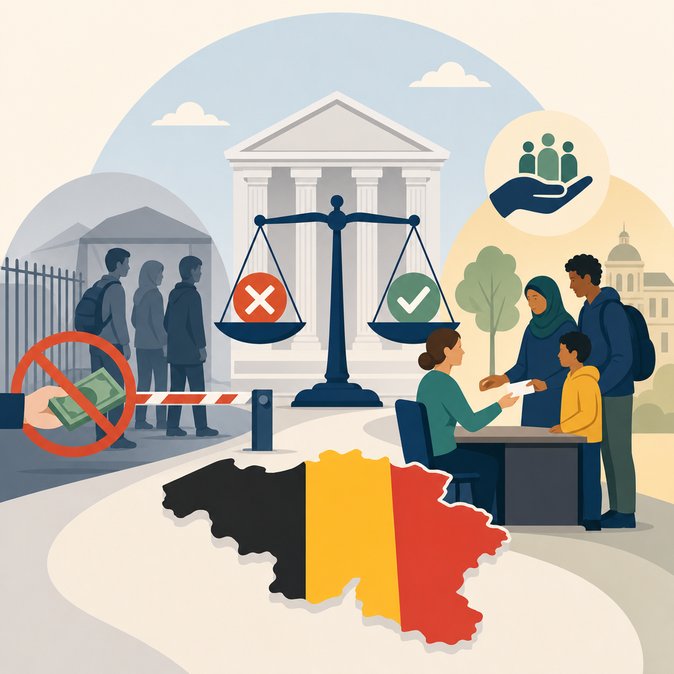
On 21 May 2026 the European Commission launched a specific Asylum, Migration and Integration Fund (AMIF) action worth €77 million to finance innovative local-level integration schemes for third-country nationals. The call encourages Member States to submit up to two flagship projects each, focusing on ‘one-stop-shop’ service centres and new housing models for vulnerable migrants. Belgium’s Federal AMIF Managing Authority has confirmed it will solicit proposals from regions and municipalities over the summer. Antwerp and Liège—both struggling with reception-centre bottlenecks—have already signalled interest in modular ‘housing-first’ pilots that pair accommodation with language classes and job-matching services.
![European Commission Opens €77 Million AMIF Call—Belgian Cities Urged to Pitch Integration Projects]()
At this stage, stakeholders may also benefit from tapping into specialized visa and permit facilitation. VisaHQ, for example, helps employers, municipal authorities and individual newcomers navigate Belgium’s entry requirements, streamlining documentation, appointment booking and status tracking through its online portal (https://www.visahq.com/belgium/). Using such services can shorten pre-arrival lead times and dovetail neatly with the integration pathways envisaged under the new AMIF action.
Brussels-Capital Region is exploring an expanded digital help-desk for newly arrived ICT workers and their families, dovetailing with its Smart City agenda. For employers, the funding presents opportunities to co-sponsor training, childcare or mentorship components that smooth the onboarding of foreign talent. Projects can claim up to 90 % EU co-financing, a higher rate than standard AMIF programmes, reducing corporate outlay for CSR-aligned initiatives. Applications must reach the Commission by 2 October 2026. Mobility managers should liaise with local authorities now if they wish corporate participation—consortia must be formed before the Belgian Managing Authority submits its shortlist. Successful bids will be announced in early 2027, with activities expected to start the same year and run for 36 months.

At this stage, stakeholders may also benefit from tapping into specialized visa and permit facilitation. VisaHQ, for example, helps employers, municipal authorities and individual newcomers navigate Belgium’s entry requirements, streamlining documentation, appointment booking and status tracking through its online portal (https://www.visahq.com/belgium/). Using such services can shorten pre-arrival lead times and dovetail neatly with the integration pathways envisaged under the new AMIF action.
Brussels-Capital Region is exploring an expanded digital help-desk for newly arrived ICT workers and their families, dovetailing with its Smart City agenda. For employers, the funding presents opportunities to co-sponsor training, childcare or mentorship components that smooth the onboarding of foreign talent. Projects can claim up to 90 % EU co-financing, a higher rate than standard AMIF programmes, reducing corporate outlay for CSR-aligned initiatives. Applications must reach the Commission by 2 October 2026. Mobility managers should liaise with local authorities now if they wish corporate participation—consortia must be formed before the Belgian Managing Authority submits its shortlist. Successful bids will be announced in early 2027, with activities expected to start the same year and run for 36 months.