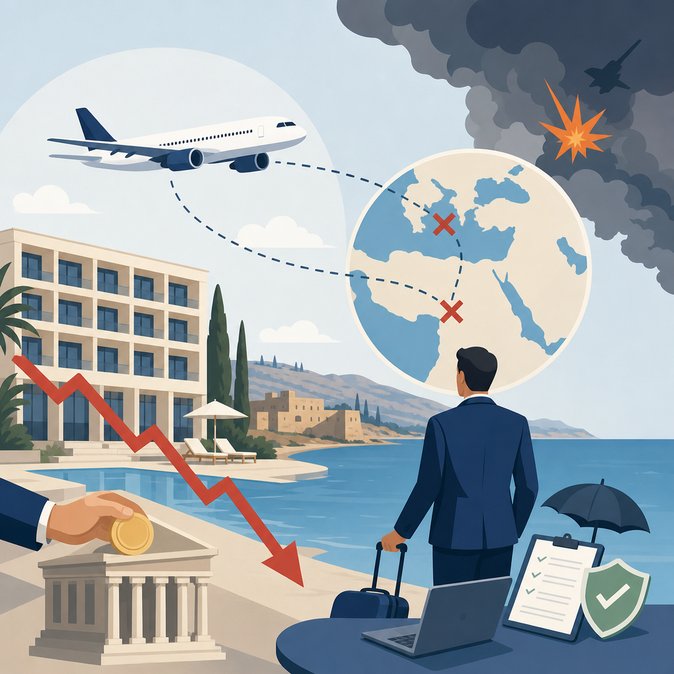
The ripple effects of the war in Iran are hitting Cyprus’ tourism-dependent economy hard, new data from the Cyprus Statistical Service (Cystat) show. Tourist arrivals fell to 303,031 in April 2026, down 27.6 % from the same month last year and marking the second consecutive double-digit monthly decline since hostilities escalated at the end of February. Total arrivals for the first four months of the year now stand at 710,370—17.9 % lower than in 2025. Industry executives trace the slump to a collapse in bookings from Israel and the wider Eastern Mediterranean, traditionally key spring markets for Cypriot resorts. Although the United Kingdom remains the island’s main source of visitors (39 % of April arrivals), hoteliers report a sharp drop in average length of stay and booking lead times as travellers hedge against further regional volatility.
Forward data from major tour operators signal summer reservations running roughly 25 % behind last year’s pace. The downturn poses immediate challenges for business travel and project work that piggyback on leisure capacity. Conference hotels in Limassol and Paphos—often used for regional off-sites—are slashing rates to fill rooms, while car-rental firms are parking up to a third of their fleets. For global mobility managers, reduced flight frequencies on routes from Tel Aviv, Doha and Amman mean longer transit times for staff rotations and tighter seat availability during peak weekends.
![Tourist Arrivals to Cyprus Plunge 27.6 % in April Amid Middle-East Conflict]()
Cyprus’ government has responded with a €35 million support package that includes marketing subsidies for airlines adding capacity from secondary European cities and a temporary reduction in airport fees. Tourism Minister Kostas Koumis is lobbying Brussels for flexibility on state-aid rules, arguing that “geopolitical force majeure” is threatening 14 % of national GDP.
Against this backdrop, travelers who still need to reach the island can turn to VisaHQ for quick, expert assistance with Cyprus entry requirements. The platform’s online application tools and live support help corporate mobility teams secure the right visas and travel documents even as airlines adjust schedules, reducing the administrative burden at a stressful time. More information is available at https://www.visahq.com/cyprus/
Travel-risk advisers meanwhile are urging companies to review insurance coverage: standard corporate policies often exclude war-related delays, and some underwriters now impose high-risk surcharges on itineraries transiting the Eastern Mediterranean flight information region. Firms with time-sensitive assignees are advised to build 24-hour buffers into travel schedules and to monitor NOTAMs for last-minute air-space reroutings that can add hours to journeys via Larnaca or Paphos.
Forward data from major tour operators signal summer reservations running roughly 25 % behind last year’s pace. The downturn poses immediate challenges for business travel and project work that piggyback on leisure capacity. Conference hotels in Limassol and Paphos—often used for regional off-sites—are slashing rates to fill rooms, while car-rental firms are parking up to a third of their fleets. For global mobility managers, reduced flight frequencies on routes from Tel Aviv, Doha and Amman mean longer transit times for staff rotations and tighter seat availability during peak weekends.

Cyprus’ government has responded with a €35 million support package that includes marketing subsidies for airlines adding capacity from secondary European cities and a temporary reduction in airport fees. Tourism Minister Kostas Koumis is lobbying Brussels for flexibility on state-aid rules, arguing that “geopolitical force majeure” is threatening 14 % of national GDP.
Against this backdrop, travelers who still need to reach the island can turn to VisaHQ for quick, expert assistance with Cyprus entry requirements. The platform’s online application tools and live support help corporate mobility teams secure the right visas and travel documents even as airlines adjust schedules, reducing the administrative burden at a stressful time. More information is available at https://www.visahq.com/cyprus/
Travel-risk advisers meanwhile are urging companies to review insurance coverage: standard corporate policies often exclude war-related delays, and some underwriters now impose high-risk surcharges on itineraries transiting the Eastern Mediterranean flight information region. Firms with time-sensitive assignees are advised to build 24-hour buffers into travel schedules and to monitor NOTAMs for last-minute air-space reroutings that can add hours to journeys via Larnaca or Paphos.