At the fourth European Political Community (EPC) summit, held on 4 May 2026 in Yerevan, Prime Minister Keir Starmer joined 40 other European leaders in endorsing a fresh package of measures to clamp down on irregular migration to the continent and, in particular, to the United Kingdom. The joint statement highlights a ‘whole-of-route’ strategy that couples humanitarian aid in source regions with tougher border security and returns agreements further downstream. For corporate mobility programmes the headline is the leaders’ commitment to more intelligence-sharing on smuggling networks, expanded sanctions against facilitators, and faster exchange of passenger data.
![UK Leads European Push to Curb Irregular Migration at Yerevan EPC Summit]()
In light of these shifting rules, companies and travellers can lean on digital visa platforms such as VisaHQ to obtain up-to-date entry guidance, lodge applications, and track approvals worldwide; its United Kingdom portal (https://www.visahq.com/united-kingdom/) offers tailored checklists and concierge support that can cut through bureaucratic delays when new API or sponsor-licence checks surface.
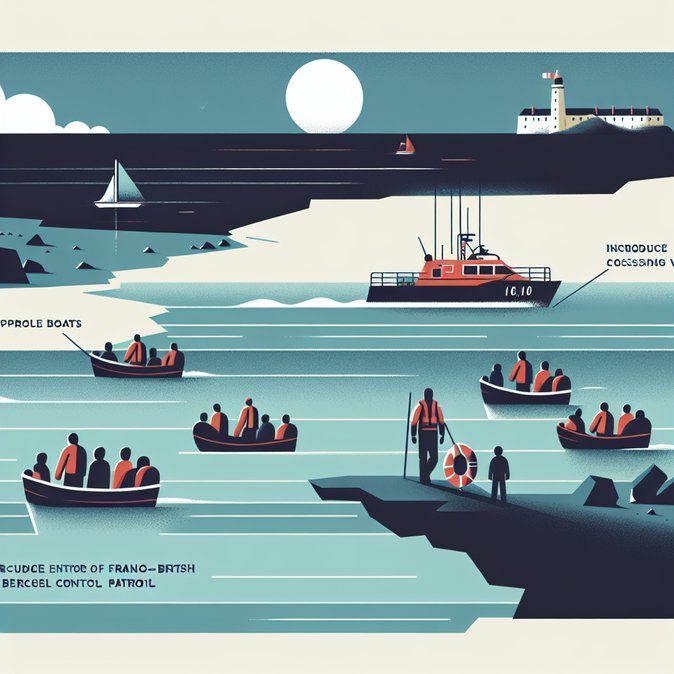
Mobility managers moving staff around Europe can therefore expect more systematic advance-passenger-information (API) demands and tighter airline reporting obligations later this summer. The declaration also pledges greater cooperation with the UNHCR and IOM, signalling that humanitarian corridors and labour-mobility pilot schemes will sit alongside enforcement. While most of the communiqué is high-level, Home Office officials travelling with the UK delegation briefed that a bilateral working group with France and Belgium will be created within weeks to tackle the new trend of small-boat departures from Belgian beaches—an issue already affecting cross-Channel freight services. Meanwhile, the UK will deploy additional Border Force officers to Armenia and Sudan to advise on document-verification and fraudulent-passport detection. For UK-based businesses the practical takeaway is that sponsor-licence compliance will become even more data-driven. Employers should prepare for requests to verify Certificate of Sponsorship details against real-time travel manifests. Travel managers should also watch for shorter filing deadlines when airlines are obliged to transmit passenger data to UK authorities, as failure to do so could delay boarding for assignees and short-term business visitors.

In light of these shifting rules, companies and travellers can lean on digital visa platforms such as VisaHQ to obtain up-to-date entry guidance, lodge applications, and track approvals worldwide; its United Kingdom portal (https://www.visahq.com/united-kingdom/) offers tailored checklists and concierge support that can cut through bureaucratic delays when new API or sponsor-licence checks surface.
Mobility managers moving staff around Europe can therefore expect more systematic advance-passenger-information (API) demands and tighter airline reporting obligations later this summer. The declaration also pledges greater cooperation with the UNHCR and IOM, signalling that humanitarian corridors and labour-mobility pilot schemes will sit alongside enforcement. While most of the communiqué is high-level, Home Office officials travelling with the UK delegation briefed that a bilateral working group with France and Belgium will be created within weeks to tackle the new trend of small-boat departures from Belgian beaches—an issue already affecting cross-Channel freight services. Meanwhile, the UK will deploy additional Border Force officers to Armenia and Sudan to advise on document-verification and fraudulent-passport detection. For UK-based businesses the practical takeaway is that sponsor-licence compliance will become even more data-driven. Employers should prepare for requests to verify Certificate of Sponsorship details against real-time travel manifests. Travel managers should also watch for shorter filing deadlines when airlines are obliged to transmit passenger data to UK authorities, as failure to do so could delay boarding for assignees and short-term business visitors.