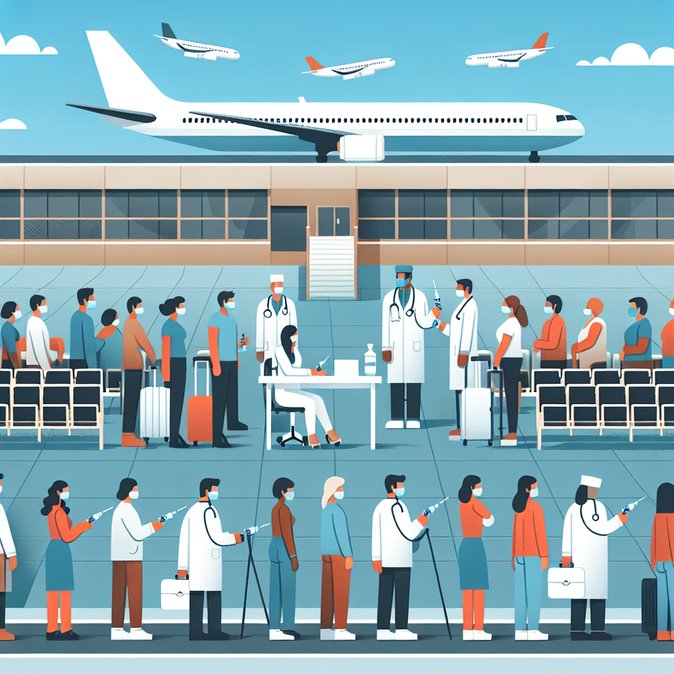
Hong Kong’s Travel Health Service has issued a fresh advisory after the city recorded its first locally acquired dengue fever infection of the year. The patient—a 21-year-old man who works in Penny’s Bay on Lantau Island—developed symptoms on 12 April but had not travelled abroad during the incubation period, indicating domestic mosquito transmission. The Centre for Health Protection is now deploying ovitraps and stepping-up vector control around the patient’s workplace and residence. Dengue is endemic in over 100 countries popular with Hong Kong travellers, including Thailand, Indonesia and the Philippines. With outbound travel for Labour Day and summer holidays surging back to pre-pandemic levels, officials warn that imported cases could seed further local outbreaks unless bite-prevention measures are followed.
![First locally acquired dengue case of 2026 prompts travel-health alert for Hong Kong residents]()
For those planning such trips, VisaHQ’s Hong Kong portal (https://www.visahq.com/hong-kong/) can simplify the paperwork side of international travel—whether that means securing multi-entry visas, renewing passports or tracking embassy requirements in real time—so travellers and mobility managers can concentrate on health precautions like dengue prevention instead of queuing at consulates.
From a mobility perspective, employers with staff on regional rotation should review insurance coverage for mosquito-borne diseases and remind travellers to use DEET-based repellent and stay in accommodation with screens or air-conditioning. Companies relocating families to Hong Kong’s outlying islands or the northern New Territories—areas with higher Aedes mosquito density—may wish to arrange professional pest assessments of housing. Hong Kong previously battled a rare local dengue cluster in 2018 centred on Lion Rock Park, which temporarily curtailed outdoor corporate events and fieldwork. Lessons learned then—rapid public-park closures, intensified fogging, and real-time ovitrap indices—are being re-activated. The government aims to keep the ovitrap index below 10 %, a threshold set after the 2018 incident to gauge outbreak risk. Practical advice: Travellers returning from dengue-affected destinations who feel unwell within 14 days should seek medical attention and disclose their itinerary. The CHP’s thematic dengue webpage is updated weekly; HR teams can integrate the RSS feed into travel-risk dashboards.

For those planning such trips, VisaHQ’s Hong Kong portal (https://www.visahq.com/hong-kong/) can simplify the paperwork side of international travel—whether that means securing multi-entry visas, renewing passports or tracking embassy requirements in real time—so travellers and mobility managers can concentrate on health precautions like dengue prevention instead of queuing at consulates.
From a mobility perspective, employers with staff on regional rotation should review insurance coverage for mosquito-borne diseases and remind travellers to use DEET-based repellent and stay in accommodation with screens or air-conditioning. Companies relocating families to Hong Kong’s outlying islands or the northern New Territories—areas with higher Aedes mosquito density—may wish to arrange professional pest assessments of housing. Hong Kong previously battled a rare local dengue cluster in 2018 centred on Lion Rock Park, which temporarily curtailed outdoor corporate events and fieldwork. Lessons learned then—rapid public-park closures, intensified fogging, and real-time ovitrap indices—are being re-activated. The government aims to keep the ovitrap index below 10 %, a threshold set after the 2018 incident to gauge outbreak risk. Practical advice: Travellers returning from dengue-affected destinations who feel unwell within 14 days should seek medical attention and disclose their itinerary. The CHP’s thematic dengue webpage is updated weekly; HR teams can integrate the RSS feed into travel-risk dashboards.