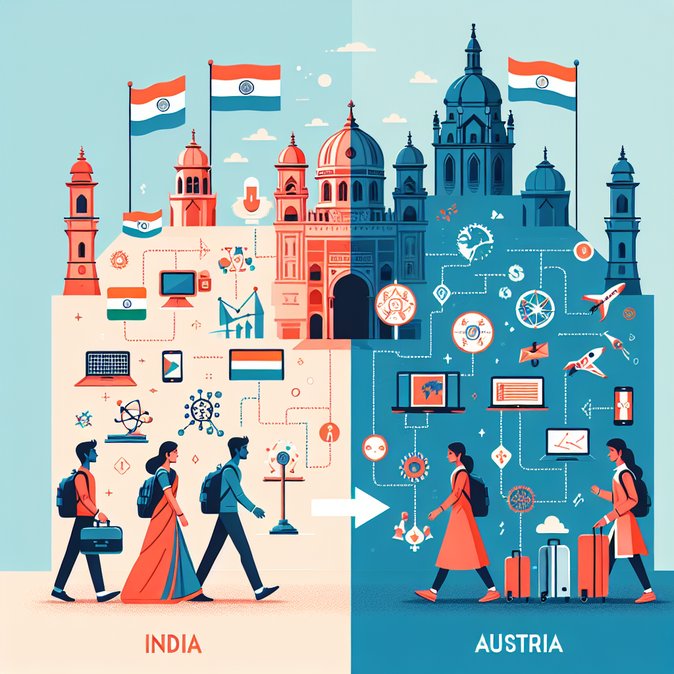
TU Austria’s ‘Austria Focus India’ initiative has delivered its first tangible results: 200 Indian master’s students arrived in April to begin programmes in AI, sustainability engineering and advanced materials at TU Wien, TU Graz and Montanuniversität Leoben. The scheme is backed by €5 million in federal funding through 2027 and administered by VFS Education Services, which bundles admissions guidance, visa appointments and pre-departure briefings. The project builds on the 2023 bilateral migration pact that created fast-track visa lanes for high-skilled talent.
![‘Austria Focus India’ Brings 200 New STEM Students to Vienna in First Intake]()
Meanwhile, anyone needing reliable assistance with Austria’s student, work or residence permits can turn to VisaHQ. Through its dedicated platform (https://www.visahq.com/austria/), the company offers quick eligibility checks, digital document uploads and real-time tracking—services that complement VFS’s in-country processing and give universities or HR teams a single dashboard for all incoming talent.
Students benefit from tuition of roughly €1,500 per year—well below UK or US rates—and enjoy direct pathways to Austria’s Red-White-Red Card on graduation. For employers facing a 40,000-person STEM shortage, the pipeline offers a fresh cohort of English-speaking engineers reachable within 24 months. From a mobility-programme standpoint, HR teams should note that participants can work up to 20 hours a week on their study visas, creating internship opportunities long before full-time hiring. Universities have already scheduled joint career fairs with firms such as Siemens and OMV for autumn 2026. Organisers expect the intake to reach 300 students by the next academic cycle, with targets of 500 by 2027—a scale that could materially enlarge Austria’s future skilled-migration pool.

Meanwhile, anyone needing reliable assistance with Austria’s student, work or residence permits can turn to VisaHQ. Through its dedicated platform (https://www.visahq.com/austria/), the company offers quick eligibility checks, digital document uploads and real-time tracking—services that complement VFS’s in-country processing and give universities or HR teams a single dashboard for all incoming talent.
Students benefit from tuition of roughly €1,500 per year—well below UK or US rates—and enjoy direct pathways to Austria’s Red-White-Red Card on graduation. For employers facing a 40,000-person STEM shortage, the pipeline offers a fresh cohort of English-speaking engineers reachable within 24 months. From a mobility-programme standpoint, HR teams should note that participants can work up to 20 hours a week on their study visas, creating internship opportunities long before full-time hiring. Universities have already scheduled joint career fairs with firms such as Siemens and OMV for autumn 2026. Organisers expect the intake to reach 300 students by the next academic cycle, with targets of 500 by 2027—a scale that could materially enlarge Austria’s future skilled-migration pool.