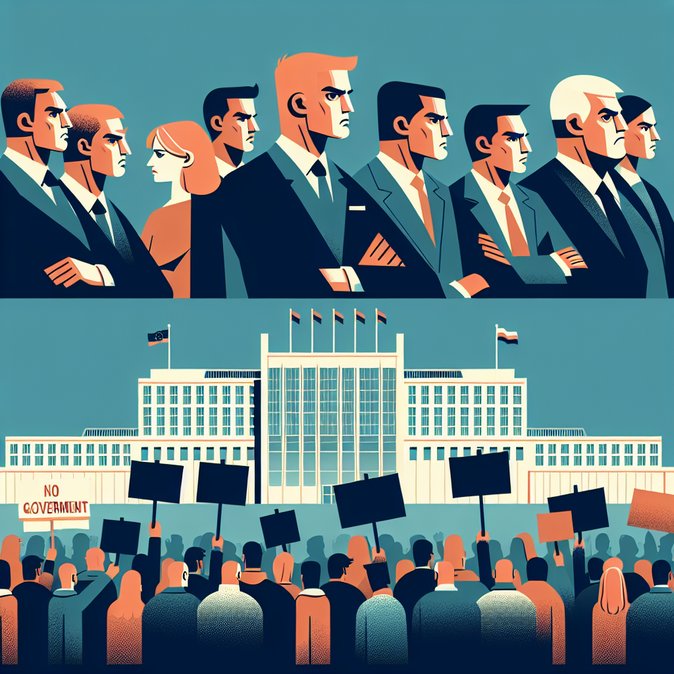
Milan’s iconic Piazza del Duomo became the backdrop for a high-profile immigration protest on 19 April 2026 as European far-right leaders gathered under the banner “Without Fear — Masters in Our Own Home.” The rally was convened by Matteo Salvini, Italy’s Deputy Prime Minister and head of the League party, and drew France’s Jordan Bardella, the Netherlands’ Geert Wilders and other members of the Patriots for Europe bloc. Organisers said the event aimed to pressure Brussels to tighten external-border policies and restrict family-reunification visas. Speakers lambasted the EU’s migration pact, arguing that compulsory relocation quotas undermine national sovereignty. Salvini reiterated calls for a naval blockade in the central Mediterranean and praised Italy’s 2025–28 visa-quota system, which caps annual work permits but fast-tracks seasonal agriculture visas.
![Far-Right Leaders Stage Milan Rally Demanding Tougher Immigration Controls]()
For organisations and individuals trying to make sense of those very visa quotas—whether to bring in skilled staff, seasonal workers or accompanying family members—VisaHQ can simplify the process. The company’s Italy-specific hub (https://www.visahq.com/italy/) tracks rule changes in real time, checks documentation for accuracy and helps applicants book the fastest available consular appointments, minimising the delays that political turbulence can create.
Demonstrators—joined by farmers protesting free-trade deals and motorcyclists opposing emissions zones—marched from Milan’s eastern ring road into the historic centre before speeches began. The rally comes as Italy prepares to chair EU discussions on the final implementation phase of the Entry/Exit System and the delayed ETIAS pre-travel authorisation, both of which the League wants linked to more rigorous overstayer enforcement. Counter-protests organised by anti-fascist groups and migrant-rights NGOs unfolded simultaneously, resulting in a heavy but largely peaceful police presence. Why it matters for global mobility: Business-immigration advisers say the political narrative risks fuelling public confusion between irregular migration and corporate mobility channels. While Italy continues to expand its quota for skilled-worker permits, a harsher public tone could translate into stricter documentary scrutiny at consulates and longer processing times, especially for family-reunion and humanitarian cases. Practical implications: Companies that rely on intra-EU postings into Lombardy and the wider north should monitor local ordinances: Milan city officials hinted at possible new crowd-control rules that could affect large-scale expatriate events in the central zone. HR departments are also advised to brief posted workers on potential weekend transit delays around Piazza del Duomo as further rallies—both nationalist and counter-demonstrations—are expected in the run-up to the European Parliament elections in June.

For organisations and individuals trying to make sense of those very visa quotas—whether to bring in skilled staff, seasonal workers or accompanying family members—VisaHQ can simplify the process. The company’s Italy-specific hub (https://www.visahq.com/italy/) tracks rule changes in real time, checks documentation for accuracy and helps applicants book the fastest available consular appointments, minimising the delays that political turbulence can create.
Demonstrators—joined by farmers protesting free-trade deals and motorcyclists opposing emissions zones—marched from Milan’s eastern ring road into the historic centre before speeches began. The rally comes as Italy prepares to chair EU discussions on the final implementation phase of the Entry/Exit System and the delayed ETIAS pre-travel authorisation, both of which the League wants linked to more rigorous overstayer enforcement. Counter-protests organised by anti-fascist groups and migrant-rights NGOs unfolded simultaneously, resulting in a heavy but largely peaceful police presence. Why it matters for global mobility: Business-immigration advisers say the political narrative risks fuelling public confusion between irregular migration and corporate mobility channels. While Italy continues to expand its quota for skilled-worker permits, a harsher public tone could translate into stricter documentary scrutiny at consulates and longer processing times, especially for family-reunion and humanitarian cases. Practical implications: Companies that rely on intra-EU postings into Lombardy and the wider north should monitor local ordinances: Milan city officials hinted at possible new crowd-control rules that could affect large-scale expatriate events in the central zone. HR departments are also advised to brief posted workers on potential weekend transit delays around Piazza del Duomo as further rallies—both nationalist and counter-demonstrations—are expected in the run-up to the European Parliament elections in June.