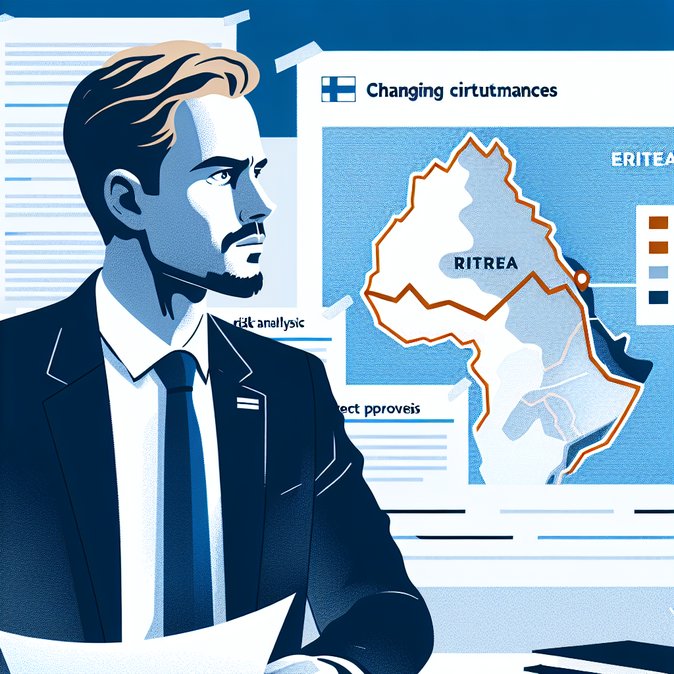
In a separate bulletin published on 19 April, Finland’s MFA upgraded its guidance for Eritrea from “normal caution” to “exercise special caution,” citing renewed military activity along Eritrea’s frontiers with Ethiopia, Sudan and Djibouti. The advisory explicitly warns Finnish citizens to avoid all travel near those border zones and notes continuing terrorism risks and widespread landmines. The change follows reports from Finland’s embassy in Addis Ababa that checkpoints on the Eritrea–Ethiopia highway were intermittently closed in late March. Although Finland has only a handful of long-term residents in Eritrea—mainly development-co-operation staff and maritime-satellite technicians—the MFA underscores that consular help is extremely limited because Finland has no diplomatic mission in Asmara. Swedes and Finns normally rely on EU partners, but several embassies reduced staffing this year due to the volatile security environment. For global-mobility programmes, the new designation means that any deployment to Eritrea now requires a high-risk travel waiver under most corporate policies. Insurance premiums may rise, and some underwriters will require evidence of secure ground transportation contracts and daily movement logs. Employers should also confirm that evacuation providers can operate in Eritrean airspace, which is periodically restricted without notice. Entry procedures remain cumbersome: business visas must be obtained before departure, and travel outside Asmara still requires separate permits that can take weeks to process.
![Finland raises Eritrea advisory to “exercise special caution” amid border tensions]()
For organisations looking for assistance with these procedural hurdles, VisaHQ (https://www.visahq.com/finland/) offers end-to-end visa facilitation and documentation support. Its team tracks rapid regulatory changes, arranges courier submissions to Eritrea’s mission, and can advise on supplementary travel permits—helping Finnish companies stay compliant while focusing on their core operations.
The MFA reminds travellers that satellite phones are tightly controlled and that photography of government buildings or military sites can lead to arrest. Finnish organisations with humanitarian or infrastructure projects in Eritrea should reassess duty-of-care frameworks, update emergency-communication trees and ensure staff register their presence via the ministry’s matkustusilmoitus.fi portal so that any future evacuation effort is not delayed.
For organisations looking for assistance with these procedural hurdles, VisaHQ (https://www.visahq.com/finland/) offers end-to-end visa facilitation and documentation support. Its team tracks rapid regulatory changes, arranges courier submissions to Eritrea’s mission, and can advise on supplementary travel permits—helping Finnish companies stay compliant while focusing on their core operations.
The MFA reminds travellers that satellite phones are tightly controlled and that photography of government buildings or military sites can lead to arrest. Finnish organisations with humanitarian or infrastructure projects in Eritrea should reassess duty-of-care frameworks, update emergency-communication trees and ensure staff register their presence via the ministry’s matkustusilmoitus.fi portal so that any future evacuation effort is not delayed.