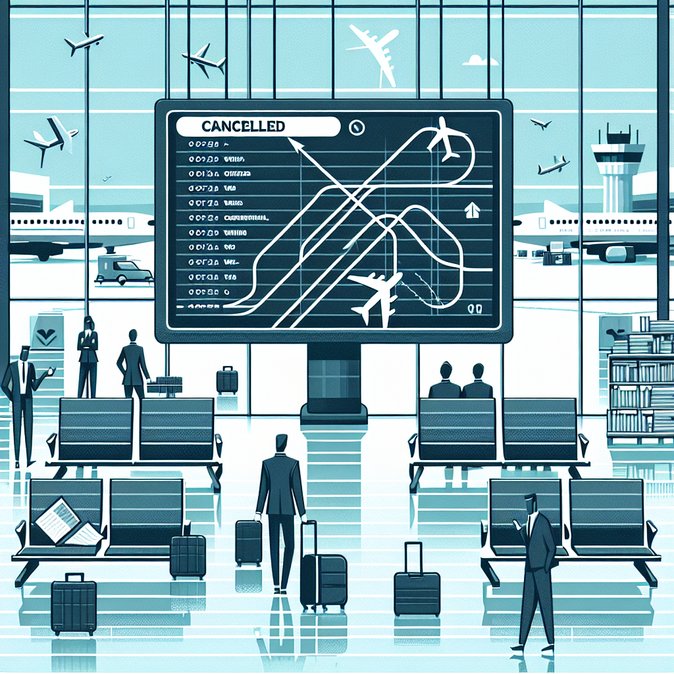
Cyprus’ main gateway was once again caught in the cross-fire of regional tensions on 16 April, when carriers scrubbed 37 rotations—18 arrivals and 19 departures—at Larnaca International Airport. According to Hermes Airports, the affected services linked Cyprus with Israel, Lebanon, the United Arab Emirates, Qatar and Bahrain, all of which were facing air-defence alerts after fresh Iranian–Israeli strikes. While the cancellations represent barely 7 % of Larnaca’s average daily traffic, the disruption hit at the start of the Easter travel window and created immediate knock-on effects for connecting itineraries and air-cargo schedules. Freight forwarders reported having to reroute high-value perishables via Athens and Istanbul, adding transit time and cost.
![Middle-East escalation forces 37 flight cancellations at Larnaca Airport]()
For travelers scrambling to rebook through alternative hubs such as Athens, Istanbul or Dubai, VisaHQ’s online platform (https://www.visahq.com/cyprus/) can quickly clarify whether additional transit or destination visas are required, submit applications on short notice, and coordinate courier pickup for documents—all without adding another layer of stress to disrupted travel plans.
Cyprus’ tourism sector—still reeling from the 2 March drone strike on RAF Akrotiri—warned of renewed booking jitters. The Cyprus Hotel Association told local media that room cancellations surged to 40 % in the 48 hours following the news, threatening the island’s attempt to lengthen its season into early summer. From a mobility-management perspective, multinational firms with staff movements through Larnaca are urging travellers to use airline apps or GDS trackers for real-time updates and to keep contingency routings via Paphos or Athens on file. Immigration queues, however, remained fluid; Cyprus’ border-control systems processed the reduced passenger load without delay. Government officials stressed that Cyprus itself is not a party to the conflict and that no additional entry restrictions are envisaged. Nevertheless, the Ministry of Transport said it is reviewing contingency plans for rapid activation of the National Air Crisis Cell should the security situation deteriorate further.

For travelers scrambling to rebook through alternative hubs such as Athens, Istanbul or Dubai, VisaHQ’s online platform (https://www.visahq.com/cyprus/) can quickly clarify whether additional transit or destination visas are required, submit applications on short notice, and coordinate courier pickup for documents—all without adding another layer of stress to disrupted travel plans.
Cyprus’ tourism sector—still reeling from the 2 March drone strike on RAF Akrotiri—warned of renewed booking jitters. The Cyprus Hotel Association told local media that room cancellations surged to 40 % in the 48 hours following the news, threatening the island’s attempt to lengthen its season into early summer. From a mobility-management perspective, multinational firms with staff movements through Larnaca are urging travellers to use airline apps or GDS trackers for real-time updates and to keep contingency routings via Paphos or Athens on file. Immigration queues, however, remained fluid; Cyprus’ border-control systems processed the reduced passenger load without delay. Government officials stressed that Cyprus itself is not a party to the conflict and that no additional entry restrictions are envisaged. Nevertheless, the Ministry of Transport said it is reviewing contingency plans for rapid activation of the National Air Crisis Cell should the security situation deteriorate further.