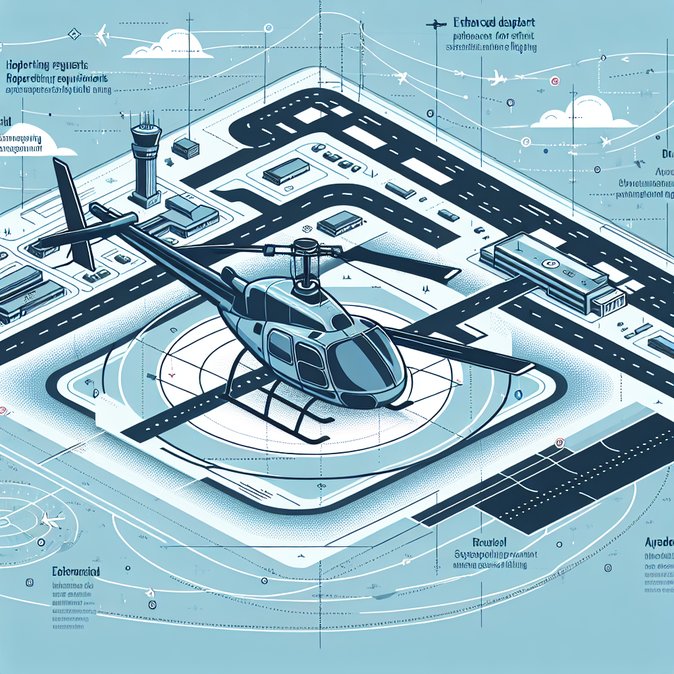
The Hong Kong Civil Aviation Department has issued a fresh edition of its Aeronautical Information Publication (AIP), in force from 16 April 2026, incorporating more than 2,000 lines of revised operational data for Hong Kong International Airport (HKIA) and the wider Flight Information Region. One of the most significant changes affects rotary-wing operations: pilots landing a helicopter anywhere in Hong Kong other than HKIA must now inform air-traffic control prior to descent, stating the intended landing site and expected ground-time. Departing helicopter pilots must establish radio contact immediately after lift-off. The new procedures aim to reduce airspace conflicts in the densely populated territory, especially around the fast-growing Northern Metropolis where ad-hoc private helipad use has surged. Fixed-wing operators will also notice updated taxi-way strengths, a re-categorised aerobatic practice area over Mirs Bay (surface to 3,500 feet), and clarification that HKIA’s rescue-and-fire-fighting remains at Category 10, the highest ICAO level. The document codifies HKIA’s 24-hour customs and immigration availability, confirming that night arrivals—including business jets—face no curfew provided slot approvals are in place.
![New aeronautical publication tightens helicopter rules and updates HKIA data]()
Whether you’re dispatching crew, executives or maintenance teams, VisaHQ can simplify the immigration side of the operation. The company’s Hong Kong portal (https://www.visahq.com/hong-kong/) offers real-time visa requirements, electronic application tools and expedited processing, ensuring that travel documents are secured well before flight plans are filed—an extra layer of assurance now that operational rules are tightening across the region.
For corporate aviation departments, the immediate action point is to update flight-planning software and pilot briefing packs. Operators running cross-border helicopter shuttles to Shenzhen and Macau are urged to review the mandatory ATC notifications, as failure to comply may now attract penalties under the Air Navigation (Hong Kong) Order. Freight forwarders should note new cargo-apron weight limits and hydrant-fuel flow rates, which could influence turn-around planning for wide-body freighters. Travel-risk managers will welcome the clarified altitude restrictions in control-zone transition areas, which bring Hong Kong’s publication in line with neighbouring FIRs and may reduce weather-related holding delays. However, the tighter helicopter reporting rules may lengthen door-to-door times for senior executives accustomed to flexible point-to-point hops within the city, so itinerary buffers are advisable.

Whether you’re dispatching crew, executives or maintenance teams, VisaHQ can simplify the immigration side of the operation. The company’s Hong Kong portal (https://www.visahq.com/hong-kong/) offers real-time visa requirements, electronic application tools and expedited processing, ensuring that travel documents are secured well before flight plans are filed—an extra layer of assurance now that operational rules are tightening across the region.
For corporate aviation departments, the immediate action point is to update flight-planning software and pilot briefing packs. Operators running cross-border helicopter shuttles to Shenzhen and Macau are urged to review the mandatory ATC notifications, as failure to comply may now attract penalties under the Air Navigation (Hong Kong) Order. Freight forwarders should note new cargo-apron weight limits and hydrant-fuel flow rates, which could influence turn-around planning for wide-body freighters. Travel-risk managers will welcome the clarified altitude restrictions in control-zone transition areas, which bring Hong Kong’s publication in line with neighbouring FIRs and may reduce weather-related holding delays. However, the tighter helicopter reporting rules may lengthen door-to-door times for senior executives accustomed to flexible point-to-point hops within the city, so itinerary buffers are advisable.