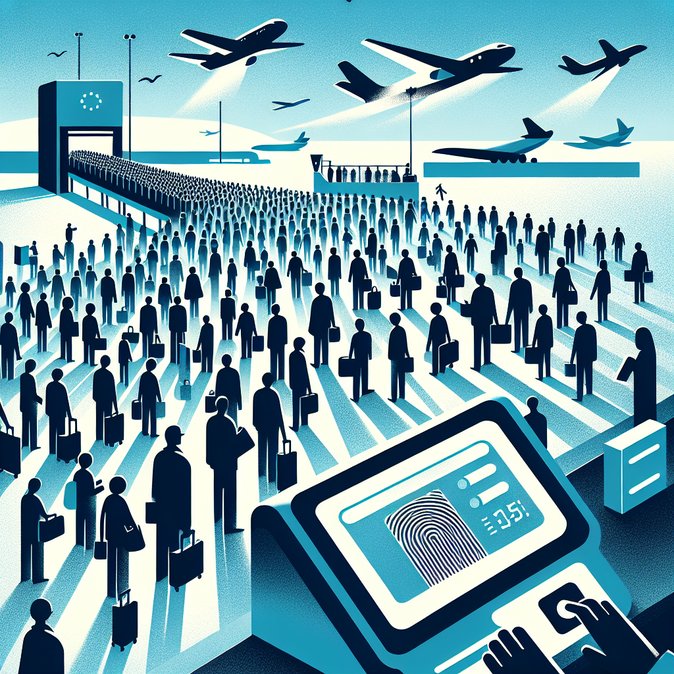
Spain’s Ministry of Interior has confirmed Brussels’ announcement that the Smart-Borders Entry/Exit System (EES) is now fully live at all external Schengen frontiers, including every Spanish airport, seaport and land crossing. According to travel-compliance portal Schengen90, the bloc registered more than 45 million border crossings and blocked 24,000 attempted entries during the phased roll-out between October 2025 and 10 April 2026. The next component of the package – the European Travel Information and Authorisation System (ETIAS) – has been delayed until “the last quarter of 2026” owing to continued IT integration issues. For Spain-bound business travellers from visa-waiver countries, that means two different layers of compliance over the next 18 months. First, they must submit to biometric enrolment under the EES at the border now.
![EU confirms EES fully operational; ETIAS pushed back to late 2026]()
Amid these shifting requirements, VisaHQ’s Spain portal (https://www.visahq.com/spain/) can help companies and individual travellers stay ahead of the curve by tracking Schengen day counts, flagging upcoming EES or ETIAS obligations, and offering streamlined online filing the moment new authorisation windows open.
Second, they will need to apply online for an ETIAS travel authorisation once that system goes live. The staggered timeline gives Spanish consulates and large employers more breathing room to adjust travel-policy templates, but it also prolongs a period of regulatory uncertainty. The EES automates overstay detection by time-stamping every entry and exit and matching fingerprints against alert lists. Spanish border-guards union AUGC says the technology has already flagged “dozens” of forged documents and one fugitive warrant in Barcelona since Friday’s launch. Employers sponsoring short-term assignments must therefore audit stay-calculations carefully: the system’s 90/180-day logic applies across the entire Schengen Area, not just Spain. Meanwhile, the ETIAS delay removes the immediate threat of an additional pre-travel step during Spain’s 2026 high-season. Tour operators have welcomed the breathing space, but business-immigration lawyers warn against complacency. Companies with frequent travellers should start bulk-data exercises now so that HR profiles and passport data are ready for a mass upload to the ETIAS platform when pilot windows open next year. For mobility specialists, the dual timetable creates both workload and opportunity. Those that invest early in automated tracking tools can use the extended window to fine-tune compliance dashboards, train travelling staff, and renegotiate service-level agreements with relocation providers before ETIAS adds yet another checkpoint to Spain-bound travel.

Amid these shifting requirements, VisaHQ’s Spain portal (https://www.visahq.com/spain/) can help companies and individual travellers stay ahead of the curve by tracking Schengen day counts, flagging upcoming EES or ETIAS obligations, and offering streamlined online filing the moment new authorisation windows open.
Second, they will need to apply online for an ETIAS travel authorisation once that system goes live. The staggered timeline gives Spanish consulates and large employers more breathing room to adjust travel-policy templates, but it also prolongs a period of regulatory uncertainty. The EES automates overstay detection by time-stamping every entry and exit and matching fingerprints against alert lists. Spanish border-guards union AUGC says the technology has already flagged “dozens” of forged documents and one fugitive warrant in Barcelona since Friday’s launch. Employers sponsoring short-term assignments must therefore audit stay-calculations carefully: the system’s 90/180-day logic applies across the entire Schengen Area, not just Spain. Meanwhile, the ETIAS delay removes the immediate threat of an additional pre-travel step during Spain’s 2026 high-season. Tour operators have welcomed the breathing space, but business-immigration lawyers warn against complacency. Companies with frequent travellers should start bulk-data exercises now so that HR profiles and passport data are ready for a mass upload to the ETIAS platform when pilot windows open next year. For mobility specialists, the dual timetable creates both workload and opportunity. Those that invest early in automated tracking tools can use the extended window to fine-tune compliance dashboards, train travelling staff, and renegotiate service-level agreements with relocation providers before ETIAS adds yet another checkpoint to Spain-bound travel.