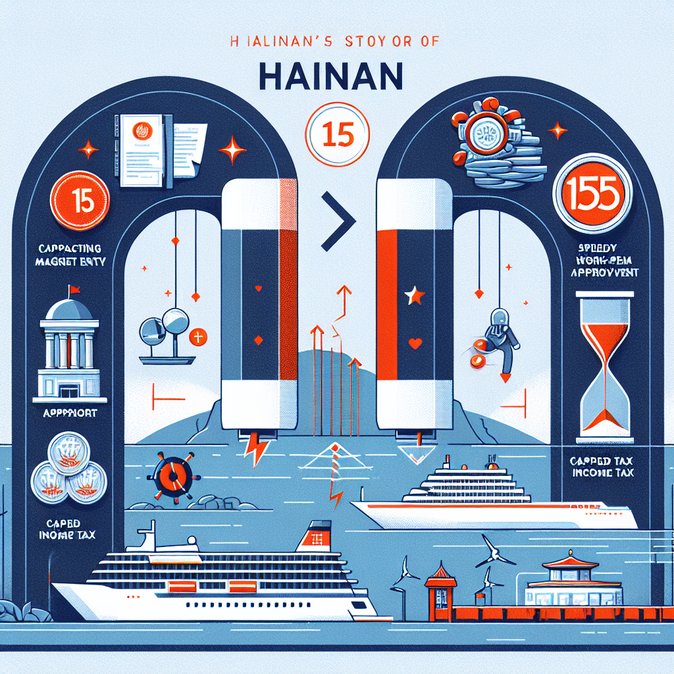
Hainan province, already home to China’s most liberalised entry scheme, has unveiled a 2026-30 blueprint that puts cross-border mobility at the centre of its Free Trade Port (FTP) strategy. Governor Liu Xiaoming told a State Council press conference that citizens from 86 countries will continue to enjoy 30-day visa-free stays, but categories of permissible activities will be broadened to cover short-term employment, offshore innovation projects and “digital nomad” residencies. The island will double down on its “One Million Elite Talents” campaign by offering fast-track work permits in as little as five days, plus personal income-tax caps of 15 %—well below the mainland’s top 45 % bracket.
![Hainan’s new Five-Year Plan pledges deeper visa-free access to lure global talent]()
Navigating these expanded opportunities can be complex, and VisaHQ can help simplify the process. Through its dedicated China hub (https://www.visahq.com/china/), the platform offers real-time updates, document checklists and concierge support for visa-free entry registration, fast-track work permits and longer-term residence applications—giving both travelers and corporate HR teams a streamlined path to full compliance with Hainan’s new rules.
To prevent abuse, authorities will introduce a points-based compliance system that rewards employers who maintain spotless immigration records with automatic renewal privileges. Infrastructure will keep pace: Haikou’s second cruise terminal opens in June with on-board immigration clearance, while Sanya Phoenix airport is adding a dedicated lane for visa-free arrivals linked to biometric e-gates. A new cloud-based customs platform will allow tech start-ups to import R&D equipment duty-free within 24 hours, reducing time-to-market for prototype testing. For multinational HR teams, Hainan’s relaxed regime offers a sandbox to pilot offshore payroll structures and explore bonded tele-working hubs. However, wages paid on the island are subject to local social-insurance contributions even for short-term assignees, and remote workers must still register accommodation within 24 hours via the police e-portal. Legal advisers urge companies to draft split-pay contracts carefully to avoid creating a taxable presence on the mainland. If Hainan meets its target of hosting 200,000 foreign professionals by 2030, it could become a bell-wether for broader national reforms. The Ministry of Commerce is already studying whether elements of the island’s policy mix—such as negative lists for cross-border data flows and crypto-payment pilots—can be exported to Greater Bay Area tech zones.

Navigating these expanded opportunities can be complex, and VisaHQ can help simplify the process. Through its dedicated China hub (https://www.visahq.com/china/), the platform offers real-time updates, document checklists and concierge support for visa-free entry registration, fast-track work permits and longer-term residence applications—giving both travelers and corporate HR teams a streamlined path to full compliance with Hainan’s new rules.
To prevent abuse, authorities will introduce a points-based compliance system that rewards employers who maintain spotless immigration records with automatic renewal privileges. Infrastructure will keep pace: Haikou’s second cruise terminal opens in June with on-board immigration clearance, while Sanya Phoenix airport is adding a dedicated lane for visa-free arrivals linked to biometric e-gates. A new cloud-based customs platform will allow tech start-ups to import R&D equipment duty-free within 24 hours, reducing time-to-market for prototype testing. For multinational HR teams, Hainan’s relaxed regime offers a sandbox to pilot offshore payroll structures and explore bonded tele-working hubs. However, wages paid on the island are subject to local social-insurance contributions even for short-term assignees, and remote workers must still register accommodation within 24 hours via the police e-portal. Legal advisers urge companies to draft split-pay contracts carefully to avoid creating a taxable presence on the mainland. If Hainan meets its target of hosting 200,000 foreign professionals by 2030, it could become a bell-wether for broader national reforms. The Ministry of Commerce is already studying whether elements of the island’s policy mix—such as negative lists for cross-border data flows and crypto-payment pilots—can be exported to Greater Bay Area tech zones.