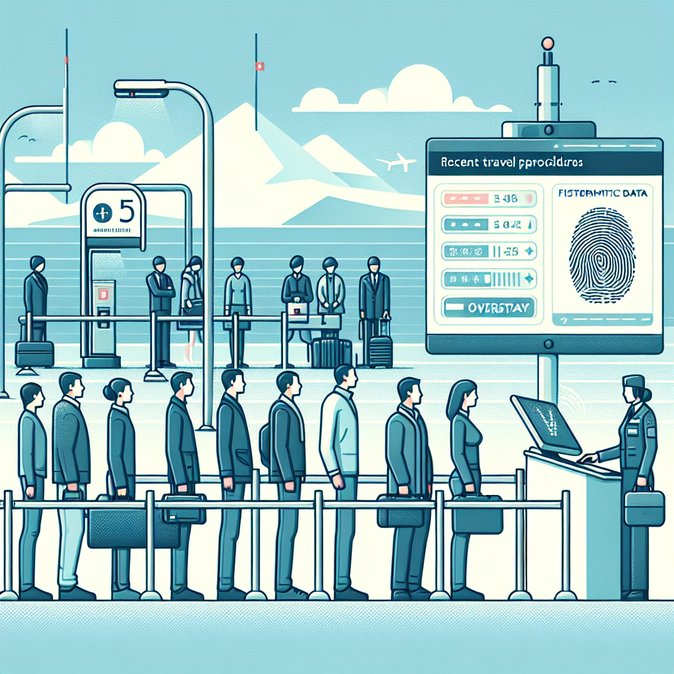
Switzerland’s external borders entered a new digital era on 10 April 2026 when the European Union’s long-awaited Entry/Exit System (EES) became fully operational across the entire Schengen zone. From Zurich Airport to the remote alpine road crossings, every non-EU national arriving for a short stay must now provide biometric fingerprints and a live facial image, replacing the traditional ink passport stamp. The system, run by the EU’s IT agency eu-LISA, stores each traveller’s identity data together with the exact time and place of entry and exit. For Swiss business travellers, the most immediate benefit is the automatic calculation of remaining Schengen days. Frequent flyers of multinational firms—who often struggle to track the 90-days-in-180 limit—can check their balance online and avoid accidental overstays that trigger fines or entry bans.
![Schengen Entry/Exit System Goes Live, Transforming Swiss Border Checks]()
Travellers who prefer professional assistance navigating these changing rules can turn to VisaHQ, whose Swiss portal (https://www.visahq.com/switzerland/) offers step-by-step guidance, real-time tracking and expert support for Schengen visas and soon-to-launch ETIAS authorisations. By centralising documents and trip histories, VisaHQ helps users stay comfortably within the 90/180-day allowance and approach the new EES checks with confidence.
Border guards also spend less time leafing through passports for old stamps, freeing them to focus on risk profiles flagged automatically by the system. Yet the launch has not been seamless. Early reports from Geneva Cointrin Airport described queues of up to an hour as travellers grappled with self-service kiosks and officials guided those without biometric passports to manual counters. Airport operators warned that, until staffing levels and passenger familiarity improve, peak-season congestion could easily return. Corporate mobility managers are already adjusting travel policies: companies are advising non-EU assignees to build extra buffer time into itineraries, and relocation providers are updating arrival briefings. Swiss exporters, meanwhile, welcome the stronger security promises that the EES brings—faster, data-driven borders should reduce the chance of business trips being disrupted by fraudulently altered passports. Looking ahead, the EES is only the first pillar of Europe’s “Smart Borders” programme. An additional layer—ETIAS, the European Travel Information and Authorisation System—will start in late 2026, requiring visa-exempt visitors to secure an online travel authorisation before departure. For Switzerland’s globally mobile workforce, the days of spontaneous cross-border hops are rapidly fading into history.

Travellers who prefer professional assistance navigating these changing rules can turn to VisaHQ, whose Swiss portal (https://www.visahq.com/switzerland/) offers step-by-step guidance, real-time tracking and expert support for Schengen visas and soon-to-launch ETIAS authorisations. By centralising documents and trip histories, VisaHQ helps users stay comfortably within the 90/180-day allowance and approach the new EES checks with confidence.
Border guards also spend less time leafing through passports for old stamps, freeing them to focus on risk profiles flagged automatically by the system. Yet the launch has not been seamless. Early reports from Geneva Cointrin Airport described queues of up to an hour as travellers grappled with self-service kiosks and officials guided those without biometric passports to manual counters. Airport operators warned that, until staffing levels and passenger familiarity improve, peak-season congestion could easily return. Corporate mobility managers are already adjusting travel policies: companies are advising non-EU assignees to build extra buffer time into itineraries, and relocation providers are updating arrival briefings. Swiss exporters, meanwhile, welcome the stronger security promises that the EES brings—faster, data-driven borders should reduce the chance of business trips being disrupted by fraudulently altered passports. Looking ahead, the EES is only the first pillar of Europe’s “Smart Borders” programme. An additional layer—ETIAS, the European Travel Information and Authorisation System—will start in late 2026, requiring visa-exempt visitors to secure an online travel authorisation before departure. For Switzerland’s globally mobile workforce, the days of spontaneous cross-border hops are rapidly fading into history.