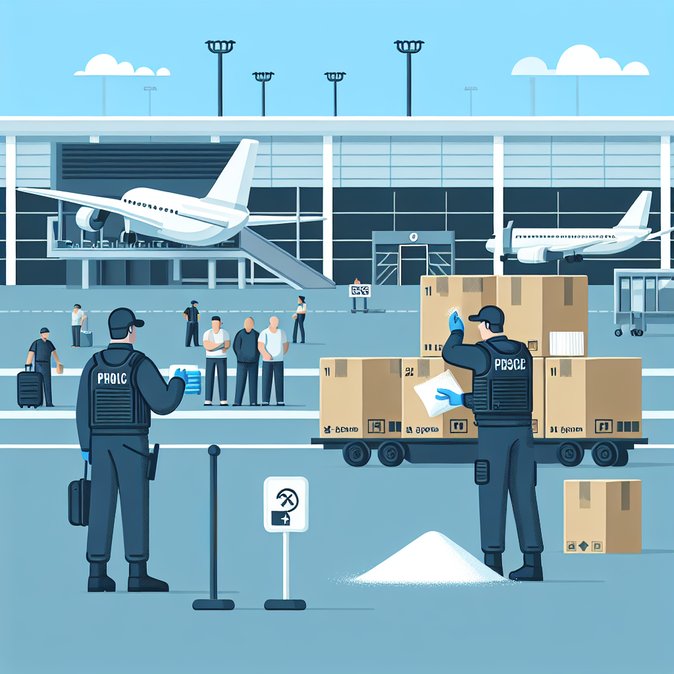
Brazil and the United States have unveiled a landmark security pact aimed squarely at the supply lines that move illegal weapons, drugs and counterfeit goods through Brazil’s busiest airports and ports. Signed in Brasília on April 10 2026 by Finance Minister Dario Durigan and senior U.S. Customs and Border Protection officials, the agreement establishes a permanent “Mutual Interdiction Team.” At the heart of the deal is DESARMA, a shared-data platform that will let customs officers on both sides of the equator scan cargo manifests in real time, match serial numbers and flag suspicious routings before containers ever leave U.S. warehouses. Brazilian authorities say the pilot phase will concentrate on Guarulhos International Airport, where drug seizures jumped from 89 kg in 2024 to more than 1.5 tonnes in the first quarter of 2026. For multinationals that depend on Brazil’s air-cargo corridors—and for corporate travel teams moving staff through São Paulo’s airports—the initiative promises tangible benefits. Faster, joint inspections should reduce last-minute holds on legitimate shipments while allowing authorities to zero in on high-risk consignments. Freight forwarders have already been invited to join an “authorised economic operator” fast-track lane that will mirror the U.S. C-TPAT model.
![Brazil and United States create “Mutual Interdiction Team” to tighten airport and border security]()
Whether you’re a logistics manager flying in to oversee inspections or a compliance officer shuttling between U.S. and Brazilian facilities, VisaHQ can expedite the business-visa process, flag vaccination or passport validity pitfalls, and track any new entry formalities triggered by the DESARMA rollout—visit https://www.visahq.com/brazil/ for one-click support.
The pact also signals a political thaw. Relations chilled after Washington slapped 50 % tariffs on Brazilian metals last year, but both sides now frame the interdiction team as proof that economic growth and security can advance together. Business-travel advisers warn, however, that tighter cargo screening may translate into longer minimum-connection times at Guarulhos and Viracopos until new x-ray equipment is fully calibrated later this year. Companies with regional supply chains should audit whether their U.S. exporters correctly declare dual-use items and update commercial invoices with harmonised codes. Failure to do so could trigger automatic DESARMA alerts and costly delivery delays once the system goes live network-wide in July 2026.

Whether you’re a logistics manager flying in to oversee inspections or a compliance officer shuttling between U.S. and Brazilian facilities, VisaHQ can expedite the business-visa process, flag vaccination or passport validity pitfalls, and track any new entry formalities triggered by the DESARMA rollout—visit https://www.visahq.com/brazil/ for one-click support.
The pact also signals a political thaw. Relations chilled after Washington slapped 50 % tariffs on Brazilian metals last year, but both sides now frame the interdiction team as proof that economic growth and security can advance together. Business-travel advisers warn, however, that tighter cargo screening may translate into longer minimum-connection times at Guarulhos and Viracopos until new x-ray equipment is fully calibrated later this year. Companies with regional supply chains should audit whether their U.S. exporters correctly declare dual-use items and update commercial invoices with harmonised codes. Failure to do so could trigger automatic DESARMA alerts and costly delivery delays once the system goes live network-wide in July 2026.