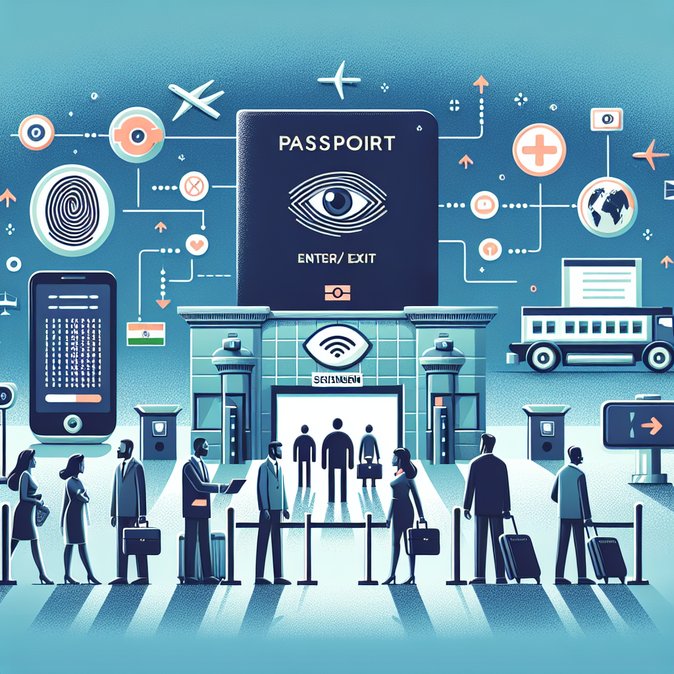
From 10 April 2026 every Indian passport holder entering or leaving the Schengen Area will be processed through the European Union’s new Entry/Exit System (EES). Paper passport stamping is replaced by a biometric platform that captures facial images, fingerprints and travel data, automatically calculating each traveller’s allowed 90-in-180-day stay. The European Commission says the move is part of its long-planned Smart Borders package to curb overstays and identity fraud. More than 45 million crossings were recorded during the phased rollout, with 24,000 refusals of entry and 600 security-risk detections, according to Commission statistics. Airlines have warned that first-time registration could add 5-10 minutes per passenger, and several Indian tour operators are advising clients to arrive at least three hours before departure during the initial bedding-in period.
![EU switches on Entry/Exit System today: what Indian travellers need to know]()
If gathering the correct paperwork feels daunting, VisaHQ’s India portal (https://www.visahq.com/india/) can simplify your Schengen visa application. Their step-by-step platform checks supporting documents, tracks processing times and offers real-time guidance, helping you clear the new EES formalities with confidence.
Indian nationals still need a Schengen visa, but they will now leave a far richer digital footprint. An overstay in, say, Spain will instantly be visible to German border guards the next time the traveller tries to enter Frankfurt, closing loopholes created by inconsistent manual stamping. For frequent Indian business visitors, the automated calculation of remaining days removes guesswork but also eliminates any ‘grace’ officers sometimes extended informally. Airports such as Amsterdam Schiphol and Paris CDG have installed hundreds of self-service kiosks. Passengers scan their passports, have their photo taken and, where required, give fingerprints. Travellers who refuse biometrics can be denied entry. Data will be stored for three years (five if entry was refused), raising privacy concerns; the EU insists the database is encrypted and access tightly controlled. What to prepare: ensure your passport has at least six months’ validity, keep accommodation and return-ticket proofs handy and factor extra time at arrival immigration. Business travellers should track cumulative Schengen days closely—EES will do it for you, and alerts at day 88 will be too late to salvage compliance.

If gathering the correct paperwork feels daunting, VisaHQ’s India portal (https://www.visahq.com/india/) can simplify your Schengen visa application. Their step-by-step platform checks supporting documents, tracks processing times and offers real-time guidance, helping you clear the new EES formalities with confidence.
Indian nationals still need a Schengen visa, but they will now leave a far richer digital footprint. An overstay in, say, Spain will instantly be visible to German border guards the next time the traveller tries to enter Frankfurt, closing loopholes created by inconsistent manual stamping. For frequent Indian business visitors, the automated calculation of remaining days removes guesswork but also eliminates any ‘grace’ officers sometimes extended informally. Airports such as Amsterdam Schiphol and Paris CDG have installed hundreds of self-service kiosks. Passengers scan their passports, have their photo taken and, where required, give fingerprints. Travellers who refuse biometrics can be denied entry. Data will be stored for three years (five if entry was refused), raising privacy concerns; the EU insists the database is encrypted and access tightly controlled. What to prepare: ensure your passport has at least six months’ validity, keep accommodation and return-ticket proofs handy and factor extra time at arrival immigration. Business travellers should track cumulative Schengen days closely—EES will do it for you, and alerts at day 88 will be too late to salvage compliance.