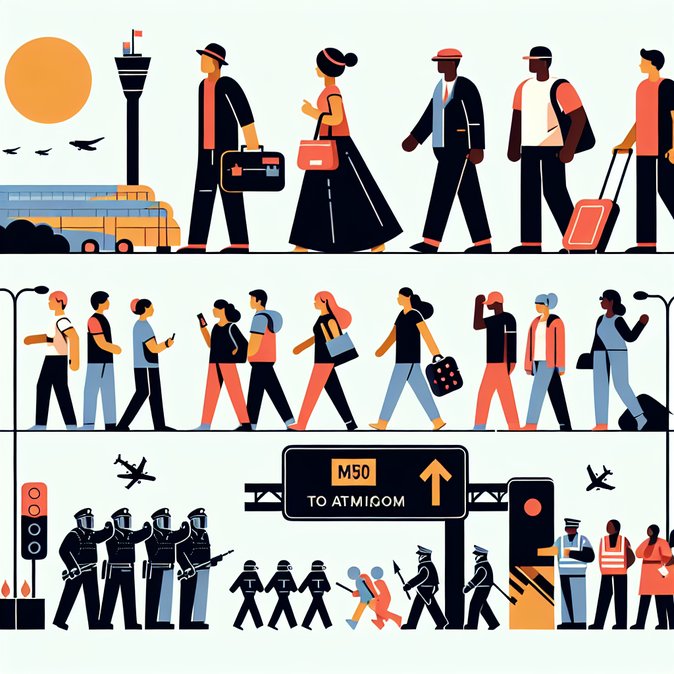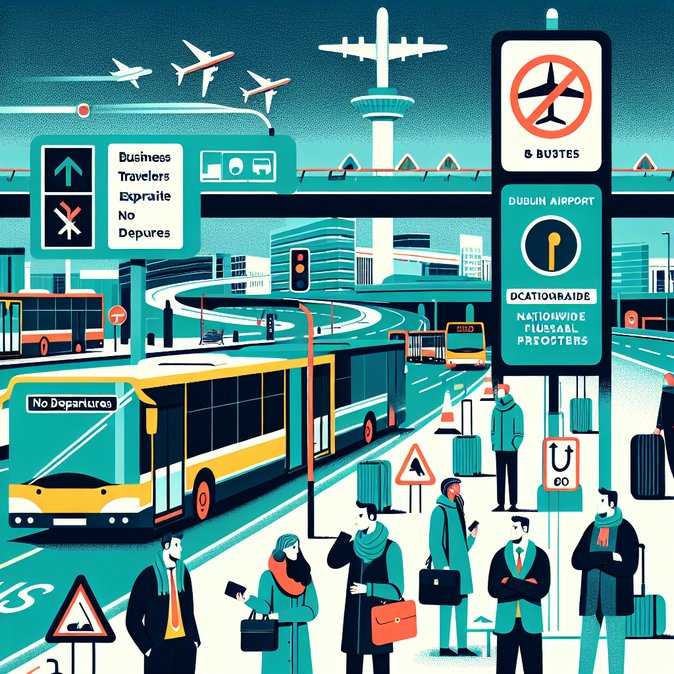
Ireland’s fourth consecutive day of fuel-price protests has disrupted almost every mode of travel in the State. Convoys of tractors, trucks and cars blocked sections of the M50, M1, M7, M8, M18 and other strategic corridors on 10 April, forcing thousands of passengers to abandon vehicles and walk to Dublin Airport with their luggage. An Garda Síochána warned protesters they could face arrest under the Public Order Act, while Taoiseach Micheál Martin confirmed that Defence Forces troops had been placed on standby to clear blockades if essential fuel or food supplies are threatened. Airports Council International (ACI) Europe has separately warned the European Commission that refinery closures linked to the Iran war could leave European airports short of jet fuel within three weeks.
![Fuel-price protests snarl Ireland’s transport arteries; Government puts army on standby]()
For organizations coordinating international assignments or emergency travel during such disruptions, VisaHQ can streamline the visa and passport documentation process, offering up-to-the-minute guidance for Ireland and more than 200 other destinations. Their Ireland portal (https://www.visahq.com/ireland/) allows mobility managers and individual travellers alike to verify entry requirements, obtain electronic visas where available, and arrange courier collection for urgent applications—helping to keep critical trips on track even when transport infrastructure is under pressure.
Industry fears are being magnified in Ireland, where fuel depots at Whitegate (Cork), Foynes (Limerick) and Galway remain ring-fenced by demonstrators, constricting supplies needed to keep emergency generators and ground-handling equipment running. Business groups—including Ibec, the Irish Exporters’ Association and the Irish Hotels Federation—have urged Government to invoke emergency powers if talks with protest leaders fail. Retail Ireland reported empty supermarket shelves in parts of the country, while Fuels For Ireland warned that up to 500 petrol stations could run dry “within hours” if deliveries do not resume. For global-mobility managers the immediate priority is traveller tracking and route re-planning. Employers with staff due to transit through Dublin, Cork or Shannon Airports this weekend are being advised to build in a minimum four-hour surface buffer, pre-book taxis authorised to use the Dublin Port Tunnel, and monitor real-time updates from Transport Infrastructure Ireland (TII). Organisations moving time-critical cargo across the island are activating contingency ferry routings via Belfast or Holyhead to bypass southern blockades. Longer-term, the confrontation highlights Ireland’s vulnerability to single-refinery supply chains and the need for diversified jet-fuel storage near major airports. Corporate travel buyers should revisit force-majeure clauses in airline and hotel contracts and ensure that revised duty-of-care plans account for politically-driven fuel shortages.

For organizations coordinating international assignments or emergency travel during such disruptions, VisaHQ can streamline the visa and passport documentation process, offering up-to-the-minute guidance for Ireland and more than 200 other destinations. Their Ireland portal (https://www.visahq.com/ireland/) allows mobility managers and individual travellers alike to verify entry requirements, obtain electronic visas where available, and arrange courier collection for urgent applications—helping to keep critical trips on track even when transport infrastructure is under pressure.
Industry fears are being magnified in Ireland, where fuel depots at Whitegate (Cork), Foynes (Limerick) and Galway remain ring-fenced by demonstrators, constricting supplies needed to keep emergency generators and ground-handling equipment running. Business groups—including Ibec, the Irish Exporters’ Association and the Irish Hotels Federation—have urged Government to invoke emergency powers if talks with protest leaders fail. Retail Ireland reported empty supermarket shelves in parts of the country, while Fuels For Ireland warned that up to 500 petrol stations could run dry “within hours” if deliveries do not resume. For global-mobility managers the immediate priority is traveller tracking and route re-planning. Employers with staff due to transit through Dublin, Cork or Shannon Airports this weekend are being advised to build in a minimum four-hour surface buffer, pre-book taxis authorised to use the Dublin Port Tunnel, and monitor real-time updates from Transport Infrastructure Ireland (TII). Organisations moving time-critical cargo across the island are activating contingency ferry routings via Belfast or Holyhead to bypass southern blockades. Longer-term, the confrontation highlights Ireland’s vulnerability to single-refinery supply chains and the need for diversified jet-fuel storage near major airports. Corporate travel buyers should revisit force-majeure clauses in airline and hotel contracts and ensure that revised duty-of-care plans account for politically-driven fuel shortages.