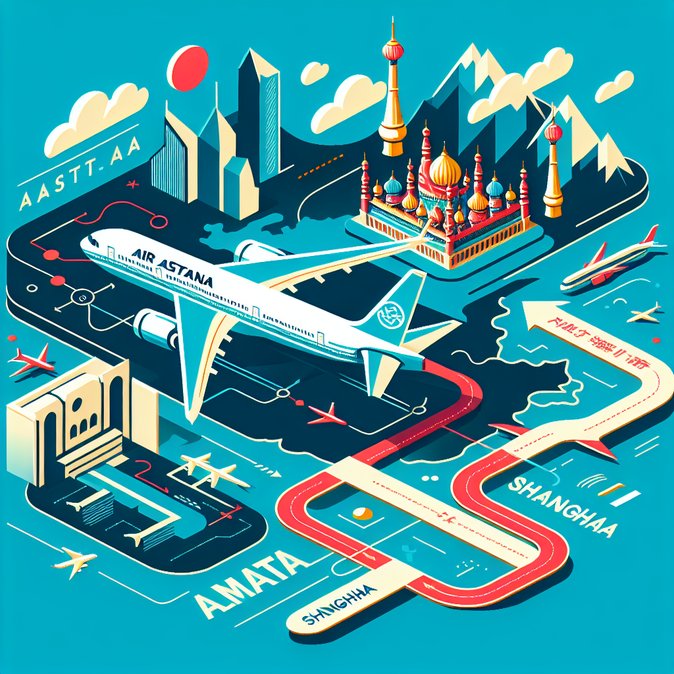
Kazakhstan’s flag-carrier Air Astana has inaugurated thrice-weekly flights linking Almaty, the republic’s commercial capital, with Shanghai’s Pudong hub. Launched in late March and formally presented at a 9 April press briefing in Shanghai’s Peace Hotel, the new service plugs a strategic gap in Central Asia–East Asia connectivity. The airline now operates to six Chinese cities—Beijing, Guangzhou, Shanghai, Sanya, Urumqi and Yining—totalling up to 32 weekly frequencies. Passenger volumes on Kazakh-China routes reached 250,000 in 2025, almost doubling 2024 levels, a jump the carrier attributes partly to China’s unilateral 15-day visa-free entry for Kazakh nationals introduced last July. For global companies running oil-and-gas, mining and infrastructure projects under the Belt & Road framework, the new nonstop cuts journey times by at least three hours compared with one-stop options via Urumqi or Beijing. It also opens one-carrier itineraries from Europe or Turkey through Almaty to eastern China, bypassing congested Gulf hubs. HR mobility managers should note that visa-free entry does not cover employment; staff posted for project work must still secure the relevant Z-visa and Foreign Work Permit.
![Air Astana Adds Almaty–Shanghai Service, Bringing Kazakhstan–China Frequencies to 32 Per Week]()
For organisations or individuals who need assistance navigating China’s Z-visa, business (M) visa or any other entry category, VisaHQ can streamline the process with its end-to-end online service. The company’s China page (https://www.visahq.com/china/) provides real-time requirements, digital document uploads and expert support, allowing corporate mobility teams to offload paperwork and keep projects on schedule.
Nevertheless, easier point-to-point access is likely to stimulate short-term technical visits and executive travel between Shanghai-based OEMs and Kazakh manufacturing partners.

For organisations or individuals who need assistance navigating China’s Z-visa, business (M) visa or any other entry category, VisaHQ can streamline the process with its end-to-end online service. The company’s China page (https://www.visahq.com/china/) provides real-time requirements, digital document uploads and expert support, allowing corporate mobility teams to offload paperwork and keep projects on schedule.
Nevertheless, easier point-to-point access is likely to stimulate short-term technical visits and executive travel between Shanghai-based OEMs and Kazakh manufacturing partners.