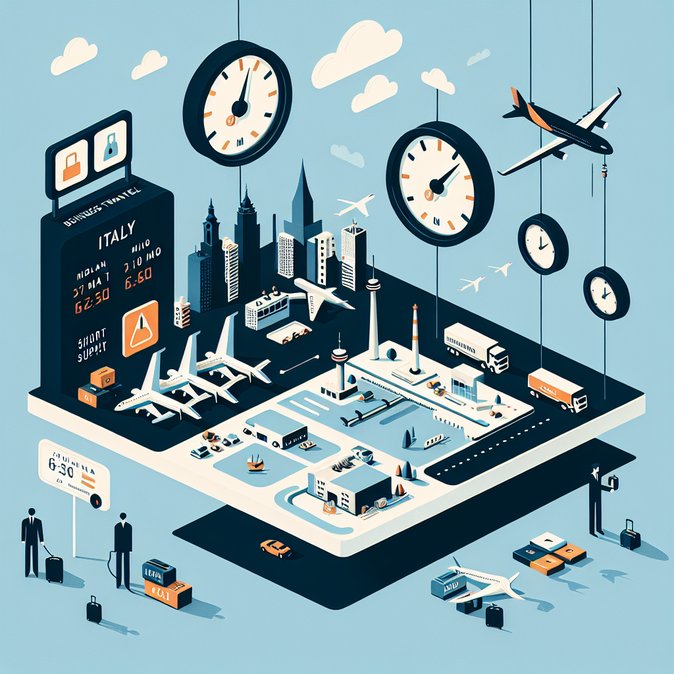
Italy’s skies will fall partially silent on Friday, 10 April after the main air-traffic-control union groupings (UILT-UIL, UGL-TA, ASTRA, FAST-Confsal-AV) confirmed a coordinated national walk-out from 13:00 to 17:00 local time. The strike—also involving ENAV’s technology subsidiary Techno Sky and ADR Security staff at Rome Fiumicino and Ciampino—comes after months of fruitless contract talks and rising discontent over rosters and staffing levels. Industry body ENAV warns that the stoppage hits the two Area Control Centres of Rome and Milan as well as tower operations at Milan Malpensa and Naples Capodichino. Under Italian law, “fasce di garanzia” (07:00-10:00 and 18:00-21:00) and a list of humanitarian or lifeline services must operate, but anything scheduled inside the strike window is at high risk of delay or cancellation. ENAC has already published the mandatory list of guaranteed flights, prioritising single-daily island links and long-haul departures.
![Italian Air Traffic Controllers Set for 4-Hour National Strike on 10 April—Hundreds of Flights Already Cancelled]()
Should last-minute schedule changes require new travel documents—for example, shifting a connecting flight outside the Schengen Area—VisaHQ can streamline the process. Through its Italy portal (https://www.visahq.com/italy/) the service offers real-time visa assessments, courier handling and concierge support, helping both individual travellers and corporate mobility teams secure alternative visas quickly when strikes upend original plans.
Flag-carrier ITA Airways responded by scrapping roughly 27 percent of its Friday programme—over 150 rotations across Europe, North America and North Africa—while low-cost carriers such as Ryanair and easyJet issued re-booking offers and fee-free changes. Olbia Costa Smeralda airport, a seasonal gateway for business jets and luxury tourism, posted its own advisory urging passengers to contact airlines before heading to the airport and reminding them that minimum services will be provided only outside the strike window. For corporate mobility managers the short, concentrated action is a reminder to build redundancy into Italian itineraries during April—a month traditionally heavy with labour unrest across multiple transport modes. Travellers with critical same-day meetings are being told to favour early-morning departures or consider rail alternatives on high-density domestic corridors such as Milan-Rome. Under EU Reg. 261/2004, carriers must still offer re-routing and care, but compensation is unlikely because strikes are deemed “extraordinary circumstances”. Companies with large assignee populations in Italy should prepare employee-communications explaining those rights, reinforce duty-of-care tracking and, where possible, pre-position staff to avoid missed connections on onward long-haul business trips.
Should last-minute schedule changes require new travel documents—for example, shifting a connecting flight outside the Schengen Area—VisaHQ can streamline the process. Through its Italy portal (https://www.visahq.com/italy/) the service offers real-time visa assessments, courier handling and concierge support, helping both individual travellers and corporate mobility teams secure alternative visas quickly when strikes upend original plans.
Flag-carrier ITA Airways responded by scrapping roughly 27 percent of its Friday programme—over 150 rotations across Europe, North America and North Africa—while low-cost carriers such as Ryanair and easyJet issued re-booking offers and fee-free changes. Olbia Costa Smeralda airport, a seasonal gateway for business jets and luxury tourism, posted its own advisory urging passengers to contact airlines before heading to the airport and reminding them that minimum services will be provided only outside the strike window. For corporate mobility managers the short, concentrated action is a reminder to build redundancy into Italian itineraries during April—a month traditionally heavy with labour unrest across multiple transport modes. Travellers with critical same-day meetings are being told to favour early-morning departures or consider rail alternatives on high-density domestic corridors such as Milan-Rome. Under EU Reg. 261/2004, carriers must still offer re-routing and care, but compensation is unlikely because strikes are deemed “extraordinary circumstances”. Companies with large assignee populations in Italy should prepare employee-communications explaining those rights, reinforce duty-of-care tracking and, where possible, pre-position staff to avoid missed connections on onward long-haul business trips.
More From Italy
View all
Schengen Entry/Exit System Becomes Fully Operational on 10 April—Italian Borders Switch to Biometric Checks

Ryanair Slashes European Network but Pledges Major Italian Expansion—40 New Aircraft & 250 Routes if Taxes Fall