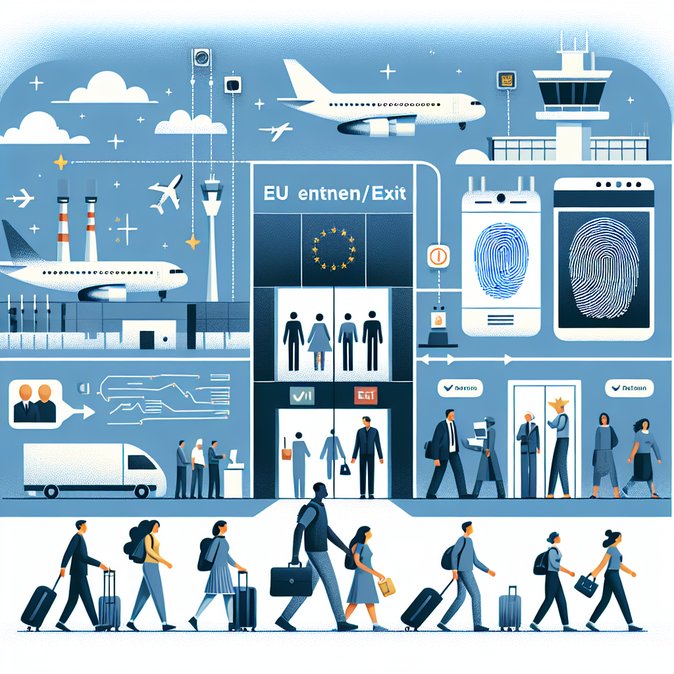
After six months of phased testing, the European Union’s biometric Entry/Exit System (EES) becomes legally compulsory at all external Schengen borders from 00:01 CET on 10 April 2026. According to Gujarat Samachar’s English edition, the switch replaces physical passport stamping with a digital record built from fingerprint and facial data, and covers associate members such as Switzerland alongside France, Germany, Italy and Spain.
![Schengen Entry/Exit System fully mandatory from 10 April—what Swiss travellers need to know]()
For travellers who want personalised guidance on how the EES affects their upcoming trips, VisaHQ can help. Through its dedicated Swiss page (https://www.visahq.com/switzerland/), the platform provides real-time visa requirement checks, alerts about document validity under the new regime and streamlined application tools—useful for everyone from holiday-makers to corporate mobility managers.
For Swiss residents returning home from non-Schengen trips, the practical change is two-fold: first-time entrants after the cut-over must enrol biometrics at a staffed booth; subsequent crossings can use self-service kiosks that match live images to the stored template. Zurich, Geneva and Basel airports have installed 180 kiosks in total, but Federal Police admit initial registration may add 30–60 minutes during peak waves. Carriers flying into Switzerland now face liability fines of up to €5,000 per passenger for boarding travellers whose visa entitlement will have expired by the time they reach the kiosk—prompting airlines to tighten document checks at origin airports. Corporate mobility teams should therefore review automated check-in settings and ensure that transferees’ residence permits are machine-readable. Land borders are also affected: on the A2 motorway at Chiasso, Italian police will record biometric exits for third-country nationals in transit to Switzerland, while Swiss officers will capture re-entry data—effectively creating a double stop for non-EU lorry drivers. Logistics firms anticipate slower freight flows and are advising drivers to pre-print QR codes generated by the EU’s optional mobile pre-registration app. Privacy campaigners have raised concerns over data security, but Brussels insists that templates are stored in an encrypted central repository for a maximum of three years. The Federal Data Protection and Information Commissioner has opened a review into how Swiss authorities will access and share the database. For now, travellers are urged to carry valid documents, arrive early and keep printed proof of onward travel in case biometric kiosks malfunction in the first days of full operation.

For travellers who want personalised guidance on how the EES affects their upcoming trips, VisaHQ can help. Through its dedicated Swiss page (https://www.visahq.com/switzerland/), the platform provides real-time visa requirement checks, alerts about document validity under the new regime and streamlined application tools—useful for everyone from holiday-makers to corporate mobility managers.
For Swiss residents returning home from non-Schengen trips, the practical change is two-fold: first-time entrants after the cut-over must enrol biometrics at a staffed booth; subsequent crossings can use self-service kiosks that match live images to the stored template. Zurich, Geneva and Basel airports have installed 180 kiosks in total, but Federal Police admit initial registration may add 30–60 minutes during peak waves. Carriers flying into Switzerland now face liability fines of up to €5,000 per passenger for boarding travellers whose visa entitlement will have expired by the time they reach the kiosk—prompting airlines to tighten document checks at origin airports. Corporate mobility teams should therefore review automated check-in settings and ensure that transferees’ residence permits are machine-readable. Land borders are also affected: on the A2 motorway at Chiasso, Italian police will record biometric exits for third-country nationals in transit to Switzerland, while Swiss officers will capture re-entry data—effectively creating a double stop for non-EU lorry drivers. Logistics firms anticipate slower freight flows and are advising drivers to pre-print QR codes generated by the EU’s optional mobile pre-registration app. Privacy campaigners have raised concerns over data security, but Brussels insists that templates are stored in an encrypted central repository for a maximum of three years. The Federal Data Protection and Information Commissioner has opened a review into how Swiss authorities will access and share the database. For now, travellers are urged to carry valid documents, arrive early and keep printed proof of onward travel in case biometric kiosks malfunction in the first days of full operation.