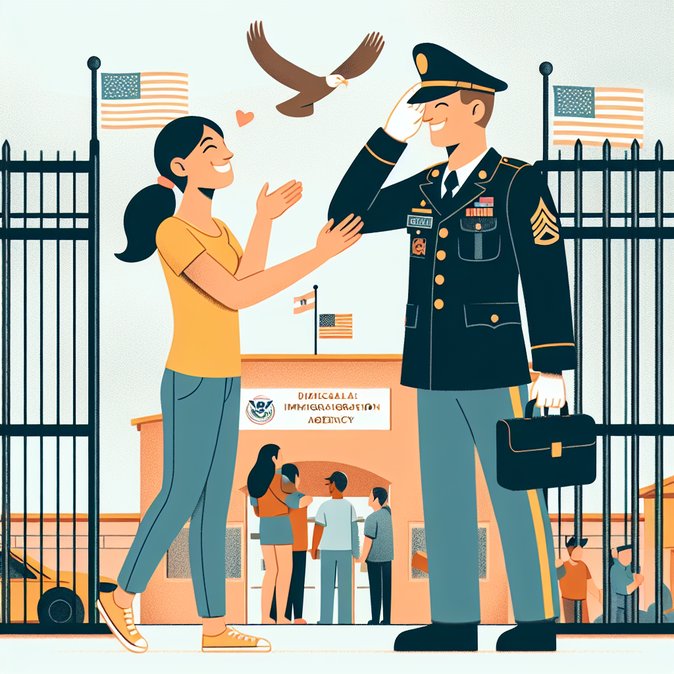
A 22-year-old Honduran national, Annie Ramos, was released on Tuesday, April 7, 2026, from the South Louisiana ICE Processing Center after nearly a week in custody. Ramos was arrested on March 31 while trying to register for spousal military benefits at Fort Johnson, Louisiana, where her husband, Staff Sgt. Matthew Blank, is preparing for deployment. The incident quickly drew national attention because Ramos entered the United States as a toddler and has lived here for two decades. Immigration records show she was ordered removed in 2005 after her family missed a court hearing; advocates say the family never received proper notice. Her case resonated on social media and within military circles, where critics argued that detaining the spouse of an active-duty service member undermines troop morale during wartime. Senator Mark Kelly (D-AZ) and the American Legion both contacted DHS, urging a humanitarian release. ICE ultimately released Ramos on her own recognizance with a GPS ankle monitor while removal proceedings continue. DHS officials told the Associated Press the release “balances enforcement priorities with family unity and military readiness.” Immigration attorneys note that spouses of U.S. troops can sometimes obtain “parole-in-place,” but that discretionary benefit has been used far less often under the current administration’s enforcement-first policy.
For multinational employers, the episode underscores the unpredictability of U.S. interior enforcement even for long-term residents with strong equities. Companies with military clients or employees should alert foreign-national family members that routine base visits can trigger background checks against old removal orders. Counsel should review clients’ immigration histories proactively and, where possible, file motions to reopen in absentia removal orders before emergencies arise.
![Honduran-born wife of U.S. soldier freed after week-long ICE detention sparks outcry]()
Amid such complexities, VisaHQ’s online visa and passport service (https://www.visahq.com/united-states/) can help families, service members, and employers gather the right supporting documents, track status updates, and stay ahead of shifting U.S. immigration requirements—potentially averting the kind of last-minute scramble that confronted the Blank family.
Looking ahead, attorneys expect lawmakers to re-introduce the bipartisan Military Family Parole-in-Place Act, which would codify protections for undocumented spouses of service members. Until then, businesses supporting defense contracts should prepare contingency plans for workers whose family members may face sudden detention or travel restrictions.
For multinational employers, the episode underscores the unpredictability of U.S. interior enforcement even for long-term residents with strong equities. Companies with military clients or employees should alert foreign-national family members that routine base visits can trigger background checks against old removal orders. Counsel should review clients’ immigration histories proactively and, where possible, file motions to reopen in absentia removal orders before emergencies arise.

Amid such complexities, VisaHQ’s online visa and passport service (https://www.visahq.com/united-states/) can help families, service members, and employers gather the right supporting documents, track status updates, and stay ahead of shifting U.S. immigration requirements—potentially averting the kind of last-minute scramble that confronted the Blank family.
Looking ahead, attorneys expect lawmakers to re-introduce the bipartisan Military Family Parole-in-Place Act, which would codify protections for undocumented spouses of service members. Until then, businesses supporting defense contracts should prepare contingency plans for workers whose family members may face sudden detention or travel restrictions.