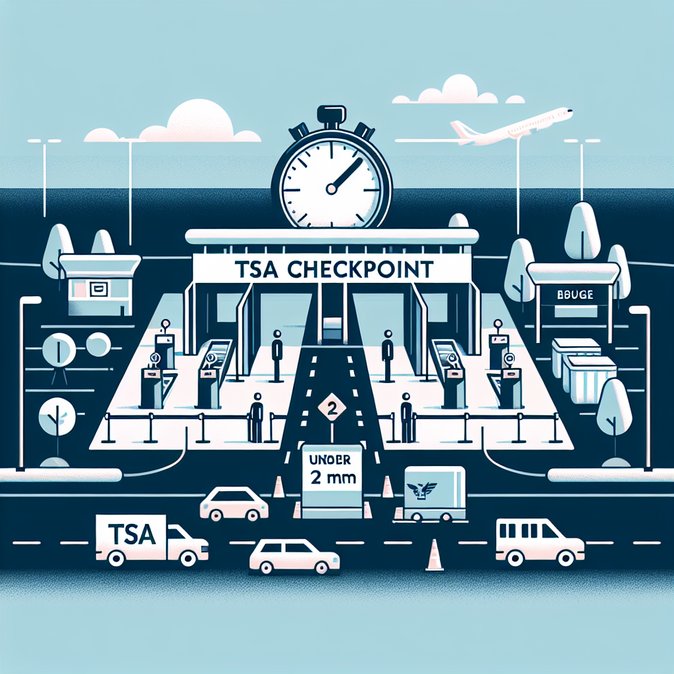
Los Angeles International Airport bucked the national trend of spring congestion on April 5, posting security waits of just one to five minutes at many checkpoints during the Easter morning rush. Data from the airport’s flyLAX.com dashboard showed the Tom Bradley International Terminal clearing general passengers in about two minutes, while TSA PreCheck lanes in several domestic terminals dipped to near-zero wait times. The performance is significant because LAX is among the world’s busiest O&D gateways and a major hub for trans-Pacific corporate travel. Airport officials attribute today’s smooth processing to strategic staff redeployment, automated screening lanes added during the pandemic recovery, and the fact that Easter fell on a Sunday—a lighter day for corporate itineraries.
![LAX Security Lanes Move at Record Pace—1-to-5-Minute Waits Despite Holiday Traffic]()
For international flyers, shaving minutes off the security queue is only half the battle; making sure passports and visas are squared away before departure can save hours later. VisaHQ’s self-service portal for U.S. residents (https://www.visahq.com/united-states/) walks travelers through visa requirements for more than 200 countries, provides live support, and offers expedited processing—another time-saving layer that pairs nicely with LAX’s newfound efficiency.
Even so, the TSA continues to recommend the standard two-hour (domestic) and three-hour (international) arrival buffers, pointing to variables such as checked-bag drop-offs, gate changes and traffic congestion on the notoriously crowded Century Boulevard approach road. For mobility teams coordinating film-industry crews, tech-sector hops to Silicon Valley or Asia-Pacific rotations, the short lines offer a margin of relief at the tail end of a week marked by weather-related delays elsewhere in the network. Travellers should still keep tabs on real-time flight status: any rolling delays at upstream hubs could shift LAX departure banks and quickly erase today’s cushion.

For international flyers, shaving minutes off the security queue is only half the battle; making sure passports and visas are squared away before departure can save hours later. VisaHQ’s self-service portal for U.S. residents (https://www.visahq.com/united-states/) walks travelers through visa requirements for more than 200 countries, provides live support, and offers expedited processing—another time-saving layer that pairs nicely with LAX’s newfound efficiency.
Even so, the TSA continues to recommend the standard two-hour (domestic) and three-hour (international) arrival buffers, pointing to variables such as checked-bag drop-offs, gate changes and traffic congestion on the notoriously crowded Century Boulevard approach road. For mobility teams coordinating film-industry crews, tech-sector hops to Silicon Valley or Asia-Pacific rotations, the short lines offer a margin of relief at the tail end of a week marked by weather-related delays elsewhere in the network. Travellers should still keep tabs on real-time flight status: any rolling delays at upstream hubs could shift LAX departure banks and quickly erase today’s cushion.