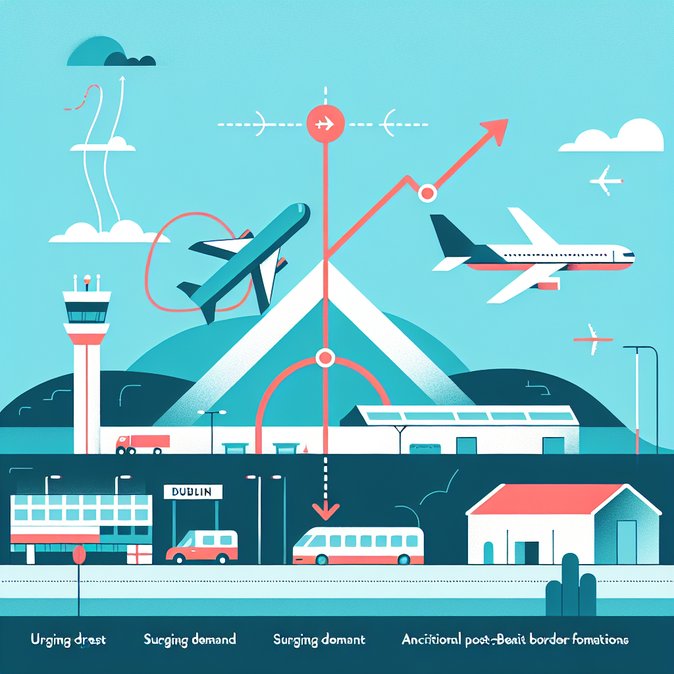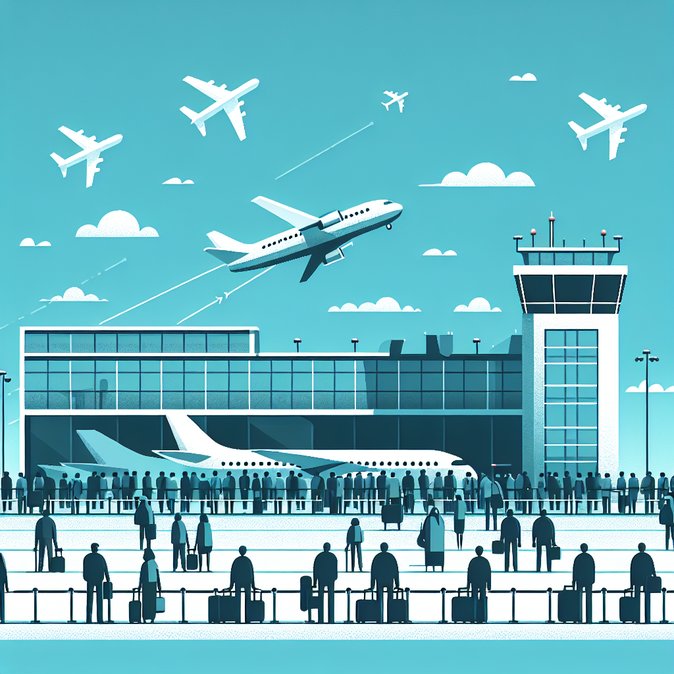
A cache of correspondence released under Freedom-of-Information rules shows that Airlines for America (A4A)—the lobby group representing every major US passenger carrier—has been pressing the Irish Government for more than a year to scrap the 32-million-passenger limit at Dublin Airport. In a sharply-worded letter delivered to Transport Minister Darragh O’Brien on 28 April 2025 and revealed on 5 April 2026, A4A warned that the cap “risks undermining the EU-US Open Skies Agreement” and could ultimately see American carriers forced to curtail services to Ireland if regulators begin turning away new flights. The passenger ceiling originated in a 2007 planning condition that assumed Dublin would need a third terminal once throughput exceeded 32 million a year. Technological advances and terminal upgrades mean that target was passed—in practical terms—several years ago; the airport handled 36.4 million passengers in 2025 and expects to top 38 million in 2026. The cap, however, remains embedded in Dublin Airport’s operating permission, creating legal jeopardy for any airline trying to add capacity this summer.
Documents show that US airlines repeatedly flagged their concerns in high-level meetings with Irish officials and the Oireachtas Joint Committee on Transport. A4A chief executive Chris Sununu argued that pushing long-haul carriers towards Shannon or non-Irish airports would “distort competition” and breach Article 3 of Open Skies, which forbids artificial capacity constraints. The lobby group has already asked the US Department of Transportation to review Ireland’s compliance and hinted at retaliatory measures if flights are blocked.
![US Airlines Warn Ireland: Dublin Airport Passenger Cap Could Breach Open-Skies Treaty]()
Meanwhile, travel planners worrying about potential last-minute rerouting or visa complications can lean on VisaHQ’s Ireland portal (https://www.visahq.com/ireland/) for fast document checks and expedited processing. The firm’s online platform tracks real-time embassy requirements for both Irish and U.S. travelers, so if flights shift from Dublin to Shannon—or even to a connecting hub in London—corporate travellers can instantly see whether transit visas, ESTA updates, or new work-permit filings are needed. Having this backup on tap can keep mobility programmes running smoothly even if the capacity debate drags on.
In response, Minister O’Brien published draft legislation—the Dublin Airport (Passenger Capacity) Bill 2026—that would give him the power to amend or abolish the cap without a full planning review. Industry sources expect the Bill to pass before the Dáil summer recess, but warn that any delay could leave airlines scrambling to re-route peak-season passengers. For global-mobility managers, the dispute is more than political theatre. Corporate travel programmes built around Dublin’s extensive US network could face last-minute schedule changes if the cap bites. HR teams moving staff under J-1 or L-1 visas also risk higher fares and limited seat inventory at the very moment assignees need to relocate for the new US fiscal year. Companies are advised to lock in travel earlier than usual, keep an eye on legislative timetables, and have contingency routings via Shannon or the UK in place.
Documents show that US airlines repeatedly flagged their concerns in high-level meetings with Irish officials and the Oireachtas Joint Committee on Transport. A4A chief executive Chris Sununu argued that pushing long-haul carriers towards Shannon or non-Irish airports would “distort competition” and breach Article 3 of Open Skies, which forbids artificial capacity constraints. The lobby group has already asked the US Department of Transportation to review Ireland’s compliance and hinted at retaliatory measures if flights are blocked.
Meanwhile, travel planners worrying about potential last-minute rerouting or visa complications can lean on VisaHQ’s Ireland portal (https://www.visahq.com/ireland/) for fast document checks and expedited processing. The firm’s online platform tracks real-time embassy requirements for both Irish and U.S. travelers, so if flights shift from Dublin to Shannon—or even to a connecting hub in London—corporate travellers can instantly see whether transit visas, ESTA updates, or new work-permit filings are needed. Having this backup on tap can keep mobility programmes running smoothly even if the capacity debate drags on.
In response, Minister O’Brien published draft legislation—the Dublin Airport (Passenger Capacity) Bill 2026—that would give him the power to amend or abolish the cap without a full planning review. Industry sources expect the Bill to pass before the Dáil summer recess, but warn that any delay could leave airlines scrambling to re-route peak-season passengers. For global-mobility managers, the dispute is more than political theatre. Corporate travel programmes built around Dublin’s extensive US network could face last-minute schedule changes if the cap bites. HR teams moving staff under J-1 or L-1 visas also risk higher fares and limited seat inventory at the very moment assignees need to relocate for the new US fiscal year. Companies are advised to lock in travel earlier than usual, keep an eye on legislative timetables, and have contingency routings via Shannon or the UK in place.