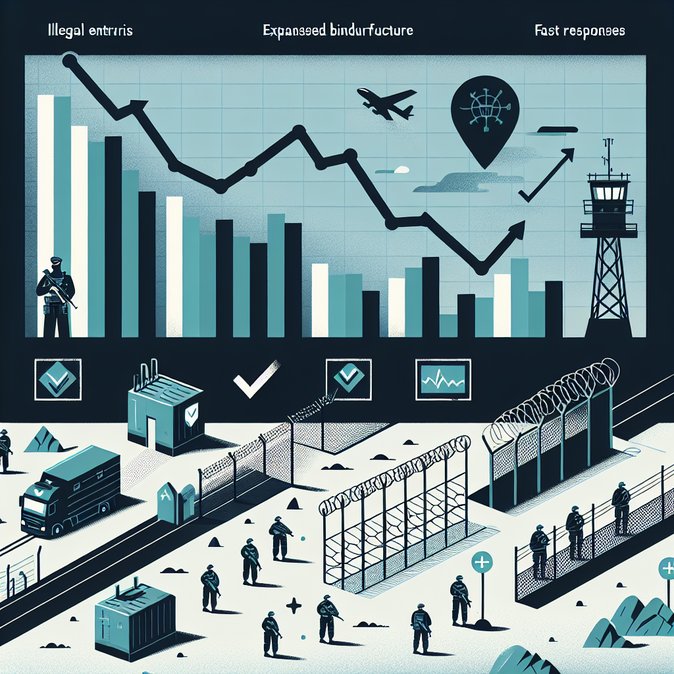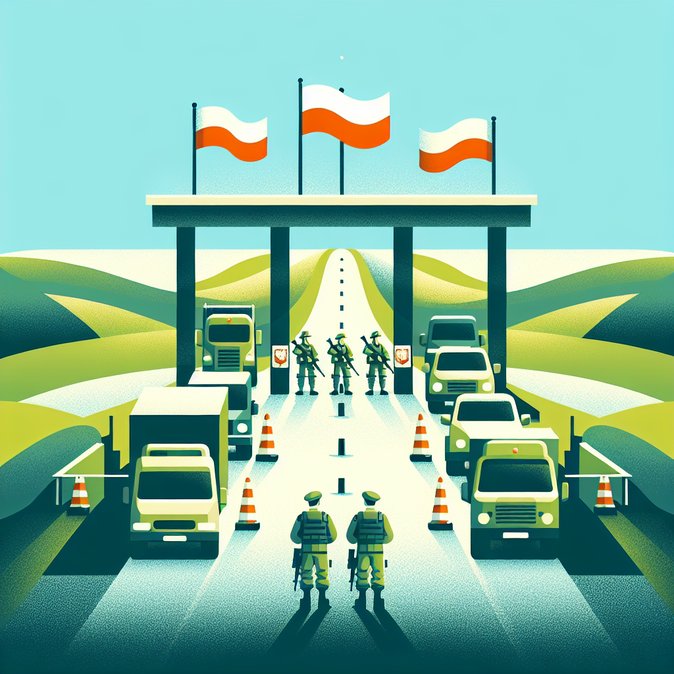
Figures released on 4 April by the Nadodrzański Border Guard District show that since temporary controls were reinstated on the Lubuskie and Dolnośląskie sections of Poland’s western border in July 2025, officers have inspected 775,000 travellers and 360,000 vehicles. The operation, carried out with support from police, territorial-defence troops and military police, led to nearly 500 refusals of entry—mostly for missing documents—230 interceptions of migrants attempting to cross into Germany and 180 arrests for crimes ranging from car theft to document forgery. The statistics illustrate the scale of Poland’s internal-Schengen enforcement effort, which has just been extended to 1 October 2026.
![Nine months of checks on Polish-German border: 775,000 people screened, 500 turned back, 180 arrested]()
For organisations unsure about the exact travel papers their personnel or drivers will need, VisaHQ’s Poland portal (https://www.visahq.com/poland/) offers an up-to-date matrix of visa, residence-card and passport requirements, together with fast-track application support and document couriering. Leveraging the service can shorten lead times and minimise the risk of the “missing-document” refusals that the Border Guard has highlighted.
Border Guard spokesperson Captain Paweł Biskupik said most refusals involved nationals of non-EU countries such as Ukraine, Turkey and Syria, while the arrests included organised-crime suspects smuggling stolen luxury cars westward. Seized contraband—mainly cigarettes and stolen vehicle parts—was valued at PLN 2.6 million. For businesses, the data confirm that ad-hoc checks will remain a fact of life on the A12/A2 and A15/A18 corridors linking Berlin with Poznań and Wrocław. Although average waiting times are moderate, carriers moving high-value goods should budget extra transit hours and ensure drivers carry original CMR and T-forms to avoid secondary inspection bays. Companies sending staff to German suppliers may wish to route via major crossings such as Świecko, where processing capacity is higher. The continued presence of multi-agency patrols also raises compliance stakes for employers transporting third-country nationals on intra-EU assignments. HR teams should verify that posted workers have biometric residence permits or EU ICT cards and are prepared to demonstrate purpose of stay when questioned by joint patrols. Failure to do so can result in on-the-spot fines and, in severe cases, entry bans.

For organisations unsure about the exact travel papers their personnel or drivers will need, VisaHQ’s Poland portal (https://www.visahq.com/poland/) offers an up-to-date matrix of visa, residence-card and passport requirements, together with fast-track application support and document couriering. Leveraging the service can shorten lead times and minimise the risk of the “missing-document” refusals that the Border Guard has highlighted.
Border Guard spokesperson Captain Paweł Biskupik said most refusals involved nationals of non-EU countries such as Ukraine, Turkey and Syria, while the arrests included organised-crime suspects smuggling stolen luxury cars westward. Seized contraband—mainly cigarettes and stolen vehicle parts—was valued at PLN 2.6 million. For businesses, the data confirm that ad-hoc checks will remain a fact of life on the A12/A2 and A15/A18 corridors linking Berlin with Poznań and Wrocław. Although average waiting times are moderate, carriers moving high-value goods should budget extra transit hours and ensure drivers carry original CMR and T-forms to avoid secondary inspection bays. Companies sending staff to German suppliers may wish to route via major crossings such as Świecko, where processing capacity is higher. The continued presence of multi-agency patrols also raises compliance stakes for employers transporting third-country nationals on intra-EU assignments. HR teams should verify that posted workers have biometric residence permits or EU ICT cards and are prepared to demonstrate purpose of stay when questioned by joint patrols. Failure to do so can result in on-the-spot fines and, in severe cases, entry bans.