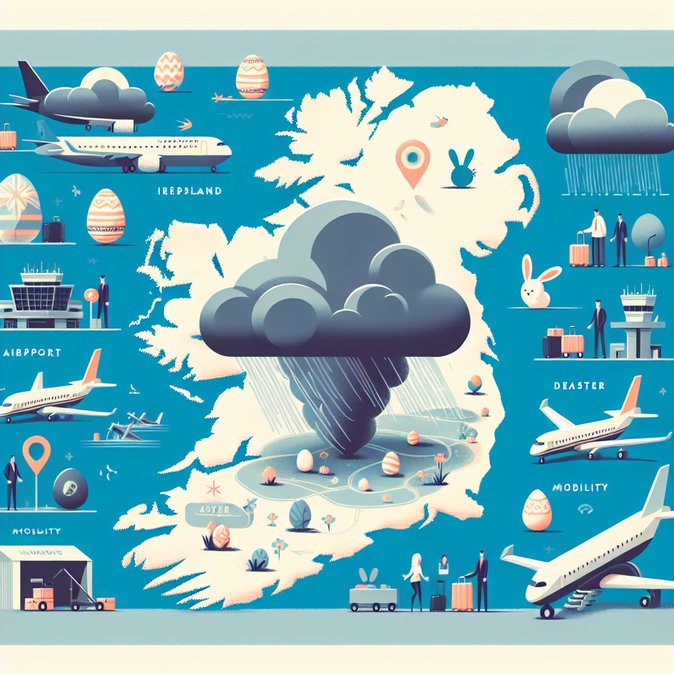
Met Éireann has extended a Status Yellow wind warning to cover the whole of Ireland from 13:00 Saturday 4 April until 02:00 Sunday as Atlantic system ‘Storm Dave’ approaches. Forecasters warn of gale-force gusts strong enough to topple trees, damage property and create hazardous driving conditions. Western and southern counties—including Cork, Kerry and Clare—are likely to experience the fiercest winds, but Dublin Airport and other east-coast hubs have begun contingency planning. For travellers, the timing could hardly be worse: the Easter exodus traditionally swells passenger numbers, and Dublin Airport alone expects 450,000 people to pass through its terminals between Good Friday and Easter Monday. Airlines have started issuing waiver policies, allowing customers to rebook without penalty if their flights are cancelled or significantly delayed.
![Storm Dave Triggers Nationwide Wind Warning, Potential Flight Disruptions Over Easter]()
If your itinerary changes at the last minute—perhaps you need to extend your stay or reroute through another country—VisaHQ can help secure the necessary visas or travel documents quickly. Their streamlined online service for Ireland (https://www.visahq.com/ireland/) can arrange extensions, transit visas or letters of invitation in as little as one business day, smoothing the paperwork so you can focus on adjusting your plans.
The Irish Coast Guard and airport authorities advise arriving three hours early for long-haul departures, monitoring carrier apps for gate changes, and allowing additional time for ground transport as cross-country rail and bus services may face speed restrictions. Corporate mobility managers should alert assignees and visiting executives to the heightened risk of disruption. Remote-first contingency plans—such as switching in-person meetings to video calls—may be prudent for Monday, when residual winds could still affect regional flights. Organisations relocating staff over the holiday weekend should confirm temporary-housing check-in flexibility and ensure travel-insurance policies cover weather-related delays. The National Severe Weather and Flooding Coordination Group remains on standby and could upgrade parts of the country to Orange level should gust forecasts intensify. In previous storms of comparable strength, Shannon and Cork airports temporarily suspended operations for periods of two to four hours; a similar pattern would ripple through connecting hubs in London and continental Europe. Practical advice: • Encourage travellers to opt for carry-on only where possible—checked-baggage backlogs are common after weather holds. • Companies with time-sensitive cargo should liaise with freight forwarders now to explore rerouting via Belfast or Manchester. • Road travellers should avoid coastal routes during peak gust windows and watch local authority feeds for closures.

If your itinerary changes at the last minute—perhaps you need to extend your stay or reroute through another country—VisaHQ can help secure the necessary visas or travel documents quickly. Their streamlined online service for Ireland (https://www.visahq.com/ireland/) can arrange extensions, transit visas or letters of invitation in as little as one business day, smoothing the paperwork so you can focus on adjusting your plans.
The Irish Coast Guard and airport authorities advise arriving three hours early for long-haul departures, monitoring carrier apps for gate changes, and allowing additional time for ground transport as cross-country rail and bus services may face speed restrictions. Corporate mobility managers should alert assignees and visiting executives to the heightened risk of disruption. Remote-first contingency plans—such as switching in-person meetings to video calls—may be prudent for Monday, when residual winds could still affect regional flights. Organisations relocating staff over the holiday weekend should confirm temporary-housing check-in flexibility and ensure travel-insurance policies cover weather-related delays. The National Severe Weather and Flooding Coordination Group remains on standby and could upgrade parts of the country to Orange level should gust forecasts intensify. In previous storms of comparable strength, Shannon and Cork airports temporarily suspended operations for periods of two to four hours; a similar pattern would ripple through connecting hubs in London and continental Europe. Practical advice: • Encourage travellers to opt for carry-on only where possible—checked-baggage backlogs are common after weather holds. • Companies with time-sensitive cargo should liaise with freight forwarders now to explore rerouting via Belfast or Manchester. • Road travellers should avoid coastal routes during peak gust windows and watch local authority feeds for closures.